A casino game aggregator places a common integration layer between an operator and multiple game providers. It may reduce the number of direct provider contracts the operator’s backend needs to implement, distribute a normalized game catalog, and provide a consistent operational view of launch or wallet messages. But an aggregator does not make all game providers equivalent, nor does it eliminate the operator’s responsibility for financial and eligibility decisions.
The essential design tension is standardization versus fidelity. A canonical interface makes provider onboarding repeatable; an overly broad interface can hide differences in transaction semantics, session expiry, bet limits, bonus behavior, game metadata, or recovery procedures. The architecture must explain which differences it normalizes, which remain explicit capabilities, and which cannot be safely represented through the common API.
This guide focuses on multi-provider adaptation and catalog distribution. For the mechanics of a single provider’s session launch and wallet callbacks, consult the companion direct-provider integration guide. For duplicate financial requests, use the separate idempotency guide; this article describes where those guarantees belong in an aggregation system.
Aggregator responsibilities versus direct integration
A direct integration connects the operator to a particular RGS and implements that provider’s contracts. An aggregator adds an intermediary: the operator integrates once against a normalized API while the aggregator maintains downstream adapters to various providers. Depending on the commercial and technical arrangement, the aggregator may also distribute launch configurations, catalog updates, jurisdictional enablement flags, and operational status notifications. These services are possibilities, not universal features.
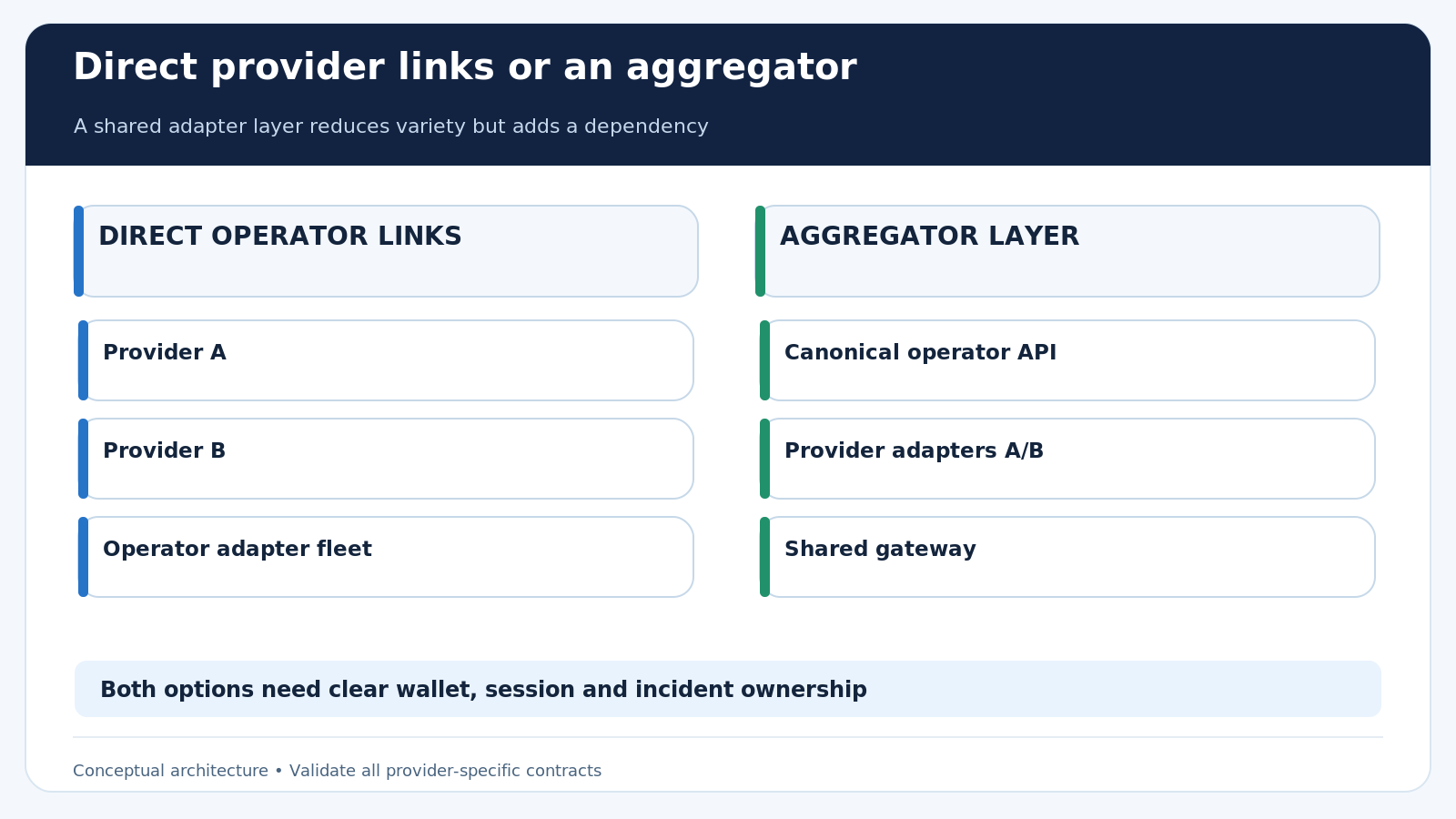
Figure 1. An aggregator centralizes adapters but also becomes a runtime and operational dependency.
Begin with a responsibility matrix. The operator should know who holds the authoritative wallet, who binds the real player to the provider’s pseudonymous identity, who hosts the game client, who controls game availability, and who settles disputed callbacks. An aggregator that routes wallet messages may be in the critical path, but it does not automatically own the financial ledger. A failure between aggregator and provider requires a defined recovery mechanism, not an assumption that the intermediary will “handle it.”
One benefit is operational leverage: consistent operator-facing credentials, a shared catalog ingest pipeline, uniform telemetry, and reusable contract tests. One cost is loss of direct visibility into provider-specific details. The operator may receive an aggregate error code while the originating RGS uses a more precise state. Preserve origin metadata and an agreed route to detailed evidence so support and reconciliation do not depend on guessing which downstream provider acted.
Assess whether aggregation changes business blast radius. With direct connections, one broken provider adapter may affect only that provider. A shared aggregator gateway may affect many providers if its routing, configuration, or wallet callback path fails. Conversely, a well-isolated aggregator can shield operators from provider endpoint churn. The decision depends on redundancy, operational ownership, contractual transparency, and observability rather than catalog size alone.
Provider adapters and canonical data models
An adapter translates a specific provider protocol into a stable canonical model. Typical canonical fields include operator, provider, game ID, session reference, round reference, external transaction reference, transaction type, amount with precise unit, currency, status, timestamp, and correlation ID. These fields do not imply that every provider has them. Missing semantics should be represented explicitly instead of fabricated.
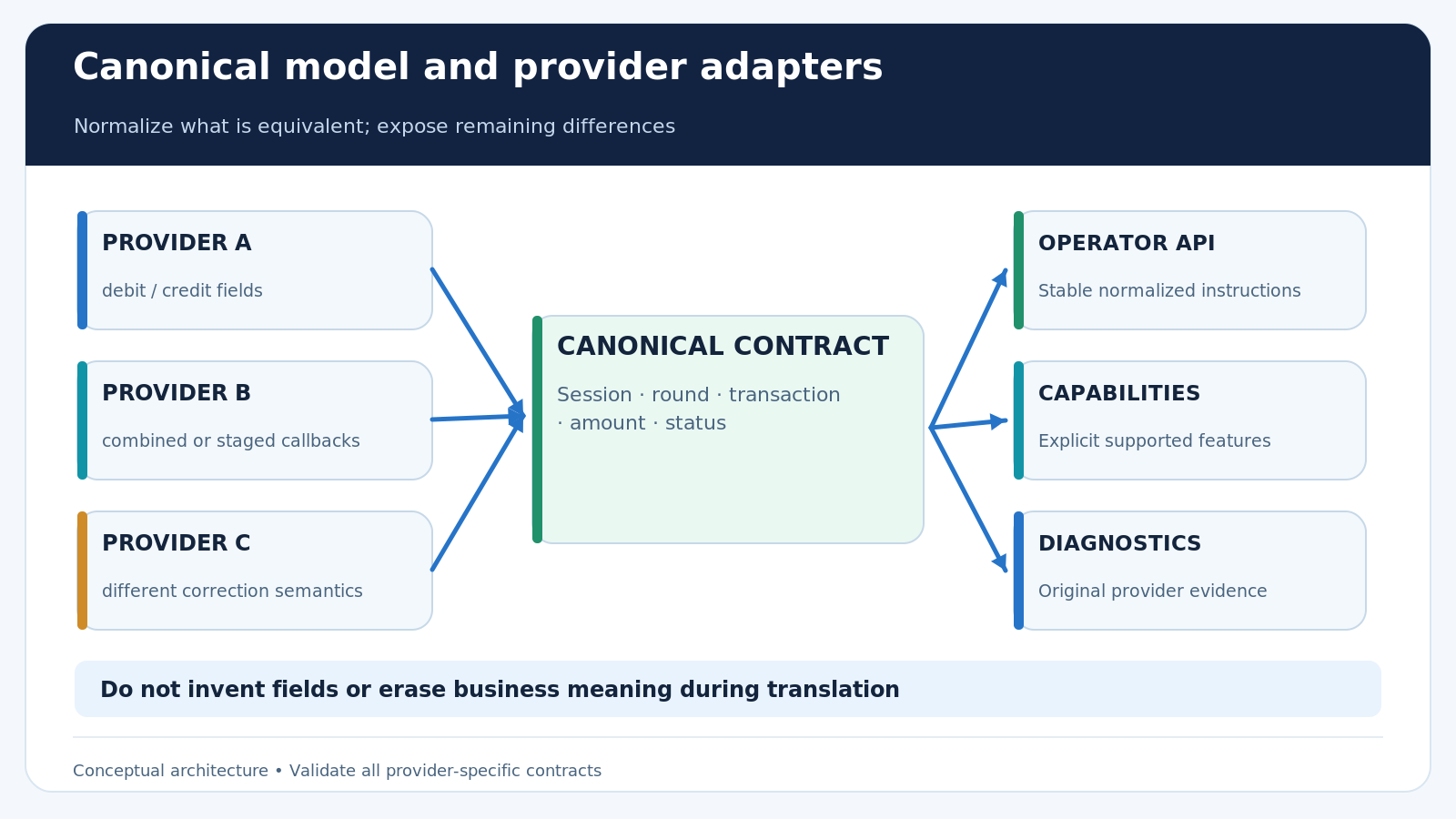
Figure 2. The canonical contract is stable while each adapter handles provider-specific naming and capability differences.
A robust model separates identity, financial instruction, and informational event. A round_finished notification is not itself a wallet credit unless the contract says it contains a financial effect. A provider’s cancel may target a bet, a round, or a session; the adapter should classify the exact operation instead of mapping all cases to one generic “refund” button. Unmappable or ambiguous messages should fail safely into an exception workflow, not be coerced into an approximate transaction.
Version provider adapters independently from the operator-facing contract. Preserve a compatibility matrix: adapter version, provider API version, canonical schema version, and approved behaviors. Introduce new canonical fields additively where practical. Fields that change meaning—such as how a bet amount or partial payout is interpreted—may require a new contract version and reconciliation migration. Schema validation should catch unknown currency formats and out-of-range amounts before the wallet boundary.
Capability flags are more honest than pretending every game supports the same operations. For instance, an adapter might advertise whether it provides a stable round reference, permits partial settlement, supports free-round promotions, exposes a transaction-status endpoint, or can receive asynchronous callbacks. These are examples of potential capabilities; the source of truth must be each actual integration contract. Decisions downstream should consider the capability, its version, and a safe fallback when absent.
Avoid a “universal provider payload” filled with arbitrary optional fields that no team owns. Design small canonical types with documented preconditions, and preserve a restricted raw message record for diagnostics where permitted. The raw record must not become an alternate source of financial authority. It is evidence for tracing translation errors, not permission to bypass validations.
Game catalog ingestion and mapping
A game catalog is more than a list of names and thumbnails. It connects provider-assigned IDs with the operator’s stable internal game identity, supported currencies and languages, device constraints, content categories, and availability rules. Some metadata describes a game build; other metadata depends on the operator agreement or jurisdiction. Treat provider-supplied metadata as input for validation and editorial review rather than automatically publishing it as a verified compliance claim.
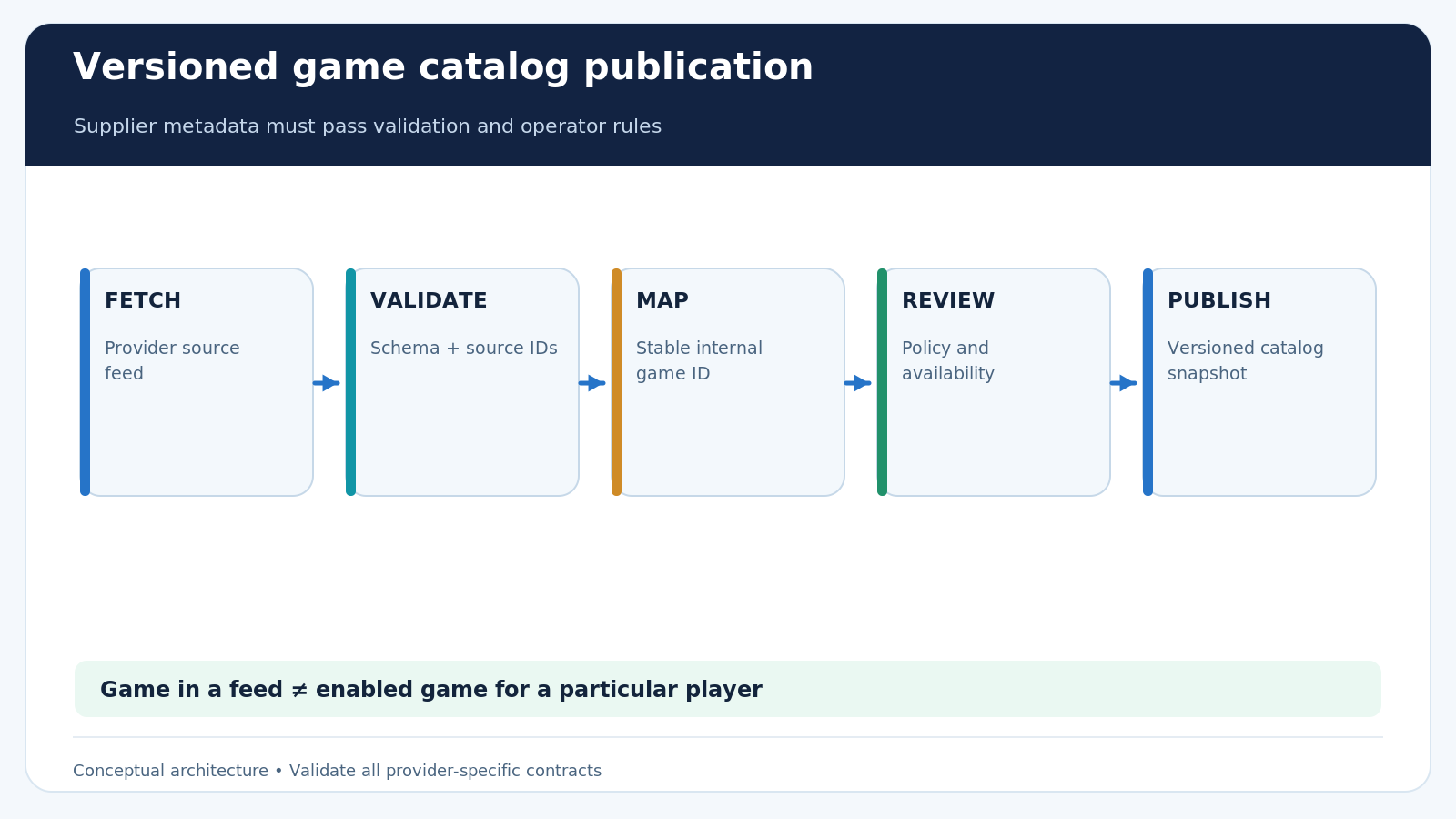
Figure 3. Publication occurs after validation and mapping; raw provider feeds should not overwrite live catalog identity.
The ingestion pipeline should fetch or receive supplier updates, validate schema and expected identifiers, transform them into a staging representation, detect additions and removals, reconcile duplicates, then publish a versioned catalog snapshot. Stable internal IDs protect the operator from supplier renames or revisions. Mapping history helps explain why a provider ID seen in an old wallet record corresponds to today’s game listing.
Be careful with game-name deduplication: two providers may distribute variants with nearly identical names but different game identifiers, rules, certification scopes, or currencies. Conversely, one game may have multiple provider IDs for markets, devices, or versions. A candidate match should not automatically merge regulated or transactional identities. Keep both raw source IDs and canonical IDs, and use a reviewable mapping decision where ambiguity matters.
Publish an availability matrix through a deliberate policy boundary. A game being present in a provider feed does not mean it is launchable for every player. The operator may need to consider commercial enablement, jurisdictional restrictions, maintenance windows, currency, device support, provider status, and session policy. Cache catalog data for speed, but specify refresh expectations and a safe result for stale availability or revoked content. Launch checks should apply authoritative current rules, not just a tile’s cached visibility.
Operationally, track catalog freshness, invalid records, unexpected removals, duplicate mappings, and mismatches between launchable catalog entries and successful provider launches. An automatic feed update should have a rollback path that restores a prior catalog version without rewinding game transactions already made under that version.
Routing, versions and provider configuration
An aggregator must choose the downstream adapter and configuration for each launch and callback. Route keys may include operator, provider, game identifier, market, currency, and contract version. Once a provider session is established, pin it to its original routing context unless the provider explicitly supports migration. Re-evaluating a route independently for every callback can send late settlements to a different adapter than the one that created the transaction.
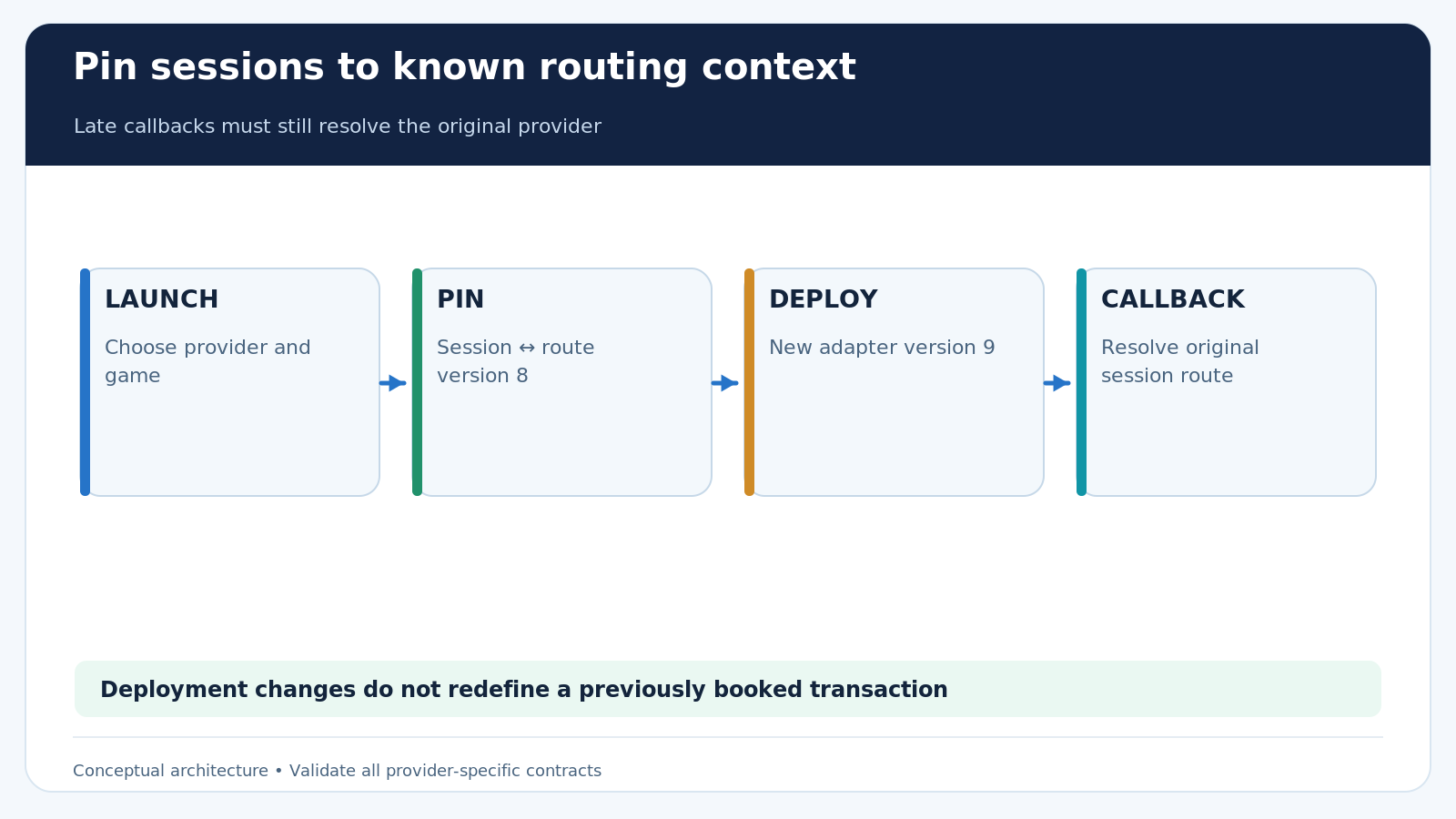
Figure 4. A session is associated with a provider route and config version, including for late callbacks.
Configuration should be versioned and reviewed. Record why a provider is enabled, which endpoint and certificate apply, timeout policy, permitted transaction types, and the exact currency representation. Never send production credentials to clients. Separate deployment rollout of adapter code from business enablement of games. A new adapter may pass tests while the relevant game remains disabled pending contractual or operational approval.
A canonical API still needs explicit error mapping. Translate errors into categories without discarding the original provider code and context. Some errors are permanent contract rejections; others are temporary transport failures; still others are unknown results that demand a status check. A single generic FAILED state can lead to harmful retries of committed bets or accidental player-facing claims that money was not taken.
Use stable external transaction identity end-to-end, even when adapter versions change. An aggregator-side attempt identifier is useful for tracing each network call, but it must not replace the provider’s immutable financial operation reference. The wallet’s deduplication scope should match the agreed business namespace and protect against collisions across providers and operators. Version changes do not authorize a second posting of the same wager.
Operational resilience and monitoring
Resilience begins with failure isolation. Give providers independent concurrency limits, timeouts, rate-control policies, and circuit-breaking where appropriate. One slow RGS must not consume the entire aggregator connection pool. Queues can absorb asynchronous events, but do not enqueue a financially meaningful request without a durable message identity and an explicit acceptance contract. A “successfully queued” response is not equivalent to a committed wallet debit.
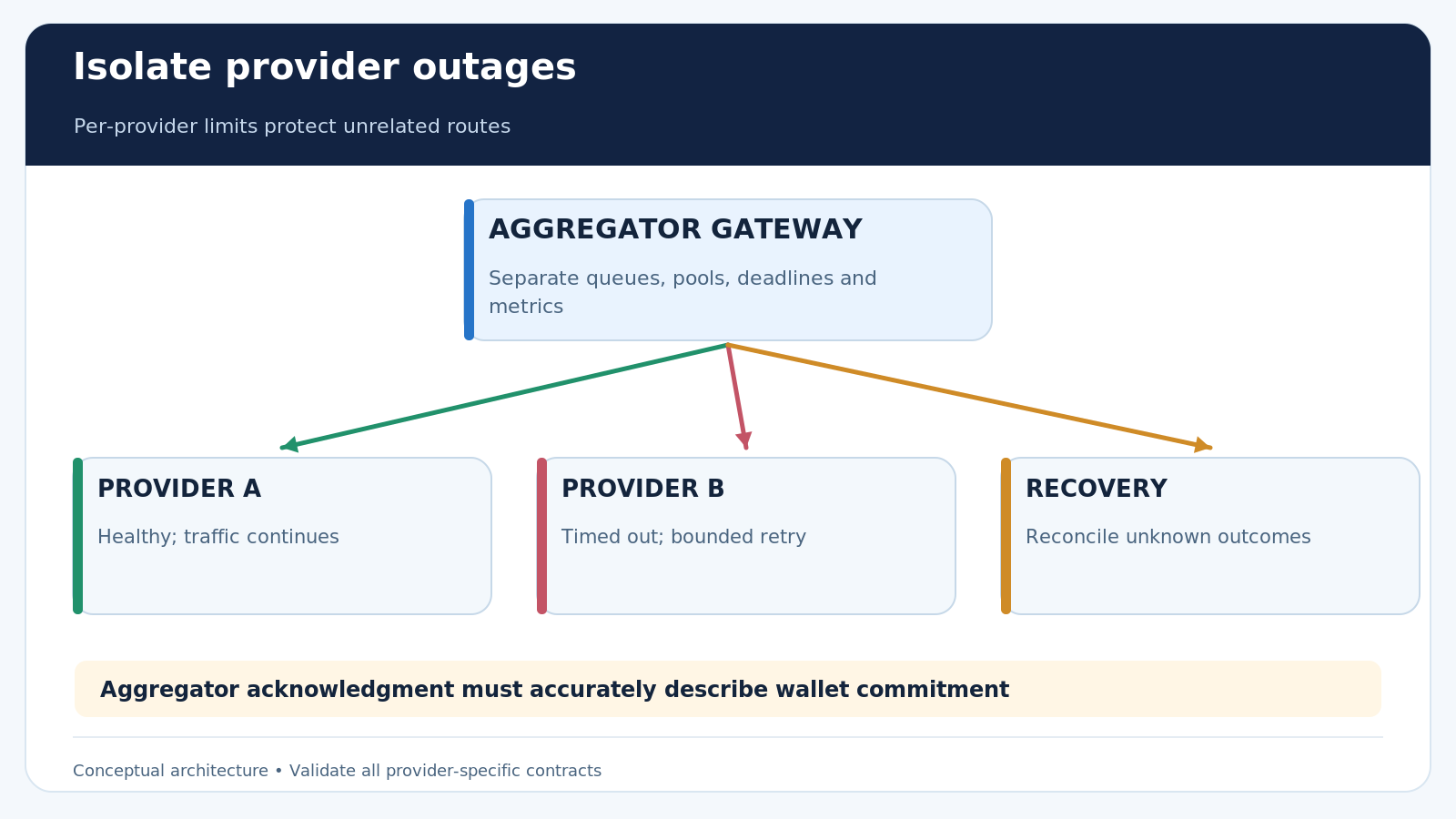
Figure 5. Isolate each provider’s failures and retain a reconciliation loop for ambiguous financial outcomes.
Observability should support three nested views: operator-wide health, per-provider adapter health, and a specific session or transaction. Expose successful launch rate, callback latency, in-progress operations, invalid signatures, catalog age, queue lag, repeated messages, and unresolved reconciliation exceptions. Add provider ID, adapter version, and a safe correlation identifier to logs and traces. Never expose secrets or full player data through a shared operator dashboard.
Plan the case where the aggregator acknowledges a message to the provider but cannot reach the operator wallet. If the contractual response means “accepted for later processing,” the aggregator needs durable storage, bounded retries, business deduplication, and a recovery plan. If it means “wallet committed now,” acknowledgment before booking is incorrect. Define this semantic boundary explicitly. Contract test it by killing network links and processes at each step.
Reconciliation should compare provider statements, aggregator translation records, and authoritative operator ledger entries. These are three potentially different views of the same business operation. Match them with stable identities and clear cutoffs; do not rely only on near-equal amounts or timestamps. A report can show a missing provider entry, a delayed aggregator delivery, or an internal wallet mismatch. Each discrepancy has a different owner and correction path.
Example aggregator workflow and trade-offs
Consider a fictional operator integrating two providers through one aggregator. The operator requests a launch for internal game G-104, and the catalog mapping resolves it to provider A’s SLOT_104_EU under routing version 8. The aggregator asks provider A to create a session and records a route pin. The operator returns the launch information to the player. During play, provider A sends a bet with external transaction A-555. The adapter maps its request to the canonical BET command, and the operator wallet books it once. A retry through another aggregator node returns the previously committed result.
Hours later, a credit callback arrives after adapter version 9 has been deployed. The session pin identifies the original provider and configuration; the adapter compatibility logic handles the late message under the agreed contract. Reconciliation can locate the launch route, raw callback, canonical command, and wallet journal transaction without depending on the currently published catalog entry. This is why historical mapping and session-pinned configuration are operational assets rather than optional metadata.
| Trade-off | Architectural benefit | New obligation |
|---|---|---|
| One operator-facing API | Less direct protocol variety | Canonical schema versioning and capability disclosure |
| Centralized catalog | Consistent publication and mapping | Freshness, provenance and safe availability filtering |
| Reusable adapters | Faster repeated onboarding patterns | Adapter certification, isolation and regression testing |
| Common routing | Controlled multi-provider distribution | Session pinning, config history and blast-radius analysis |
| Aggregated monitoring | Cross-provider operational view | Transparent raw error evidence and tenant isolation |
For acceptance, test provider-specific exceptional states rather than just representative happy paths. Verify late callbacks against a replaced catalog version, provider ID collisions, currency mismatches, malformed supplier metadata, route disablement during an active session, adapter deployment rollback, a retry storm isolated to one RGS, and three-way reconciliation after an induced network outage.
An aggregator earns its place when it reduces integration complexity without erasing essential differences. Keep a narrow operator contract, explicit capability declarations, stable historical mappings, one authoritative financial writer, and a path to investigate each provider-originated event. A larger game catalog is valuable only if its sessions and monetary transactions remain understandable when the network behaves badly.
Further reading
- Microsoft Azure Architecture Center, Microservices data considerations.
- OpenTelemetry, Context propagation across distributed boundaries.
- AWS Builders’ Library, Making retries safe with idempotent APIs.
Editorial note: These sources inform general architectural patterns. Specific game metadata, routing capabilities, and callback behavior require verification against individual aggregator and provider contracts.