A casino provider sends a callback that appears to instruct the operator’s wallet to post a win. Before processing any financial instruction, the receiving platform must know which integration principal sent it, whether its protected contents were changed, whether the message is fresh, and whether this particular economic operation has already been booked. These are related but distinct security and accounting questions. API authentication identifies the calling principal; message integrity detects alteration; replay protection limits reuse of captured messages; idempotency prevents repeated valid business instructions from creating duplicate financial effects.
Security controls are layered because no single mechanism resolves all four questions. A valid mTLS client certificate can identify a partner connection but does not guarantee that a forwarded body remained unchanged beyond the TLS endpoint. A valid HMAC can authenticate signed bytes but does not make a captured request novel. A nonce can stop byte-for-byte replay but cannot replace financial uniqueness constraints. Effective design aligns network, application, and wallet boundaries.
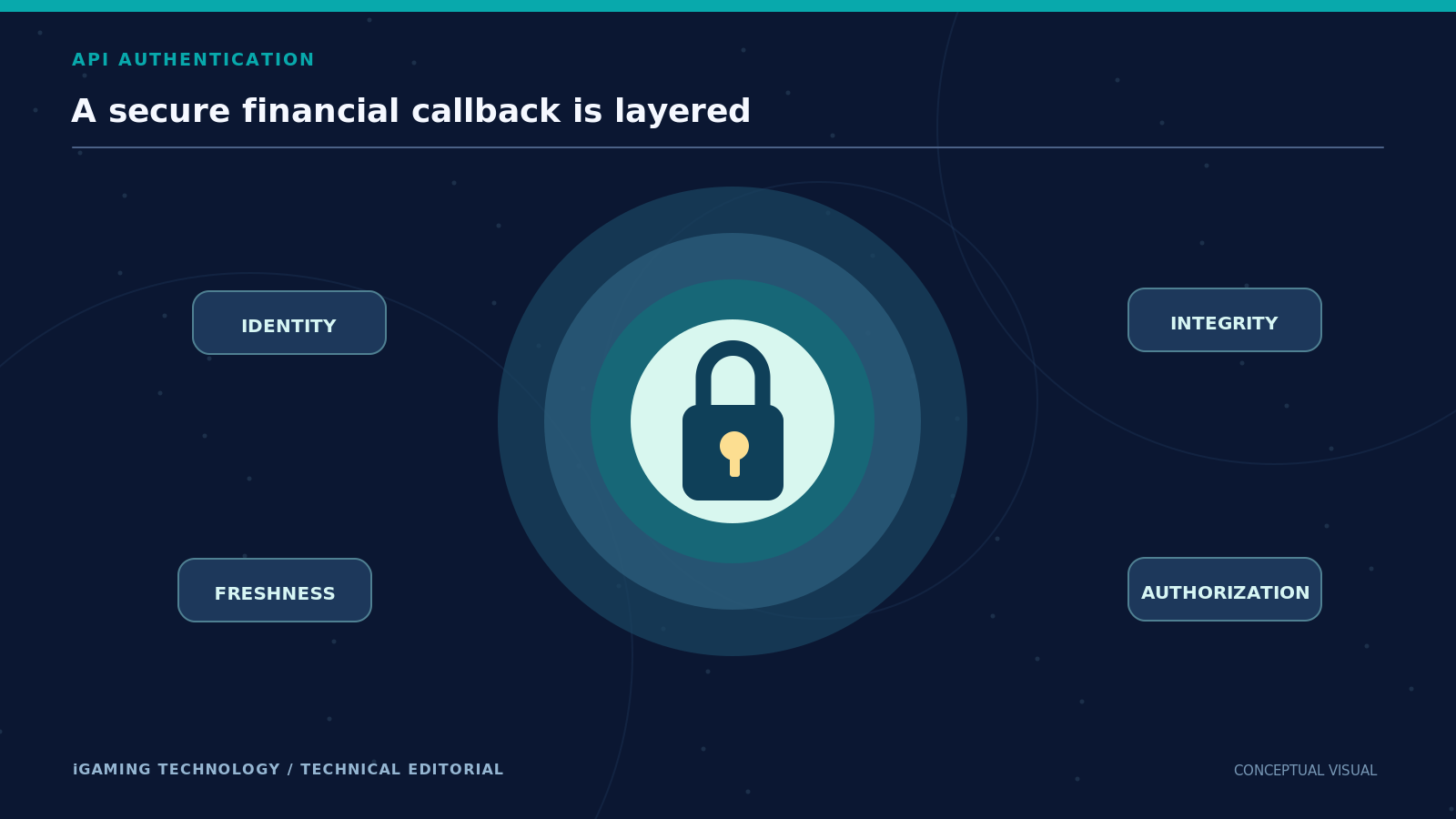
Figure 1. The security boundary is more than a padlock: identity, integrity, freshness, authorization and accounting must all succeed.
Threat model and trust boundaries
Map the full request path: provider server, public network, CDN or edge proxy, load balancer, API gateway, integration adapter, and authoritative wallet service. Trust boundaries exist where TLS terminates, signatures are verified, identities are mapped, or requests are transformed. A provider may sign the original payload while the adapter normalizes it into an internal canonical model. Both the raw verified bytes and the mapped business fields need traceable provenance without exposing secrets or sensitive data to general logs.
Threats include credential theft, message modification, replay of valid requests, wrong-tenant routing, confused-deputy authorization, request smuggling between proxies, unauthorized callbacks from an otherwise valid provider, and internal service impersonation. A valid provider identity must be bound to the correct operator, brand, wallet permissions, allowed currency, and endpoint operation. Authentication of provider A should never authorize a financial instruction for provider B or an unrelated tenant because a tenant ID appeared in JSON.
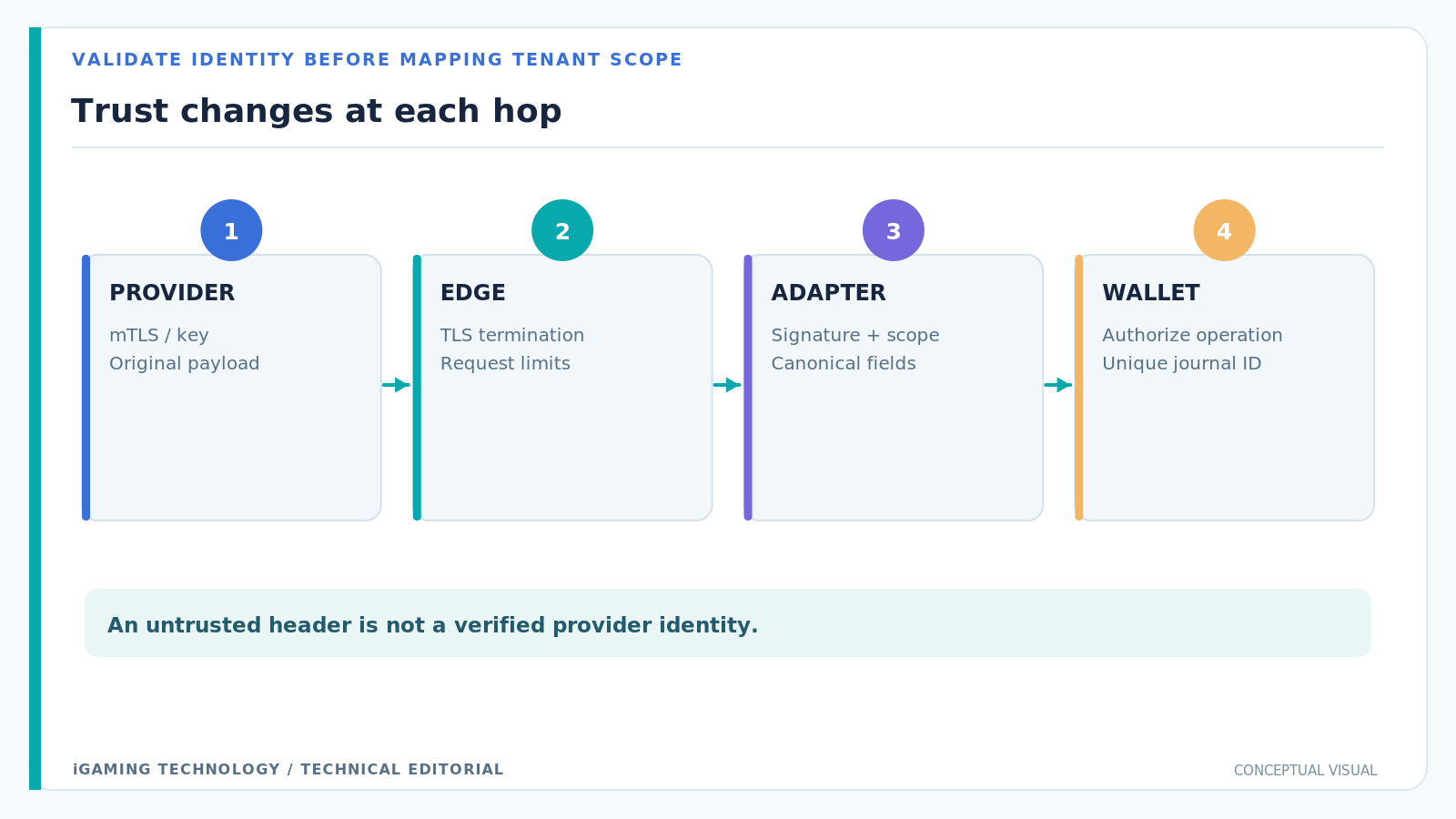
Figure 2. The authenticated partner identity must become an explicitly authorized internal principal before wallet mutation.
A security review should inventory all entry points: synchronous bet/win callbacks, refund or rollback paths, session launch, catalog APIs, webhook delivery, file exchange, administrative endpoints, and provider support tools. Do not apply exactly the same sensitivity to every endpoint. A public game thumbnail endpoint may tolerate cached read-only data; a callback that can create a player credit requires stricter identity, authorization, and replay controls.
Record what each layer proves. An IP allowlist can reduce exposure but does not authenticate a payload. TLS protects the connection in transit but typically ends at a proxy. mTLS adds client-certificate-based identity at that connection boundary. HMAC verifies signed application material under a shared secret. An idempotency key identifies the logical financial operation after successful authentication and request validation. Treat these as composable rather than interchangeable controls.
mTLS, API credentials and authentication layers
Mutual TLS (mTLS) requires both sides of a TLS connection to present and validate certificates. It can provide strong machine-to-machine identity when the network path and certificate issuance are controlled. The gateway must validate the client certificate chain, hostname or partner identity according to its policy, validity period, and revocation posture. Behind the gateway, propagate authenticated identity through a trusted mechanism: an unsigned user-supplied header such as X-Provider-ID is not evidence of identity.
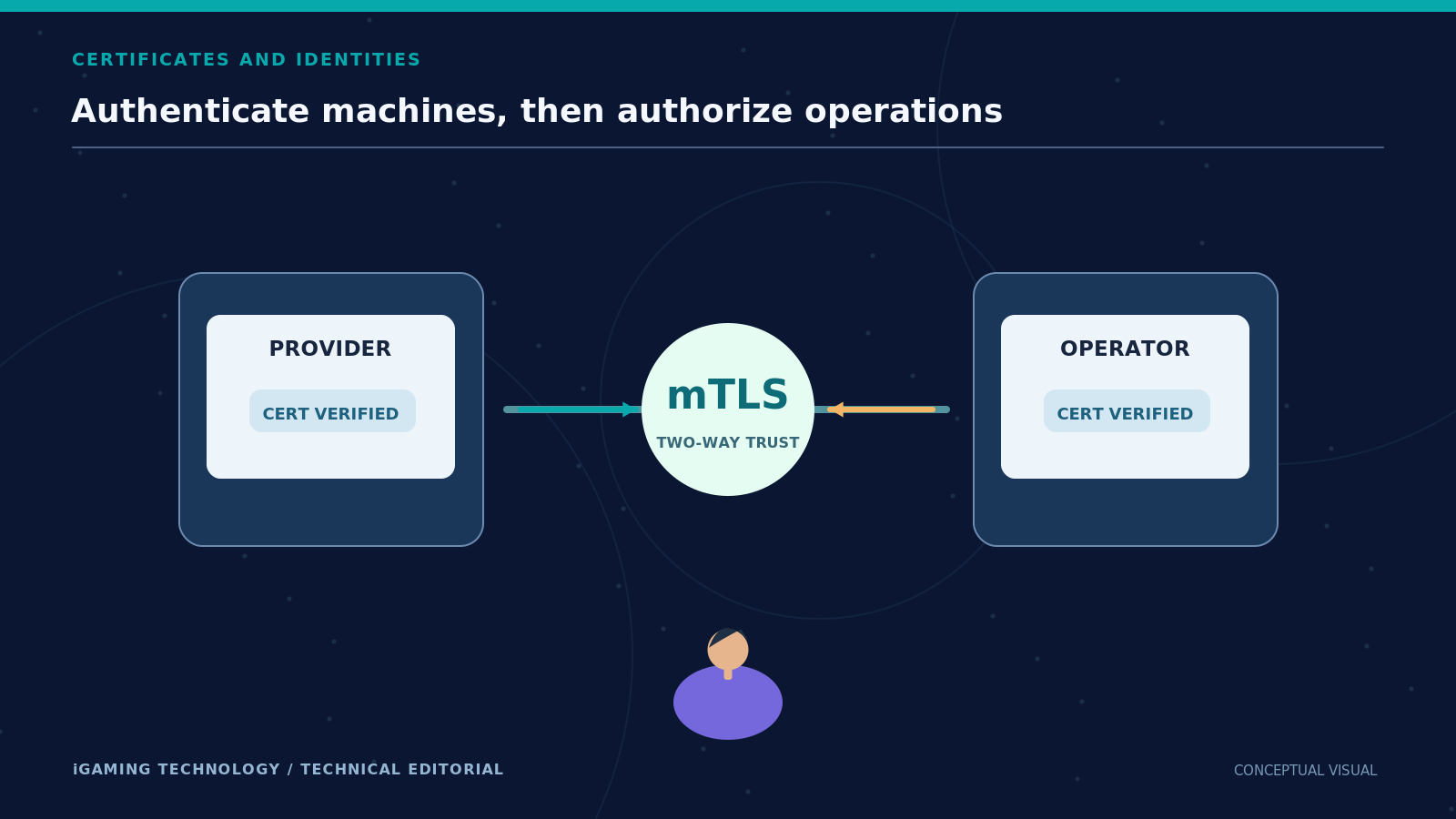
Figure 3. Certificate authentication protects the connection boundary; it needs inventory, renewal and trusted identity propagation.
Static API keys or bearer tokens can be operationally simple but are powerful secrets. Store them in a managed secret system, protect them in transit, minimize scope, and rotate them. Ensure tokens are never written into URL query strings, diagnostics screenshots, or verbose reverse-proxy access logs. Short-lived credentials reduce exposure windows when supported. Use distinct credentials for sandbox and production and separate providers and tenants to contain compromise.
A strong design may use mTLS for partner identity, request signing for end-to-end body integrity, and service authorization for permission checking. This is not necessarily required for every integration; complexity must be justified by threat model, provider capability, and operational constraints. In all designs, authenticated identity must be established before choosing a financial transaction’s deduplication namespace. Otherwise an attacker could forge the logical scope and collide with or bypass legitimate operations.
Do not mistake TLS success for authorization success. The same certified provider connection might carry requests for several operator contracts. The adapter must verify the mapped operator, game, player mapping, region, and enabled operations against server-side configuration. Deny ambiguous or stale mappings; log a safe correlation reference and a reason category without echoing raw credentials.
HMAC signing and canonical request data
An HMAC-based scheme uses a secret known to the signer and verifier to compute a message authentication code over an agreed byte sequence. A modern construction commonly uses HMAC-SHA256, but the precise algorithm, signed components, encoding and header format are contract-dependent. Never assume that two providers mean the same thing by signature: one may sign raw body bytes, another may sign method, path, timestamp and digest, and a third may use a standardized HTTP Message Signatures profile.
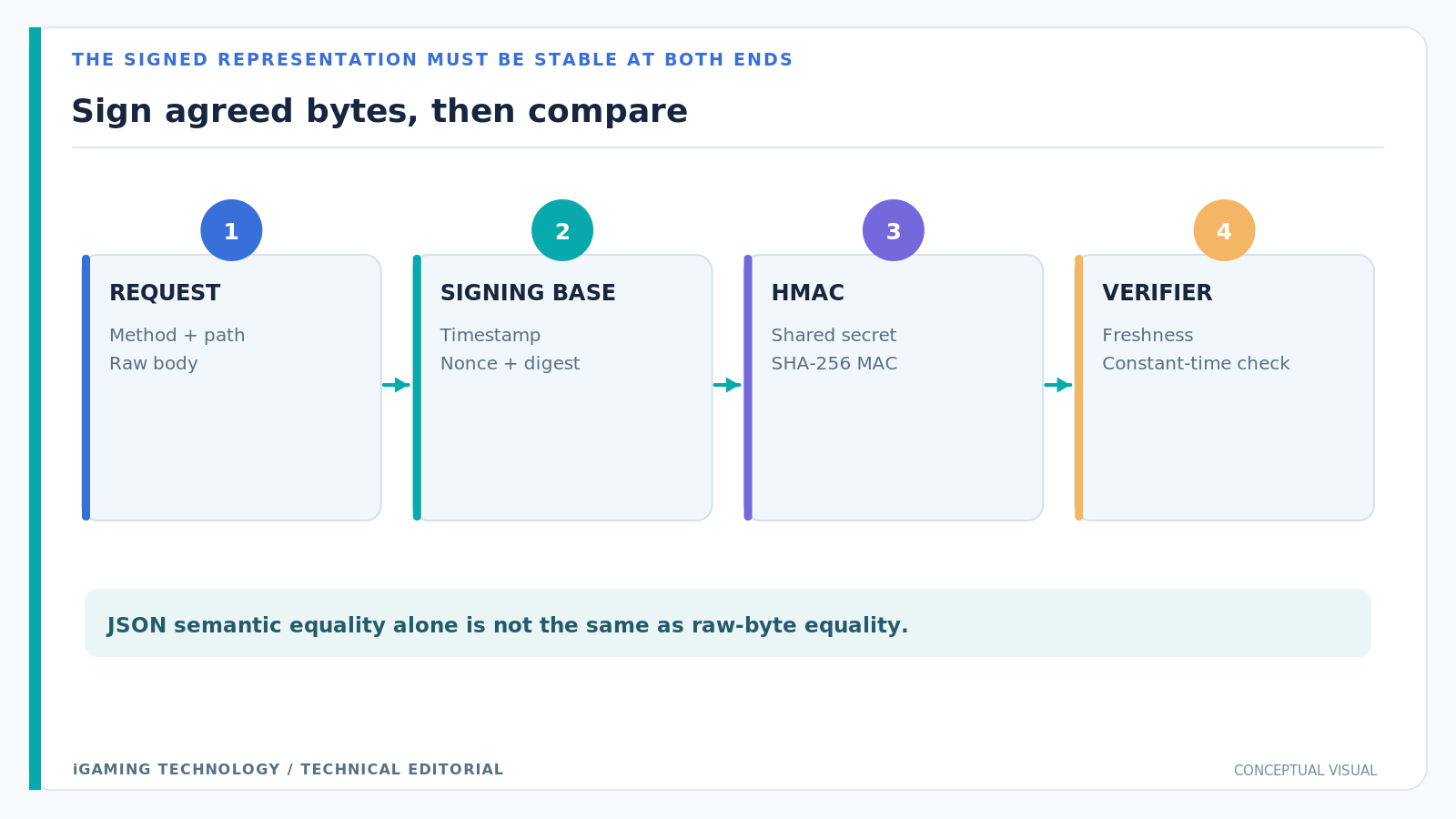
Figure 4. Both parties must calculate the same canonical bytes. JSON-equivalent payloads are not necessarily byte-identical.
The hard part is often canonicalization, not the cryptographic primitive. If the signer hashes the UTF-8 body bytes exactly as sent, the verifier should use the raw byte stream captured before JSON parsing or reserialization. If the scheme canonicalizes a structured request, document field ordering, whitespace, path encoding, query parameter order, header names, repeated headers, delimiters, and content encoding. An innocent proxy changing path normalization or a library changing JSON whitespace can break otherwise correct signatures.
A conceptual signing base might cover HTTP method, normalized path and query, creation timestamp, unique nonce, and SHA-256 digest of raw body. The actual construction must be unambiguous and be specified by the contract; concatenating variable-length fields without length prefixes or delimiters can create ambiguities. Standardized schemes such as RFC 9421 HTTP Message Signatures provide a framework for signed HTTP components but still require a mutually agreed profile and key-management policy.
Verification should reject missing mandatory components, unknown key IDs, unsupported algorithms, signatures of the wrong length, and invalid encodings before handing the instruction to business code. Compare fixed-length MACs with a constant-time comparison function offered by the cryptographic library. Avoid custom cryptographic implementations and log only verification outcome, identity scope, and safe correlation information—never the HMAC secret itself.
Replay prevention with timestamps and nonces
A valid signature proves the holder of a signing key authenticated the signed message material; without freshness controls, an attacker who captures an old valid request may replay it. Including a signed timestamp and a narrow acceptance window reduces the value of stale captured messages. Including a unique nonce and checking it against a durable store can prevent duplicate acceptance of the same signed delivery within the configured scope and window.
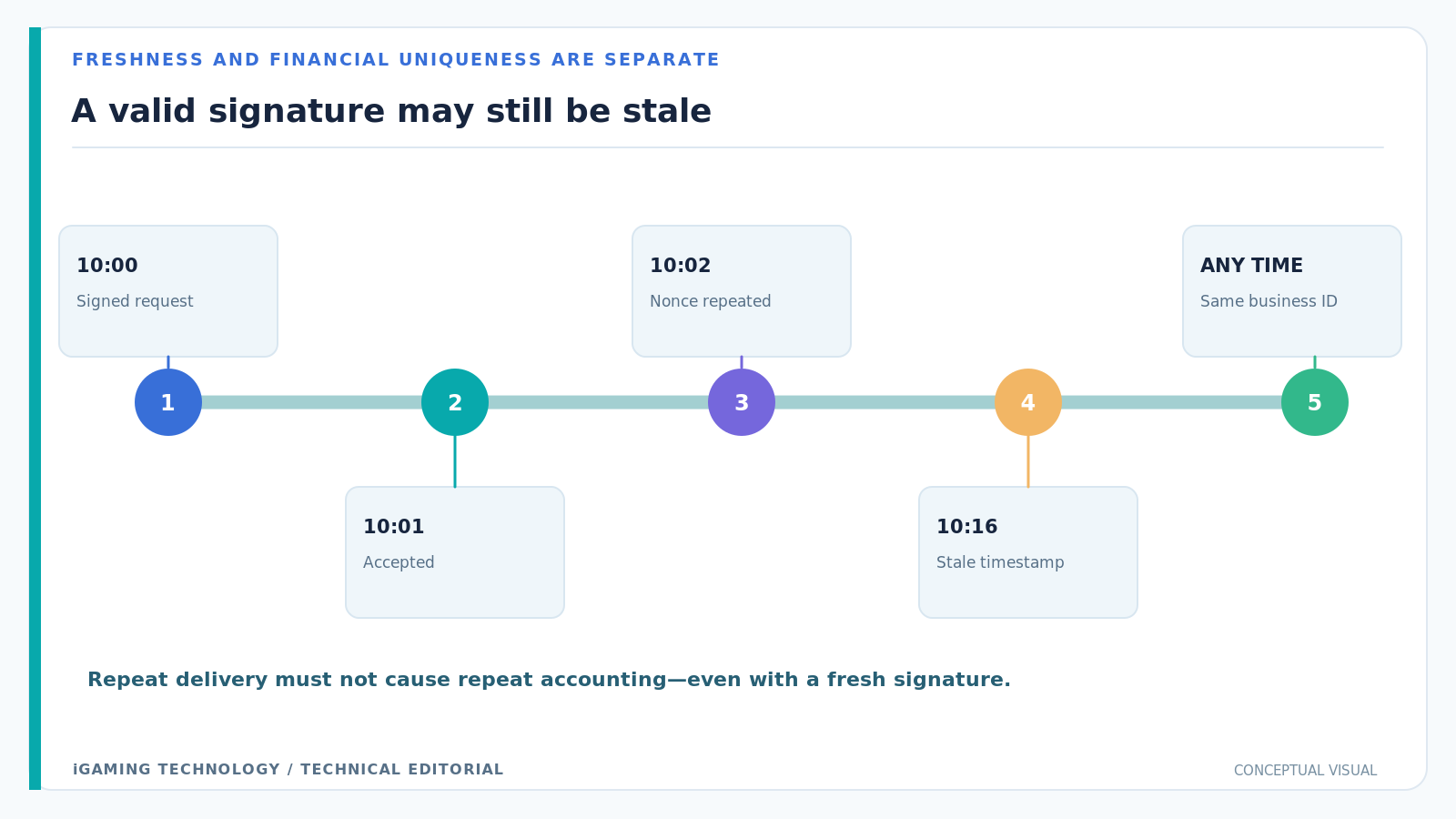
Figure 5. Signatures protect authenticity; timestamp and nonce rules add freshness. Both must be checked at the trusted boundary.
Choose the acceptance window based on clock synchronization, network conditions, and provider retry policy. A window that is too tight rejects legitimate traffic during clock drift; a window that is too generous extends replay opportunity. Synchronize clocks, monitor skew, and provide a documented retry behavior. When a provider retries a legitimate business operation, it may generate a fresh signed timestamp and nonce while retaining the original financial transaction ID. This distinction matters: transport freshness and business idempotency use different identifiers and different retention requirements.
A nonce cache needs a namespace bound to authenticated signer/key identity and an atomic insert-if-absent. If an attacker can choose an untrusted namespace, replay protection can be bypassed or used to poison another tenant’s cache. Consider where multiple gateway replicas store nonces and how they handle clock skew, failover, and eviction. A merely local in-memory cache on each pod allows the same signed request to reach another pod as if new.
Do not let nonce-based rejection accidentally cause financial uncertainty. If the first delivery was signed and accepted but its response was lost, a literal repeated delivery might fail the replay layer. The provider still needs a supported way to ask about the original operation or re-sign a repeat-safe request. The wallet should have durable business-level deduplication independent of nonce storage. The Idempotency Guide explains that final layer.
Key rotation and secret management at integration boundaries
Rotation is a protocol feature, not just an administrative checklist. Each request can carry a key identifier, allowing the verifier to choose among an active signing key and a narrowly controlled overlap of retiring keys. Ensure a staged cutover can tolerate in-flight requests and retries without accepting retired secrets forever. Record the activation time and authorized provider/tenant scope of each key, and test rollback of a mistaken deployment.
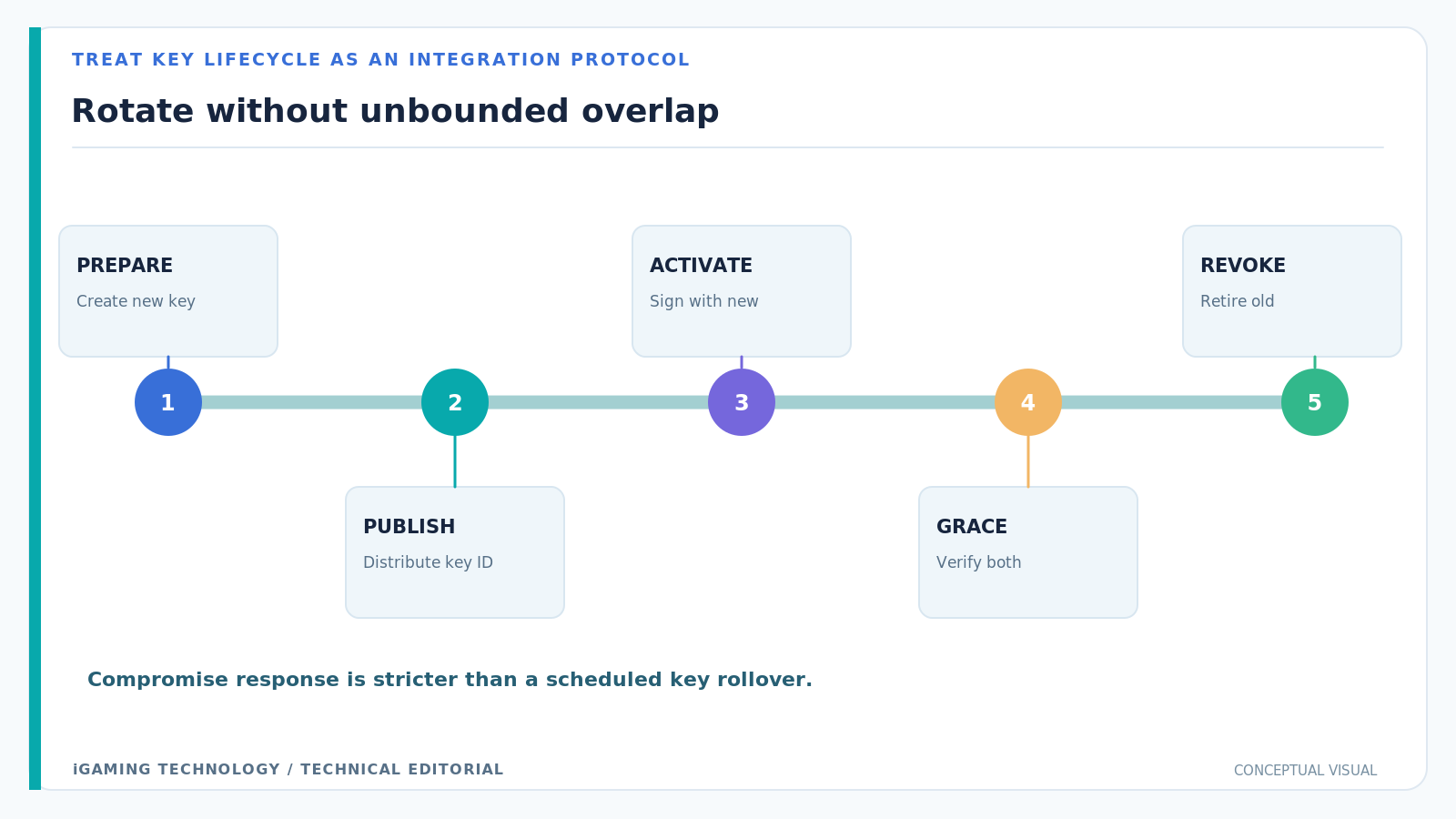
Figure 6. Rotation needs staged deployment and a defined overlap; silent indefinite acceptance of old keys expands exposure.
Use a secret manager or equivalent controlled store rather than environment dumps, code repositories, test fixtures, or support tickets. Restrict who can read and rotate each secret. Track certificate and key expiry ahead of time, especially in integrations that operate unattended during weekends and overnight settlement. Separate credential compromise response from scheduled rotation: on suspected theft, revoke or disable according to the incident plan, assess what signed requests may have been accepted, and reconcile financial activity.
Maintain separate production and sandbox roots of trust. A sandbox signing secret should never authenticate production wallet mutations. Production break-glass procedures should be limited and audited. If a provider shares one credential across multiple operator accounts, document the resulting blast radius and push for least-privilege segmentation where possible.
Reference verification flow and test cases
The verification flow below is conceptual: accept the connection only under the configured transport policy; resolve the trusted partner principal; capture raw request bytes within body-size limits; validate required signature fields and key ID; validate signed canonical components; compare MAC; check timestamp and nonce; authorize the provider/tenant/operation mapping; validate schema and monetary fields; then consult durable business idempotency before any wallet posting. The order can vary by transport, but no unauthenticated request should reach financial mutation.
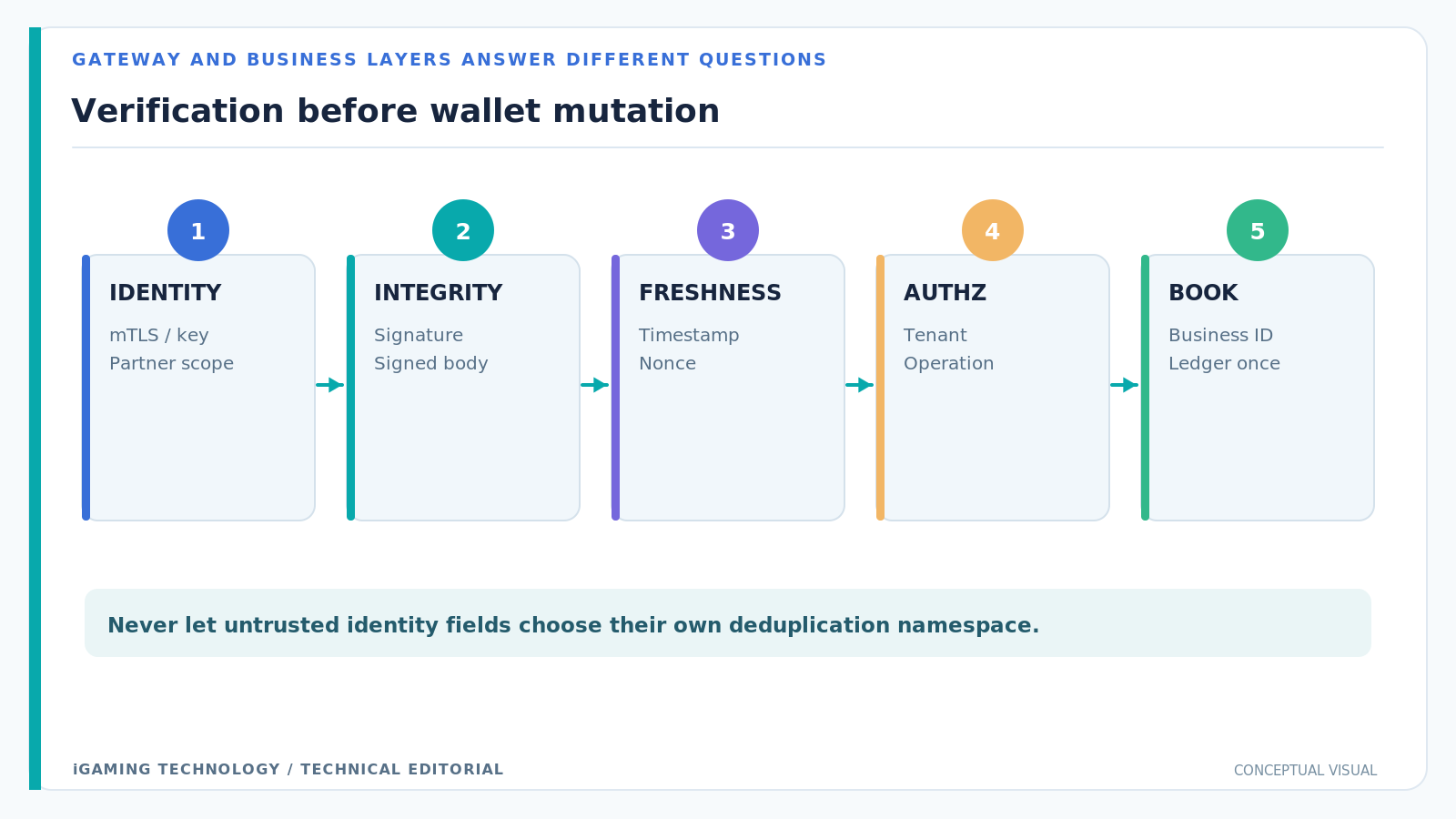
Figure 7. Cryptographic verification and business-level authorization precede the unique financial journal operation.
| Test case | Expected result | Control being tested |
|---|---|---|
| Correct mTLS identity but wrong operator ID | Reject | Authorization, not only authentication |
| Change one signed amount byte | Reject | Message integrity |
| Equivalent JSON with different formatting | Contract-defined result | Raw-body vs canonical scheme |
| Old timestamp with valid MAC | Reject | Freshness policy |
| Reused nonce within acceptance scope | Reject or documented replay response | Replay protection |
| New timestamp and nonce, same business transaction | No additional ledger effect | Financial idempotency |
| Unknown or revoked key ID | Reject | Key lifecycle |
| Concurrent requests with same financial reference | One committed effect | Database uniqueness/atomicity |
| Forwarded user-controlled identity header | Ignore or reject | Trusted identity propagation |
| Oversized body or unsupported content encoding | Reject early | Resource protection |
Add negative-path fuzz tests for UTF-8 normalization, duplicate query keys, encoded slashes, duplicate headers, CRLF variations, changed content encoding, and reverse-proxy path rewrites. Ensure your gateway and application sign or verify the same effective request representation. Test certificate renewal, expiration and revocation using a staging environment configured as close to production as feasible. Track rejected signatures by partner and error type, but avoid publishing a verbose external error that tells an attacker which signature component nearly matched.
Operational ownership is part of verification correctness. Keep a versioned register of each integration’s expected signature profile, canonicalization rules, key IDs, authorized operator scope, and test vectors. The same signed request should yield the same validation result in local tests, staging, and production; changes in proxy configuration should trigger regression tests. During incidents, responders need to distinguish invalid signature, unknown principal, stale timestamp, reused nonce, unauthorized tenant, and valid duplicate business instruction. If monitoring collapses these into “authentication failed,” teams may rotate keys unnecessarily while a clock-skew issue continues. For any suspected secret compromise, preserve security evidence and review affected wallet entries through a separate, authorized financial reconciliation process.
Key takeaway: Authenticate the caller, verify the integrity of agreed bytes, enforce freshness, authorize the mapped operator and operation, and protect the wallet with durable idempotency. No one layer should be expected to compensate for missing guarantees in another.
Technical references
- OWASP Webhook Security Cheat Sheet — signing, replay controls, TLS and subscriber endpoint security.
- RFC 9421: HTTP Message Signatures — structured signing, covered components, key references, nonces and signature lifetime.
- OpenTelemetry HTTP Semantics — safe observation of request attempts and transport errors.
Editorial note: The signing base and verification flow are illustrative. Implement the specific provider’s signed-component profile and obtain a qualified security review before handling production financial instructions.