A game provider calls a wallet and waits. The socket closes after its configured timeout. Was the bet rejected, never received, or committed with its acknowledgment lost? In a distributed gaming platform, a network failure is an observation about communication—not conclusive evidence about the business effect. This distinction determines whether a retry helps recovery or creates duplicate financial activity.
Retries, timeouts, and circuit breakers operate at different layers. A timeout limits how long one attempt can occupy resources; a retry makes a new attempt when repeating is eligible; a circuit breaker temporarily stops sending traffic to a dependency whose failure pattern suggests it cannot currently serve requests. Used together without coordination, they can amplify a provider outage. Used with clear deadlines and idempotency, they can convert transient transport trouble into recoverable work.
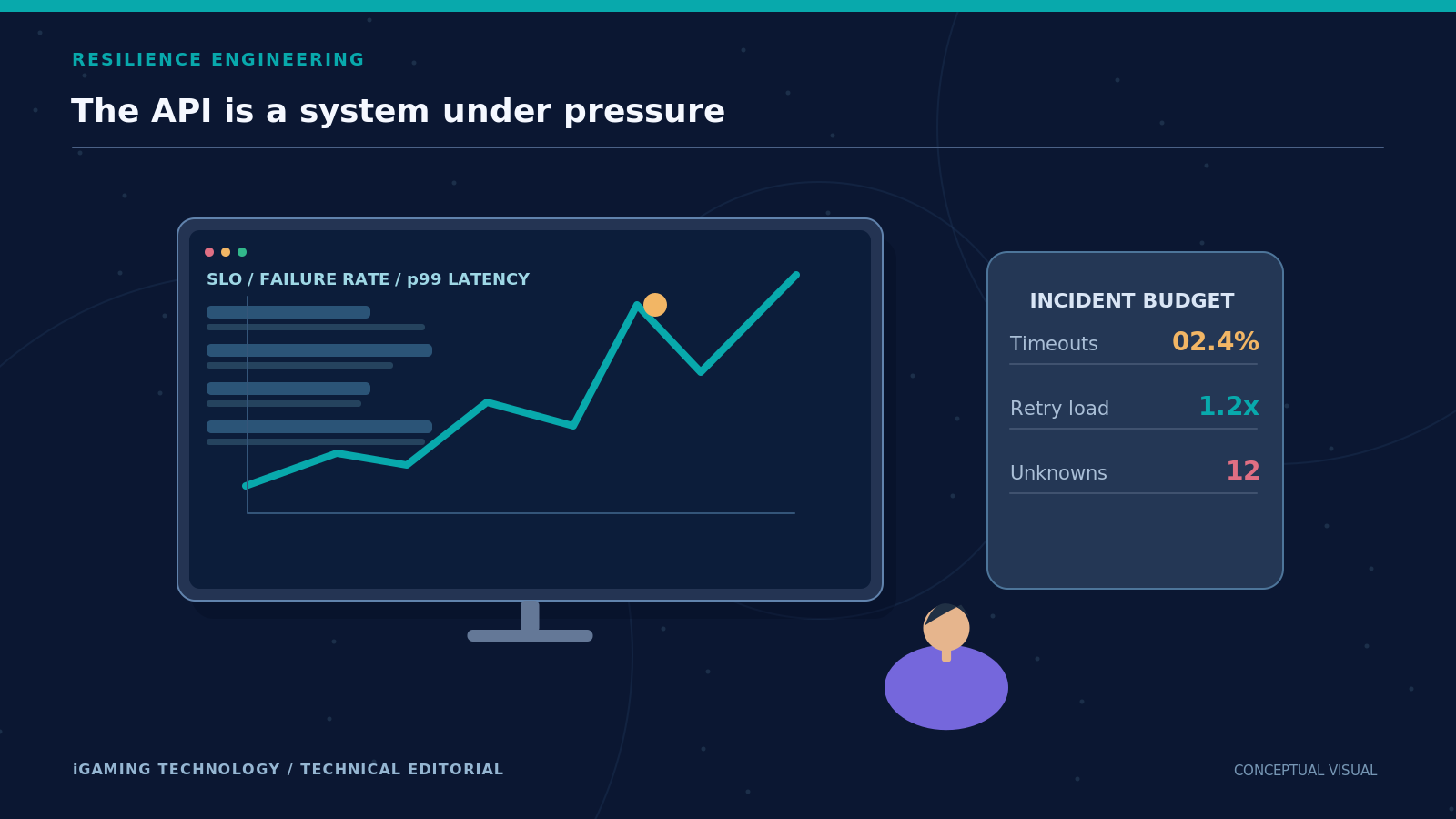
Figure 1. Resilience policies are operational controls: engineers need to see latency, load and unknown transaction outcomes simultaneously.
Failure classes and retry eligibility
Start by classifying outcomes. A connection failure before a request is sent may be safe to retry at the transport layer. A 429 or documented temporary 503 may be eligible after backoff. A validation failure such as invalid game currency or missing authorization is usually not transient; retrying the same invalid payload wastes capacity. A read timeout after the receiving service may have committed an instruction is ambiguous and needs idempotency or status lookup. Error codes are a useful signal but not a substitute for understanding where commitment happens.
For a read-only catalog lookup, a failed request can usually be retried if there is time left and the provider allows it. For a bet, win, refund, withdrawal, or transfer, repeating without a stable logical transaction identifier can produce an additional money movement. If the remote endpoint cannot guarantee idempotent replay, use a contract-supported status inquiry, ledger reconciliation, or manual exception workflow rather than inventing a new operation ID. The wallet itself must defend its accounting boundary; see Idempotency in Bet and Win APIs.
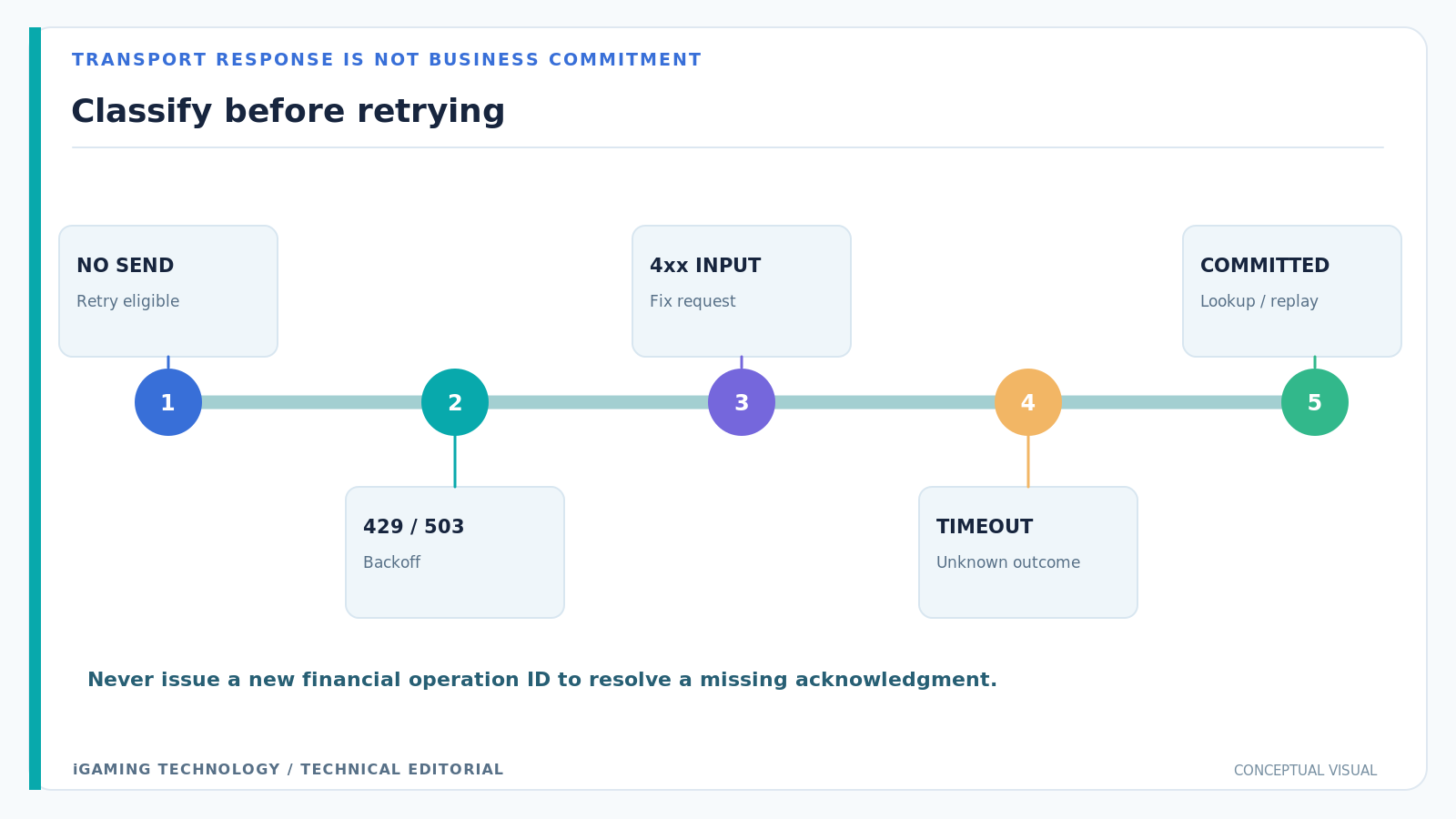
Figure 2. Unknown result is not synonymous with safe retry. It is a distinct state requiring evidence.
Define eligibility in a policy table per endpoint. For instance: GET /games is read-only and may tolerate bounded retries; POST /session/launch might be repeat-safe only with a stable launch key; POST /wallet/bet can be retried only with contract-backed idempotency; POST /wallet/refund requires its own immutable reversal ID. Apply these rules at the business operation level. A generic HTTP client configured to retry all POSTs can defeat carefully designed wallet logic.
Failures also include corrupted payloads, upstream schema changes, rate-limit responses, TLS negotiation failures, exhausted connection pools, and local process overload. Retrying a TLS certificate mismatch is not a recovery strategy. When a dependency returns a client error, inspect its documented classification rather than adding every non-200 to the retry set. A non-200 can even represent a durably rejected bet; repeating it under a new transaction ID would be a protocol violation.
Timeouts, deadlines and latency budgets
A timeout is a local timer for one operation, while a deadline is the latest time the overall user or provider request can remain useful. If a game round callback must finish within an agreed external response budget, its gateway, authorization, wallet database, and response serialization all draw from the same total. Giving every component a fresh full timeout creates a request that can exceed the original budget by multiples.
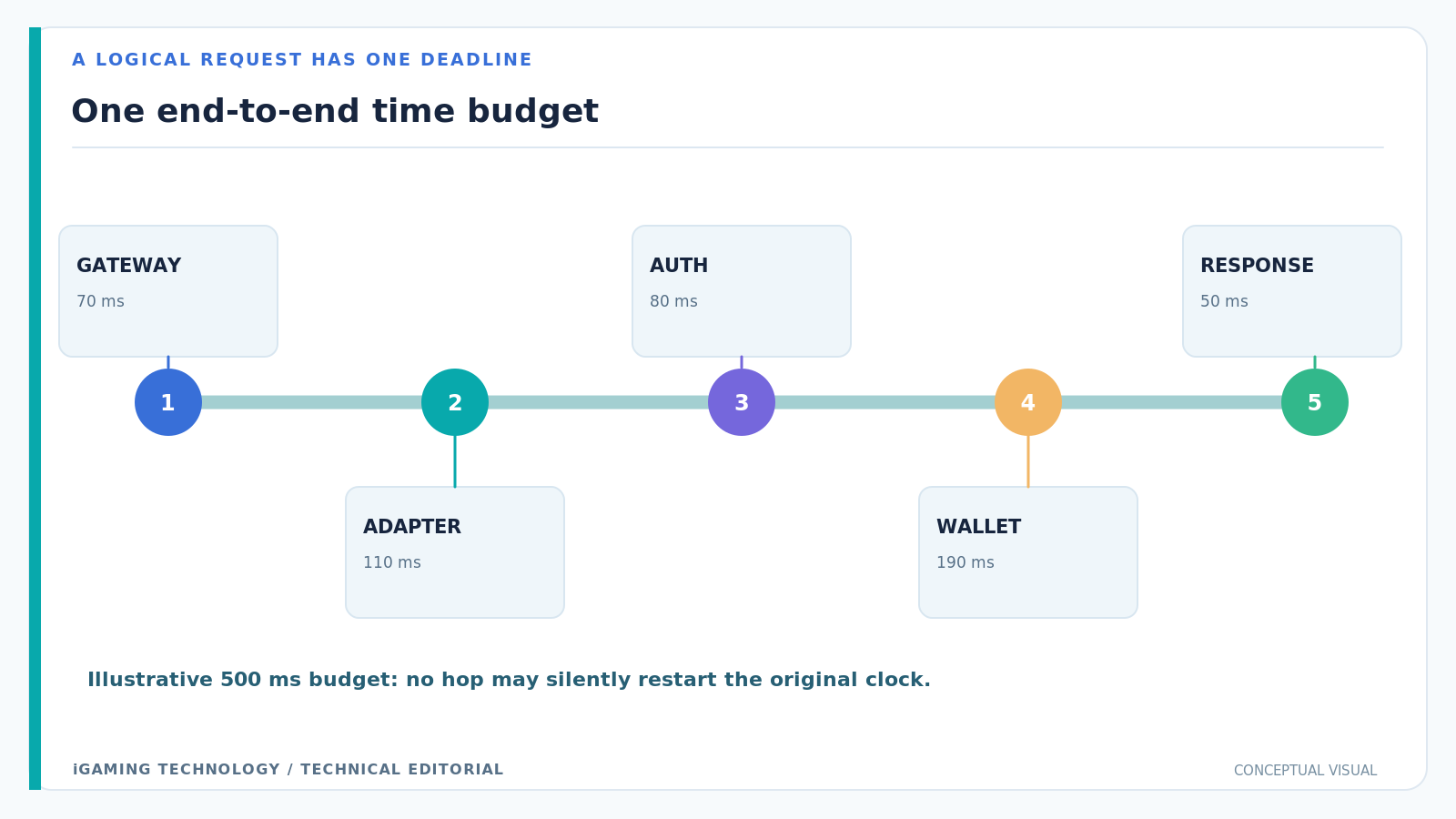
Figure 3. A request carries one deadline through its hops. Retries must consume the remaining budget rather than reset it.
Let D be the inbound deadline, now the current monotonic time, and reserve the margin needed to return a response. A downstream call budget is no greater than D - now - reserve. If the remainder is zero, fail fast with a well-defined status instead of starting another remote attempt that cannot finish usefully. Deadline propagation is especially important when a gateway, an integration adapter, and a wallet client each have built-in retries.
Set connect, TLS handshake, queue-wait, request write, first-byte, and total-operation timeout policies deliberately. Some libraries count only socket read time and exclude DNS or connection acquisition; others use one wall-clock budget. Inspect the actual client behavior under a blackholed connection, a slow handshake, and a stalled body. Monitor the p95, p99, and p99.9 of successful and failed calls separately. A timeout tuned to average latency can create false positives during legitimate load spikes.
Choosing a longer timeout does not remove uncertainty: it just delays the time you observe it. The provider can commit a debit at millisecond 450 and lose the response at millisecond 470, while the caller times out at millisecond 500. The downstream’s business journal and the caller’s view disagree until a repeat-safe lookup or reconciliation closes the gap. Document what timeout means for each endpoint and whether the provider returns a transaction status after commit.
Backoff, jitter and request amplification
Immediate retries can increase load precisely when a dependency is least able to respond. Exponential backoff spaces attempts: a conceptual sequence might grow from a small base delay to a capped maximum. Jitter varies delays so thousands of clients do not retry at the same moment. A retry budget limits the number of additional attempts relative to real incoming traffic, preventing internal recovery traffic from overwhelming the primary path.
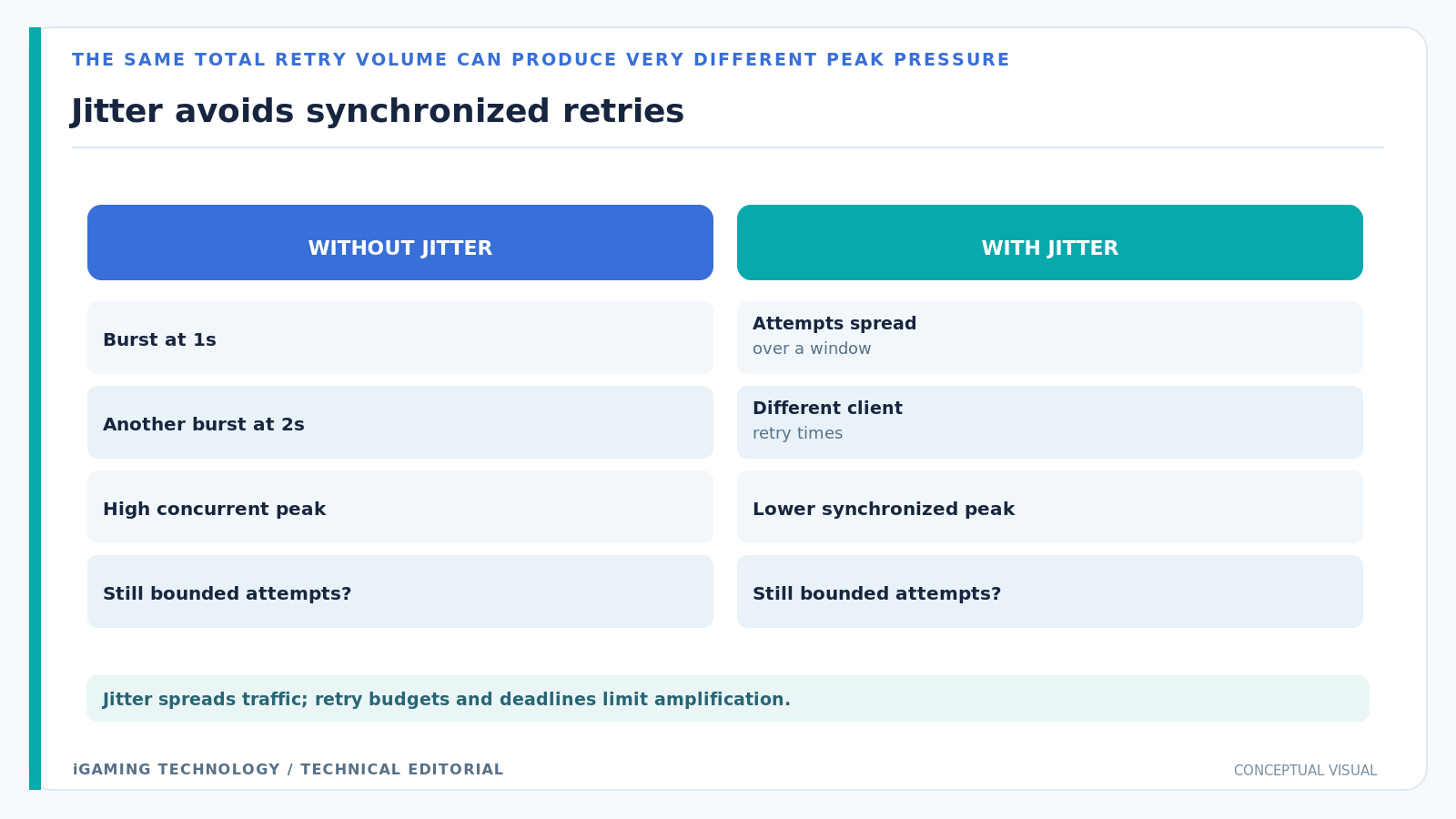
Figure 4. Spreading attempts reduces synchronized pressure; the total number of attempts must still be bounded.
Consider three successive layers—gateway, provider adapter, and wallet client. If each retries twice after the original call, a single user instruction can cause up to 27 downstream attempts (3 × 3 × 3) in the worst case, even before any broker redelivery. That multiplication can become a self-inflicted denial of service. Prefer one documented retry owner for each operation path; downstream libraries should expose timeouts and error classification instead of independently retrying all transport exceptions.
An illustrative non-financial policy may be: at most two extra attempts for an idempotent read, capped exponential delays with full jitter, an absolute end-to-end deadline, and an automatic stop on permanent errors or 429 until the contract’s allowed retry time. The exact milliseconds must be measured against real SLOs and vendor limits; copying a universal number is poor engineering. For wallet mutations, the first requirement is stable transaction identity and an authoritative outcome query, not an aggressive retry count.
Record attempt count separately from logical operation count. If ten attempts represent one bet, a dashboard labeling all ten as “transactions” exaggerates activity and hides root cause. Include retry reason, downstream route, budget exhausted, time before deadline, and idempotency replay result as structured telemetry. Distinguish the symptom “attempts increased” from the impact “ledger outcomes unresolved.”
An important review question is who is allowed to retry after the caller has given up. A background job may continue an already accepted workflow even after the original HTTP deadline expires, but it must not silently use a new financial identity or claim a synchronous success that never occurred. If the protocol is asynchronous, document the transition from ACCEPTED to COMMITTED or REJECTED and expose an authoritative status read. If the protocol is synchronous, the adapter should not detach work and lose its ability to explain the outcome. Include a queue-age limit and an escalation path for operations that remain unresolved when the provider’s replay window ends. These details decide whether a timeout policy is operationally recoverable.
Circuit breakers, bulkheads and fallback
A circuit breaker tracks recent failure conditions and can change from closed (requests normally pass) to open (fail fast) and then half-open (allow controlled probes). It can protect callers from a known-bad downstream and conserve threads and connection pools. It cannot tell whether a timed-out financial operation committed. It also cannot replace queue capacity management, idempotency, or a coherent provider outage playbook.
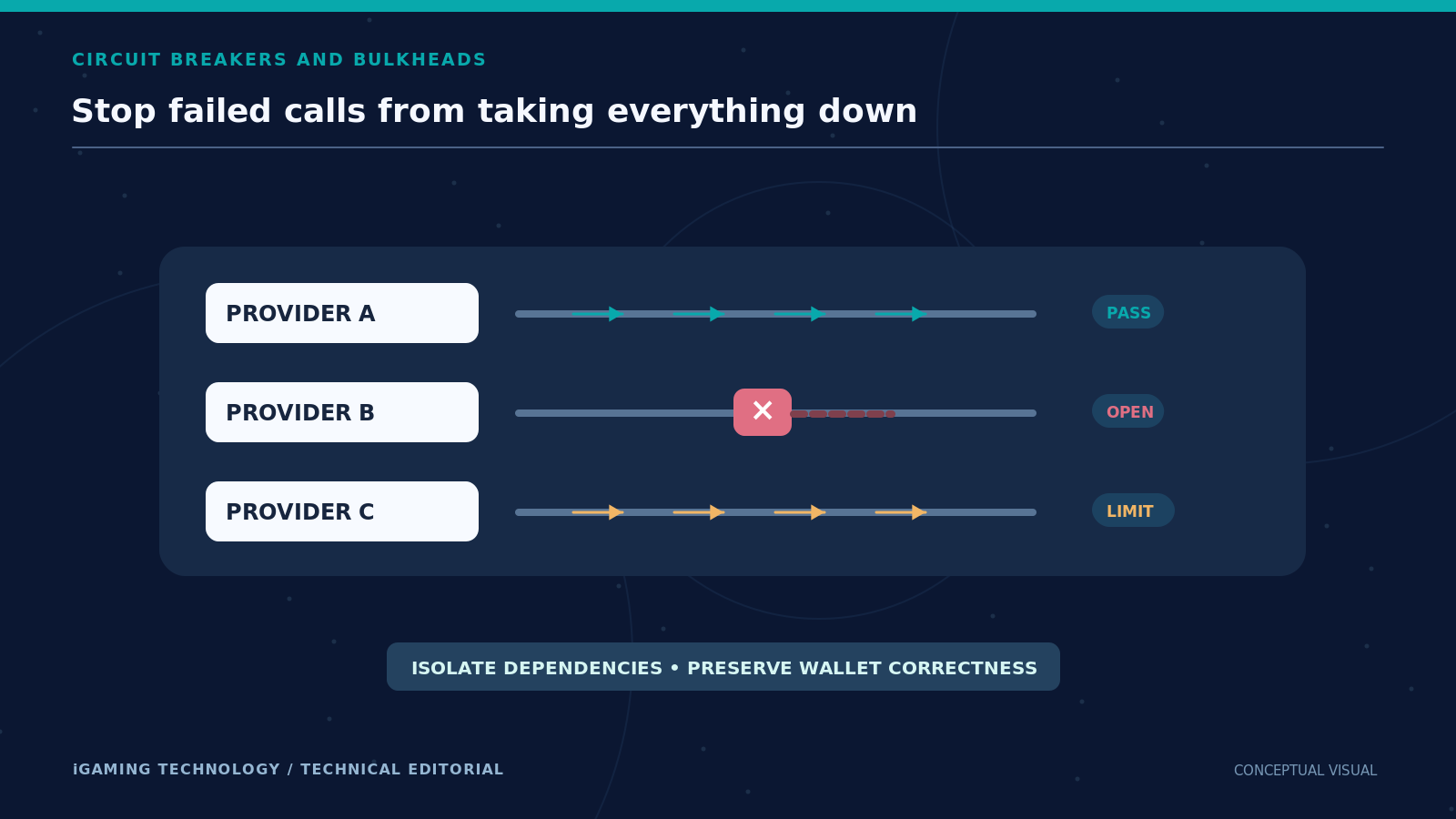
Figure 5. A breaker blocks new pressure on a failing dependency, while bulkheads stop that failure from consuming unrelated capacity.
Bulkheads partition capacity—by provider, tenant, operation class, or connection pool—so a struggling game provider does not starve wallet balance queries for every other provider. They work with bounded queues and load shedding. A breaker should be keyed at a useful scope: one failing provider endpoint should not necessarily stop the entire wallet service, but hundreds of per-user breakers may be too fragmented to provide meaningful signals. Consider different thresholds for read-heavy catalog APIs and latency-sensitive money operations.
Fallback is appropriate only when its business meaning is safe. A stale cached catalog description might be acceptable for display, clearly marked as cached. A fabricated successful bet response is not. An unavailable wallet cannot be replaced with an approximate balance from analytics or an eventually consistent read model for financial booking. If a game must be disabled until authoritative booking recovers, that is an availability sacrifice to preserve correctness.
Beware breaker feedback loops. If a breaker counts all operator validation failures as dependency failure, a burst of bad requests can open the circuit for healthy users. If half-open probes are large financial mutations, the experiment itself creates risk. Use low-risk probes when supported, classify errors carefully, and keep transition logs. The correct thresholds depend on traffic volume and the cost of a false open versus persistent overload.
Coordination with idempotent operations
Resilience should be organized around a logical operation identifier retained through every attempt. The same ID must survive client timeout, queue redelivery, gateway restart, and provider routing failover. Changing it at each attempt converts one intent into multiple apparent transactions. For mutating APIs, the target must return a repeatable committed or rejected result when the same authenticated business key and economic payload recur.
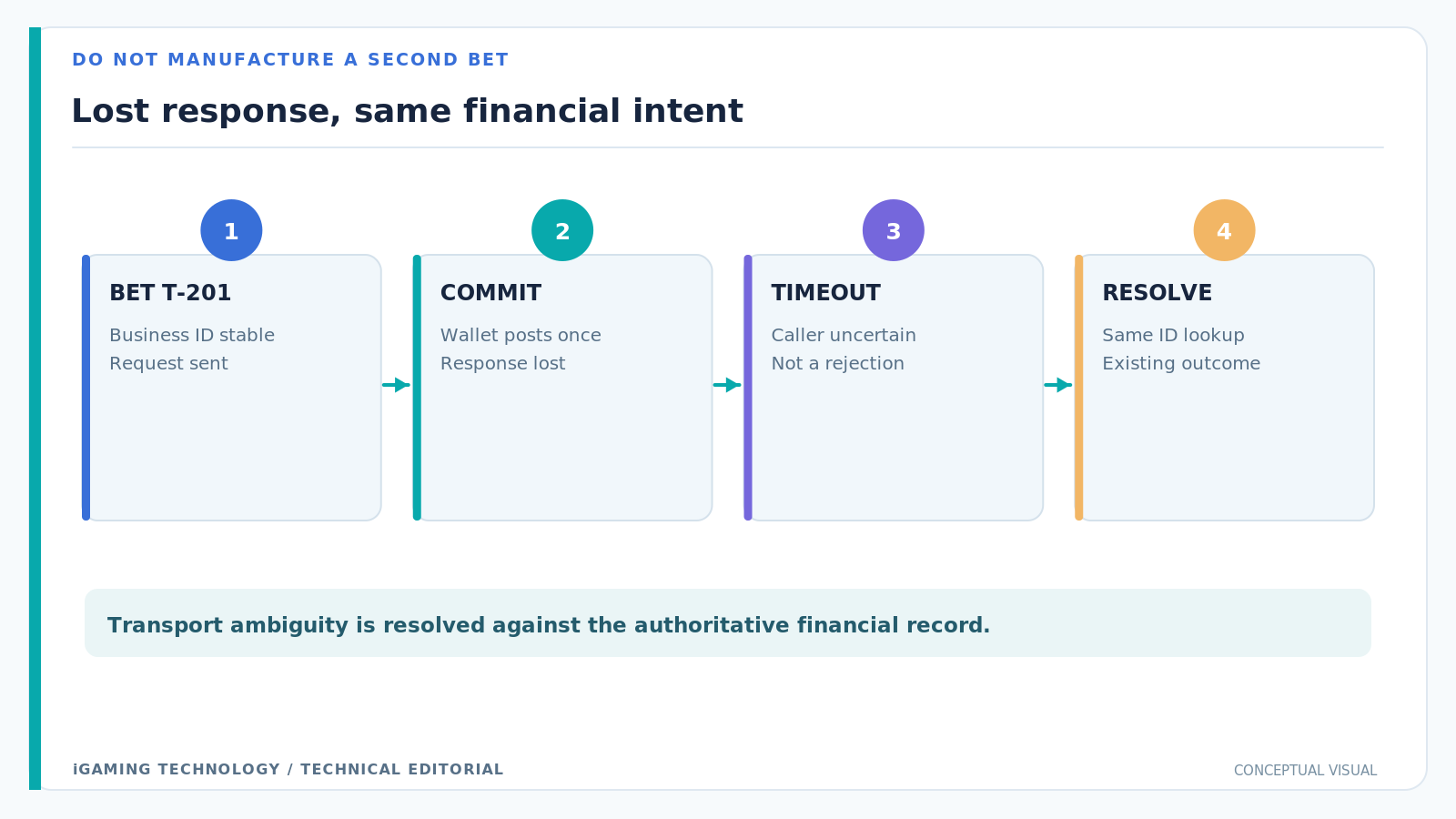
Figure 6. A lost acknowledgment creates an unknown caller state, not a reason to post another financial instruction.
A recommended response model distinguishes COMMITTED, REJECTED, IN_PROGRESS, UNKNOWN, and CONFLICT where the provider contract permits. IN_PROGRESS should have a bounded status-query path. UNKNOWN should trigger investigation or reconciliation rather than unbounded retry. CONFLICT means the same logical key arrived with different business fields. Never normalize all five to the same generic “temporary error.” An adapter should preserve the distinction even when the provider’s HTTP statuses are sparse.
A retry can be financially safe yet operationally harmful. For example, 200 duplicate deliveries of the same committed bet might not duplicate ledger postings, but can still cause CPU load, lock contention, log volume, and alert noise. Throttle at the provider boundary and return cached outcomes where permitted. Separate security replay detection from idempotent business replay: a valid re-signed repeat can be a legitimate retry even though a verbatim signed payload captured by an attacker should be rejected outside its freshness window.
Policy examples, metrics and fault tests
Use a policy worksheet with endpoint, owner, operation identity, eligible failures, max attempts, deadline, backoff/jitter, breaker scope, fallback meaning, status-lookup path, and escalation owner. The same provider may have very different policies for session launch and settlement export. Include a note explaining exactly who owns the authoritative state when clients see an unknown result.
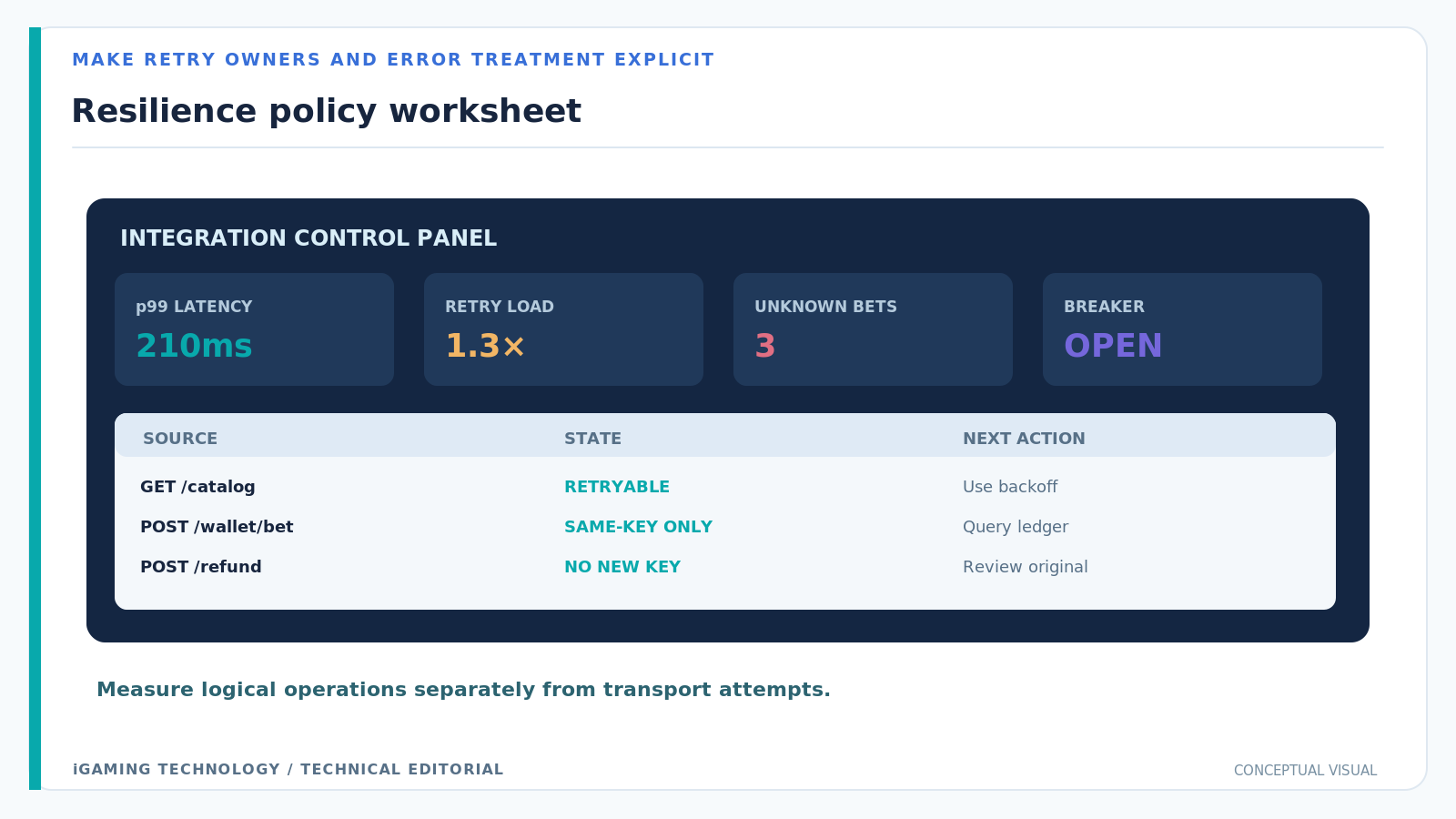
Figure 7. A per-operation policy keeps transport defaults from silently becoming financial behavior.
| Fault injection | Expected policy | Check beyond HTTP status |
|---|---|---|
| Drop response after ledger commit | Same-key replay or authoritative lookup | One journal group; one logical operation |
| Simulate 429 rate limit | Bounded delay obeying documented limit | No coordinated retry storm |
| Stalled DNS or TLS handshake | Overall deadline eventually fires | No leaked worker or connection |
| Make one provider slow | Provider-scoped breaker / bulkhead | Unrelated providers remain healthy |
| Return permanent validation error | Fail without retry | Correct rejection recorded once |
| Open breaker during pending mutation | Unknowns resolved on recovery | No invented success or additional debit |
| Restart gateway midway through attempts | Carry stable operation ID | Duplicate attempts do not duplicate effects |
Measure customer-visible success rate, p95/p99 response time, provider-specific timeout rate, retries per logical operation, retry budget burn, open-breaker time, queue age, and unresolved financial outcomes. Alerting on a breaker being open can be useful, but the high-severity condition is often an unresolved business state or correctness incident. Keep fault-test evidence in the release checklist, not just a design diagram.
Key takeaway: Resilience is not “retry more.” It is classifying failure correctly, ending work on time, protecting dependent services from overload, and using stable business identities so retries never alter the intended financial meaning.
Technical references
- AWS Builders’ Library: Timeouts, Retries, and Backoff with Jitter — timing, retry multiplication, uncertainty and jitter.
- AWS Well-Architected: Control and Limit Retry Calls — bounded retries and idempotency.
- AWS Prescriptive Guidance: Circuit Breaker Pattern — breaker goals and trade-offs.
Editorial note: All policies and identifiers are illustrative, not settings guaranteed by any casino provider. Tune against contractual deadlines and tested downstream behavior.