Direct casino game provider integration connects an operator’s player-facing platform and financial system to a game provider’s launch, session, and round protocols. What appears to the player as one action—opening a slot or table game—may involve catalog configuration, eligibility checks, a short-lived launch token, provider-hosted gameplay, and a stream of financially significant callbacks. The integration succeeds only when every boundary agrees on identities, ownership, and the meaning of a retry.
This guide follows a generic direct-provider contract. It is not a substitute for a provider’s actual API specification: providers differ on whether the wallet is operator-hosted, how rounds are identified, whether wins are separate from bets, and how cancellations work. The examples use fictional fields to illustrate design and testing decisions. Before implementation, convert every assumption into a signed-off mapping to the provider’s specification and test environment.
Integration actors, endpoints and environments
The relevant actors are the player client, operator application, identity and eligibility components, operator wallet, provider’s remote game server (RGS), and operational systems for reconciliation and monitoring. An operator typically controls player accounts, currency entitlements, and its financial books. The RGS controls game execution and its own notion of a round. A provider adapter translates between two contracts without transferring the wallet’s financial authority to a third-party payload.
A common integration surface includes a game catalog feed, game-launch operation, session validation, balance inquiry, bet/debit callback, win/credit callback, refund or cancellation call, and sometimes transaction or round-status retrieval. None of these endpoint names is universal. Some providers send a single combined transaction, while others use multiple steps. Design against the documented contract, not the names in a sample SDK.
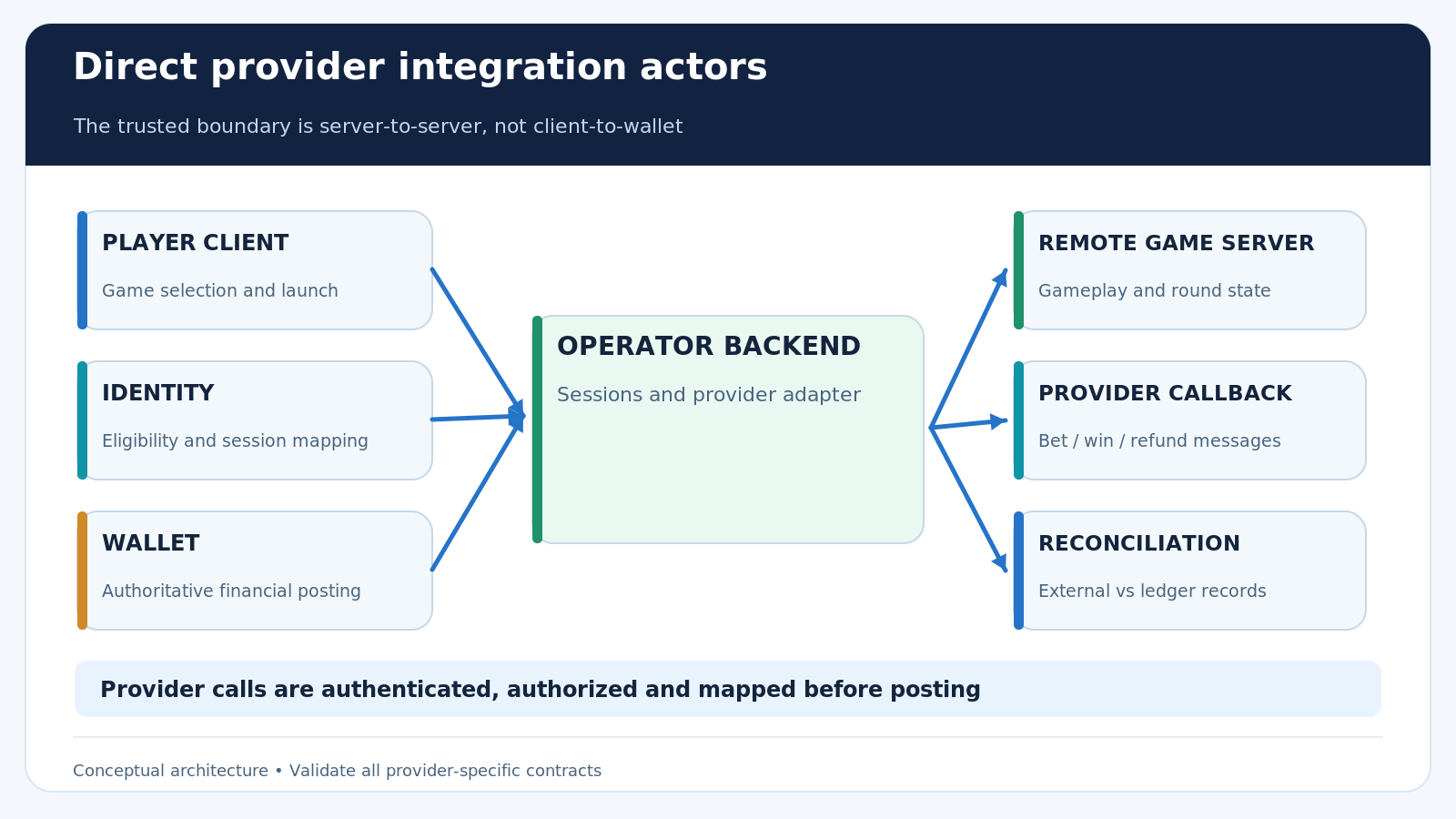
Figure 1. The provider and operator exchange session and financial messages across distinct trust boundaries.
Maintain explicit separation between sandbox and production. Each environment should have its own endpoints, credentials, player mappings, currency settings, callback allowlists where applicable, and catalog versions. A sandbox can prove message parsing but usually cannot reproduce production latency, concurrency, settlement delays, or all dispute states. Record what was tested in each environment and resist promoting configuration by copying an entire secret-bearing file.
Create a contract inventory before writing code. For each operation, capture its direction, authentication scheme, timeout, request identifiers, currency representation, response codes, retry rules, and owner of the authoritative state. Also document monetary precision and rounding rules. Sending 10.5 without a clearly defined currency exponent is avoidable ambiguity; prefer an agreed integer-minor-unit representation where the provider contract allows it. Never infer a player’s eligibility or country solely from the provider callback.
Game launch and session handoff
A launch begins with an authenticated player selecting a game. The operator checks that the game and currency are enabled for the player’s context and that the session is eligible under the platform’s relevant policies. It resolves the provider’s game identifier, creates or retrieves an operator session, and exchanges a time-limited token or session reference with the provider. Finally it returns a launch URL, embed instruction, or provider-specific redirect to the client.
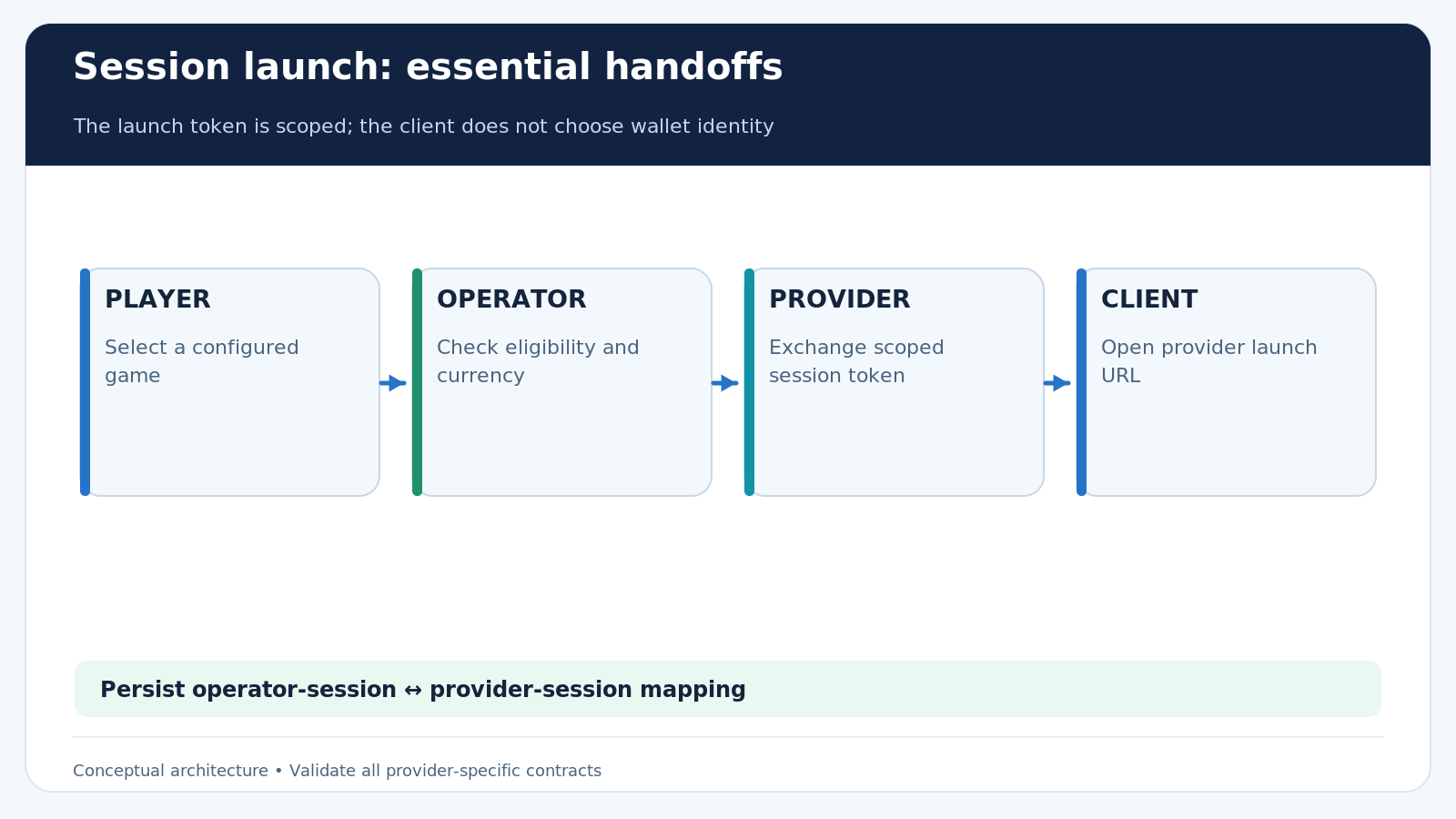
Figure 2. Eligibility and session binding precede the provider launch; the client is not the authority for wallet access.
The launch credential should be scoped to the session and have a defined expiry. Decide whether it is single-use, renewable, or explicitly bound to a game and currency, based on the contract. Do not place permanent API credentials inside browser-visible URLs or scripts. The provider may later return its own session reference; persist the mapping to the operator session while avoiding unnecessary exposure of player identifiers. The operator should be able to revoke or invalidate a session at its own boundary even if the game iframe remains open.
Launch failures and wallet failures require different user experiences. If an exchange fails before a game session exists, the client can usually retry launch after validation. If a launch succeeds but the browser never receives the URL, generating a new session blindly may produce duplicate active sessions or orphaned provider state. Prefer a bounded lookup or reuse mechanism where supported. A display error is not evidence that the provider session was never created.
For each launch, log a correlation ID, operator session ID, provider reference, configured game ID, and a non-sensitive outcome code. Avoid putting raw tokens, full PII, or secrets in logs. A support engineer should be able to answer which provider configuration launched the game without reconstructing the incident from screenshots.
Authentication and request validation (overview)
Authenticate the provider at the server boundary before interpreting a callback as a financial instruction. Supported controls may include mutual TLS, provider-issued credentials, HMAC request signatures, IP restrictions as defense in depth, and network-level access policy. Which mechanism applies is contractual. An authenticated connection is still not authorization to debit an arbitrary player or currency: validate the operator, player mapping, session state, game, currency, amount constraints, and transaction type against authoritative records.
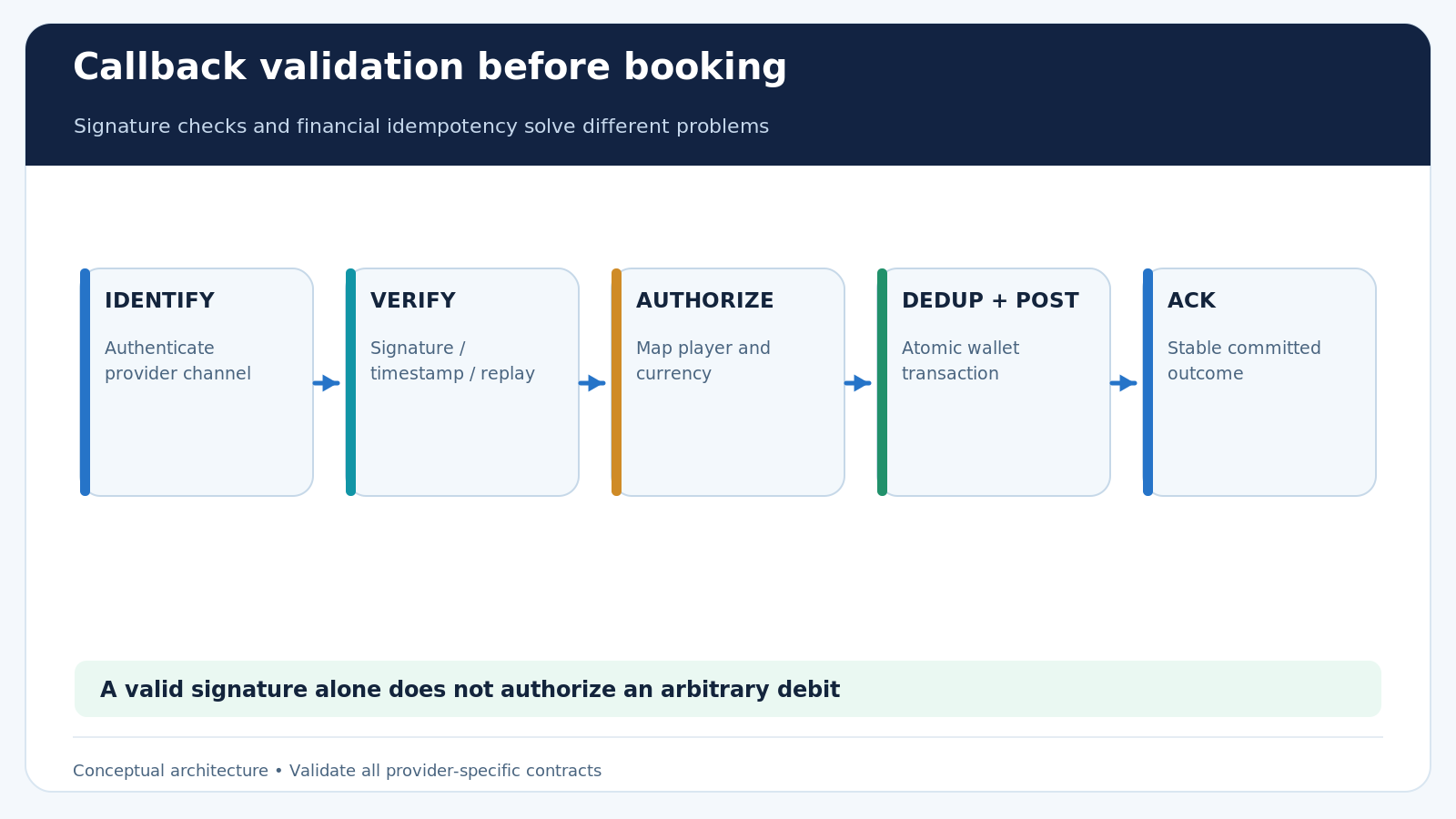
Figure 3. Connection identity, message integrity, business mapping, and repeat-safety are separate gates.
A signed request can still be replayed. Where the scheme supports it, validate the covered body, timestamp window, and unique message identity. Validate canonicalization with provider test vectors rather than inventing whitespace or field-order rules. If the callback contains a URL to follow or a purported account endpoint, do not treat it as a trusted network destination. Normalize the provider’s errors at the adapter boundary and preserve its original error reference in restricted diagnostics.
Protect operational secrets with managed storage and rotation procedures. Plan overlap periods when old and new credentials are both accepted, with clear scope and expiry. Use transport security and endpoint authentication together; neither replaces authorization, idempotency, or ledger constraints. Follow a security review for request validation against the relevant OWASP API Security risks.
Bet, win, refund and rollback callbacks
A bet callback should identify an intended financial effect with a stable provider reference. The adapter validates it, resolves the player and currency, and submits a normalized debit instruction to the wallet. The wallet checks eligibility and available funds as required by the business contract, atomically commits the transaction and its deduplication state, and returns a durable outcome. A retry of the same instruction must not produce another debit; a reused key with a materially different amount or player should be rejected and investigated.
A win callback usually creates a credit linked to a round, though providers vary on timing and grouping. A win may arrive much later than the bet or after the player has closed the client. The system must not require an active browser connection to process a valid settlement. The adapter should know whether a zero win is an event, a no-op, or a required status acknowledgment in the provider’s protocol. Do not invent credits to “complete” a round that has an ambiguous state.
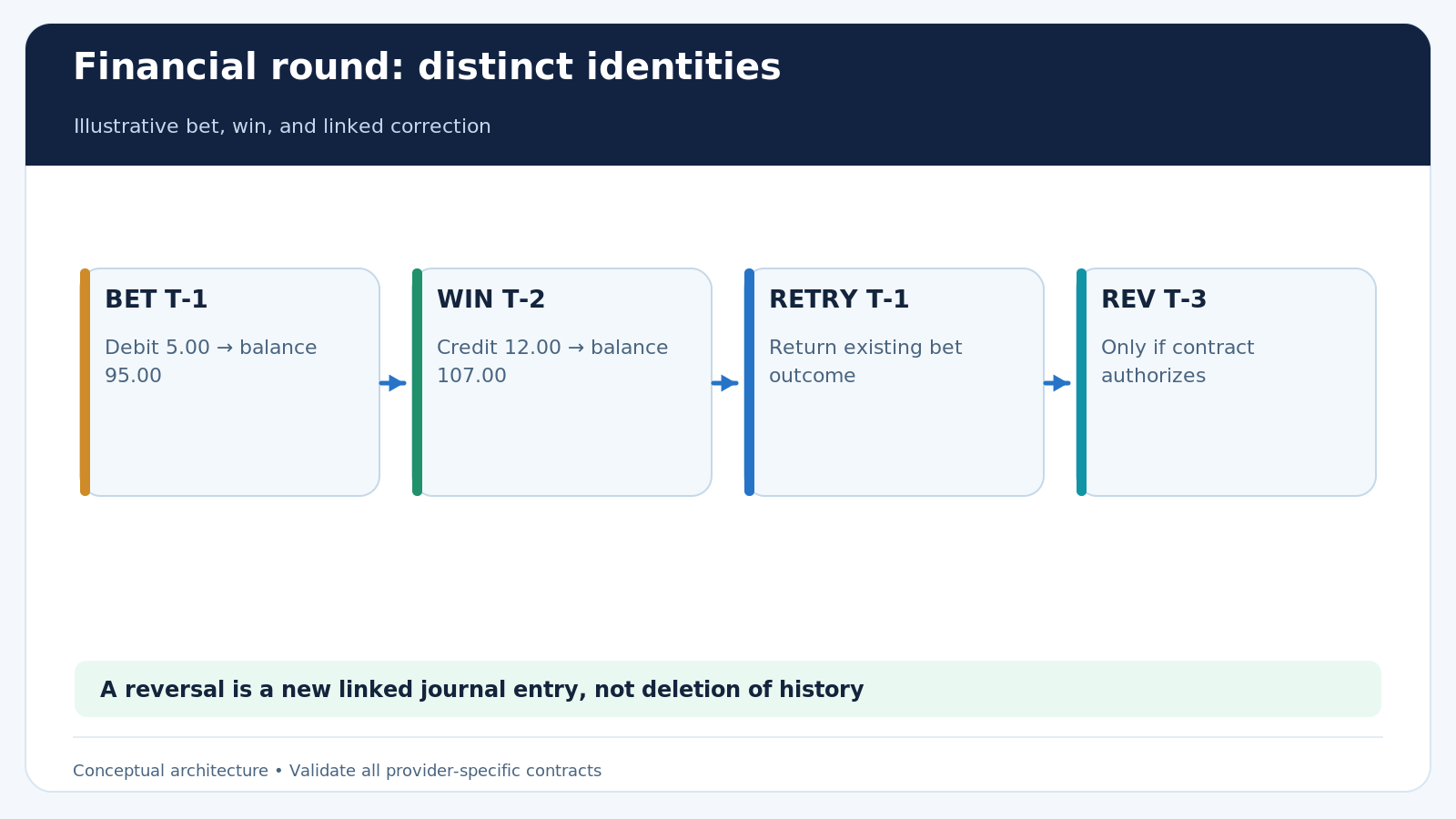
Figure 4. Financial effects have distinct durable identities and explicit links to the original transaction or round.
Refund and rollback terminology needs special care. One provider may call a reversal a rollback, another a cancel, and another a refund. Some are allowed only before round closure; some reverse a particular transaction; some reverse a complete grouped round. Map these operations to wallet commands with precisely defined preconditions, permitted amounts, and relationships to original postings. A duplicate refund must be repeat-safe; an over-refund must be rejected or routed to investigation according to the contract.
Consider a simplified fictional round: the player has 100.00 units available; a bet of 5.00 is accepted; the wallet’s committed view becomes 95.00. The provider then requests a win credit of 12.00; the wallet becomes 107.00. If the provider retries the bet due to a lost HTTP response, the balance must remain 107.00, not 102.00. If the provider later submits a valid linked correction, it is recorded as a new compensating entry rather than by deleting the original. This illustration ignores promotions, holds, taxation, and game-specific accounting rules.
Avoid holding an open database transaction while waiting for an external provider. Persist only the durable operation owned by the wallet; then acknowledge it. If the provider requires a response within a fixed budget, instrument the full path and do not confuse “transport timed out” with “business rejected.” An ambiguous result needs status retrieval or reconciliation. Replaying the same request with a new identifier defeats the purpose of idempotency.
Mapping provider errors and statuses
Provider protocols rarely share one status vocabulary. The adapter must translate external codes to stable internal categories while retaining the provider’s raw code and correlation details for support. Useful categories include invalid authentication, invalid session, insufficient funds, invalid amount or currency, unknown transaction, already processed, temporary unavailable, and permanent contract violation. The exact HTTP status returned is provider-specific; do not assume a generic mapping will be accepted by every RGS.
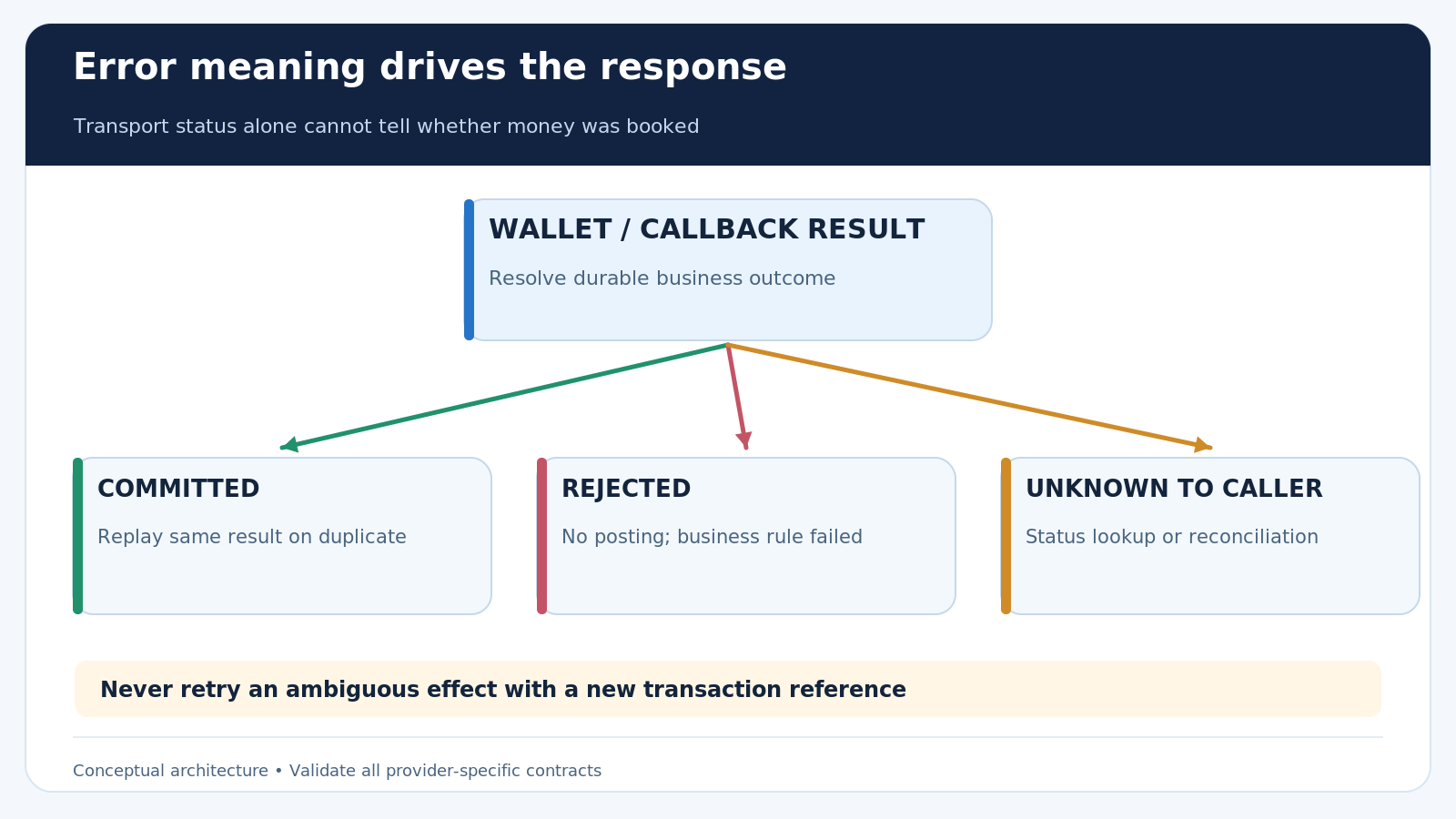
Figure 5. An error classification drives retry and investigation policy; the HTTP response alone is insufficient.
Distinguish three states: rejected, committed, and unknown to caller. A provider that receives a network timeout may classify the callback as pending, while the operator ledger has already committed it. A subsequent identical callback should retrieve the existing business result. Conversely, a validation rejection should leave no ledger posting. Repeated permanent errors should be visible as contract incidents rather than triggering endless retries.
Track operational metrics for accepted callback rate, per-provider timeout rate, idempotent replay rate, signature or authorization failures, P95/P99 latency, unknown-result age, and discrepancies between provider records and ledger records. Alerts should reflect business impact. A brief rise in duplicate callbacks may be benign during a provider retry storm; any rise in duplicate financial effects is a high-severity accounting defect.
End-to-end example and integration acceptance checks
The following fictional request illustrates the meaning of fields rather than a callable provider contract:
{
  "provider": "example-rgs",
  "operator_session_ref": "ses_demo_42",
  "provider_round_ref": "round_demo_900",
  "provider_transaction_ref": "bet_demo_901",
  "type": "BET",
  "amount_minor": 500,
  "currency": "EUR"
}
The adapter maps the request to a wallet command with an internal transaction identity derived from the agreed provider scope and immutable business reference. The wallet stores the outcome and transaction mapping in one authoritative operation. Its response should include a stable decision identifier so repeated calls can be answered consistently. A callback carrying the same reference but amount_minor: 900 is not a harmless retry; it is a conflict that must not silently overwrite or create money movement.
Acceptance testing should cover at least these scenarios:
- Normal launch, bet, win, session end, and supported reversal flows in each agreed currency.
- Repeated callbacks with identical bodies, repeated callbacks with altered bodies, and two identical calls arriving concurrently.
- Lost HTTP response after successful ledger commit, plus retries after restart or failover.
- Callback for a wrong player, wrong operator, expired session, unconfigured game, or mismatched currency.
- Signature changes, expired keys, bad timestamp or nonce, and malformed payloads without financial side effects.
- Win arriving before an expected related message, late win after client disconnect, and callback after provider maintenance.
- Reconciliation of a deliberately missing provider transaction and a deliberately missing wallet record.
- Production-like burst rate with per-provider fairness, timeouts, and alarms.
A trustworthy provider integration is defined by reproducible outcomes under retries and partial failure. The happy-path demo proves connectivity, not financial safety. Sign off the external contract, data mapping, ledger invariants, callback status semantics, and reconciliation evidence before switching any real monetary traffic to the integration.
Further reading
- AWS Builders’ Library, Making retries safe with idempotent APIs.
- OWASP, API Security Top 10.
- IETF, RFC 9110, HTTP Semantics.
Editorial note: Security, retries, and HTTP semantics are general reference material. Endpoint names, fields, response codes, and settlement states in this guide are deliberately illustrative and must be validated against each provider’s contract.