A provider reports 18,240 EUR of settled wagers for one operator and day. The operator’s wallet journal reports 18,235 EUR for the same period. Both systems may be operating as designed, yet the difference cannot be dismissed without evidence. A five-euro discrepancy might be a delayed callback, a timezone cutoff, an omitted refund, a duplicate settlement record, or an actual accounting defect. Reconciliation is the process of comparing independently recorded views of the same economic activity, explaining differences, and resolving genuine exceptions under controlled procedures.
In casino systems, reconciliation is not just a monthly financial report. It is a daily—or more frequent, depending on the contract—control over the boundary between an external game provider or aggregator and the operator’s authoritative player wallet. It must preserve original transaction history, player impacts, and the evidence used to explain disagreements. A transaction-level reconciliation system is distinct from a general analytics dashboard: its answers must be reproducible and audit-ready.
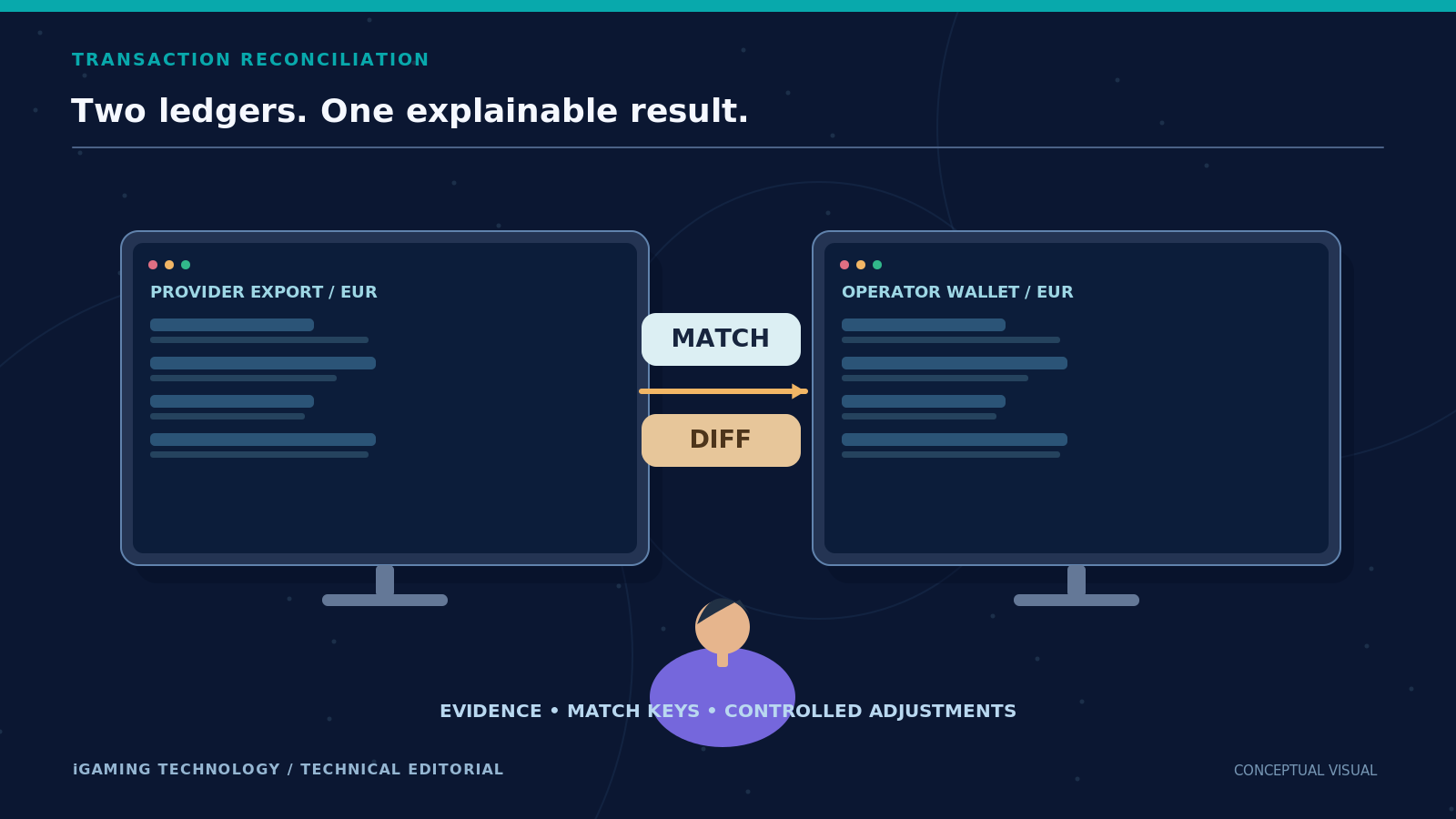
Figure 1. Reconciliation compares independent records and highlights exceptions rather than assuming one system’s totals are always right.
Data sources and reconciliation objectives
Most reconciliation designs begin with three kinds of source. The provider record includes game round, provider transaction, event type, amount, currency, provider-side status, and settlement timestamps. The operator wallet record includes the canonical financial operation, its journal postings, wallet/account identity, currency, state, and original provider reference. An integration log or inbox records transport attempts, signatures or identity verification results, parsing, acceptance, and mapping decisions. The transport log explains why a financial operation might be missing, but it is not itself proof that money moved.
Other sources may matter: aggregator exports, cash balances held by upstream parties, payment processor movements, promotional bonus adjustments, and manual corrections. Keep these in separate reconciliation streams unless the contract makes them directly comparable. Mixing cash wallet entries, bonus balances, and provider game bets in one total can create artificial mismatches. Document which accounts belong to each report and whether amounts are gross wagers, net gaming revenue components, credit balances, or another agreed measure.
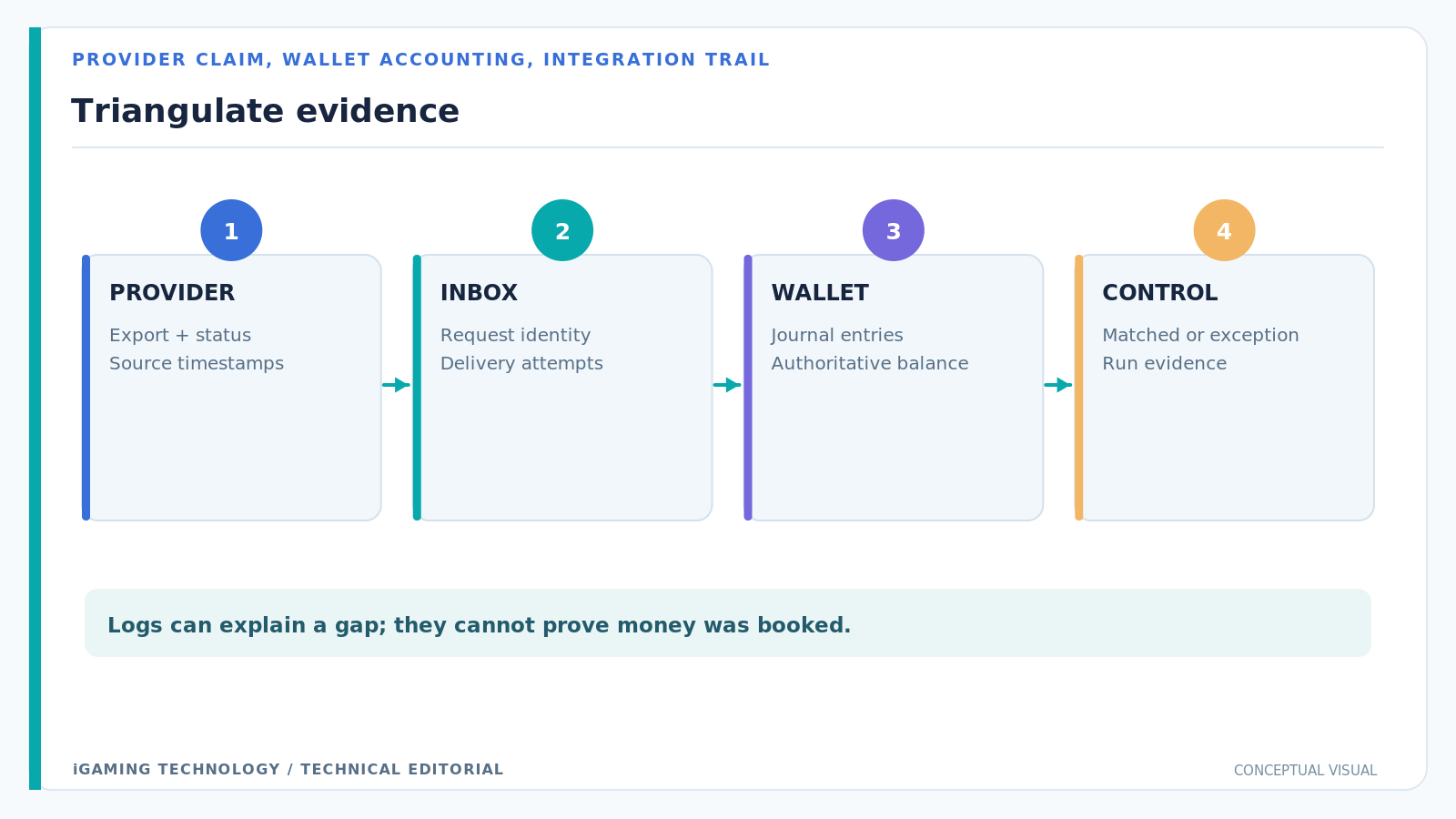
Figure 2. Three evidence layers are required: external claims, authoritative local accounting, and an integration trail.
The reconciliation objective must be explicit. A completeness control asks whether every valid provider transaction has a corresponding local operation. A uniqueness control asks whether a logical transaction posted more than once. A valuation control checks amount, currency, exchange-rate rules where applicable, and debit/credit direction. A timing control explains settlement-window differences. A status control determines whether rejected, canceled, reversed, or pending items are being compared consistently.
Define scope using operator, provider, game or brand, contract version, currency, and reporting window. If an aggregator passes through multiple providers, include both aggregator and underlying provider identity; otherwise reused upstream transaction references can collide. Store source file or API batch IDs, checksums, generation timestamp, extraction filters, and immutable imports. Re-running a report without knowing which extract was compared undermines the entire evidence trail.
Matching keys, status mapping and cutoffs
The best match key is a provider-documented immutable business transaction ID scoped to the authenticated provider and operator, optionally combined with operation type. A round ID alone is rarely sufficient: one round may include multiple bets, wins, partial refunds, or corrections. A network request ID is also unsuitable because it may change on retries. Use a normalized canonical key such as (provider_scope, operator_scope, provider_transaction_id, financial_operation_type) where the contract warrants it.
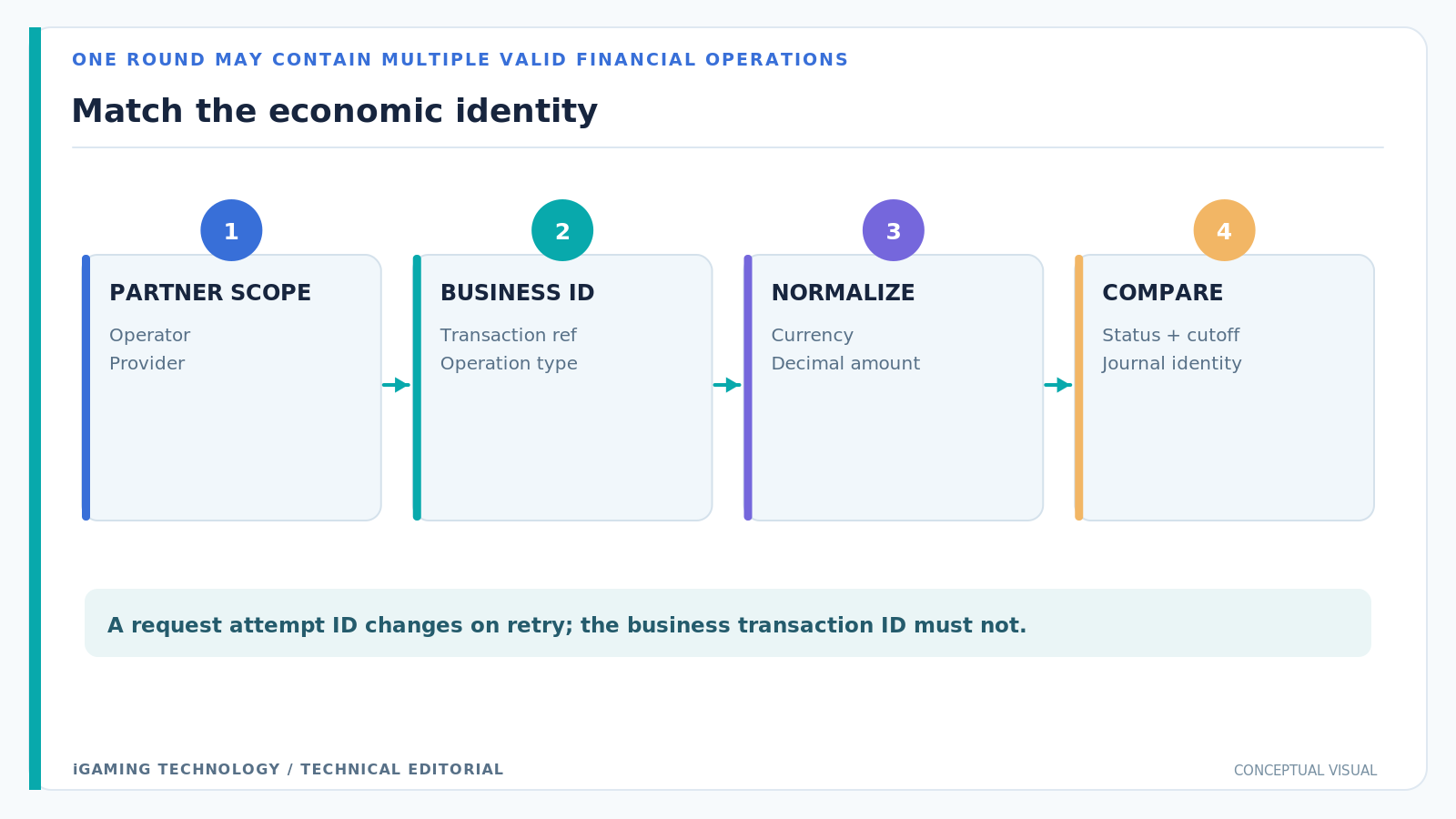
Figure 3. Reconcile logical financial operations, not the count of HTTP deliveries or the broad game-round identifier.
Status mapping deserves its own reviewed table. Provider SETTLED may correspond to wallet COMMITTED; VOID may represent a distinct compensating journal; PENDING might not yet be eligible for daily final totals; and REJECTED may not have any financial posting. Never hard-code an ambiguous provider status as a debit or refund without sign-off. Compare both the original operation and any reversal as separately linked entries, rather than deleting the original from the reconciliation source.
Cutoff differences routinely explain apparent mismatches. The provider may assign an event to the day a game round completed, while the wallet books it when a callback arrives. Both are legitimate timestamps for different questions. A reconciliation report should identify the business date, event time, wallet booking time, source export time, and ingestion time. Represent time in a well-defined zone; retain raw source timezone fields and use a normalized instant for comparison. Do not silently force a UTC date into a local calendar day and then label a midnight transaction as missing.
Amounts should be compared in exact decimal or integer-minor-unit representations with known currency precision, not binary floating point. Treat currency mismatches as serious exceptions; never net 5 EUR against 5 USD. For a report based on multiple currencies, compare within currency and scope before making an explicitly defined conversion to a reporting currency. If the provider export nets out refunds while the wallet reports gross bets and separate refunds, first transform both into a common accounting model with an auditable mapping.
Detecting missing, duplicated and delayed records
A reconciliation engine typically performs normalization, key matching, field validation, and exception classification. It should separate unmatched on provider side, unmatched on wallet side, duplicate logical identity, amount mismatch, currency mismatch, status mismatch, and timing-only difference. A single unmatched item can have multiple symptoms. Keep a primary classification and all supporting dimensions rather than losing evidence by forcing it into one broad “failed” bucket.
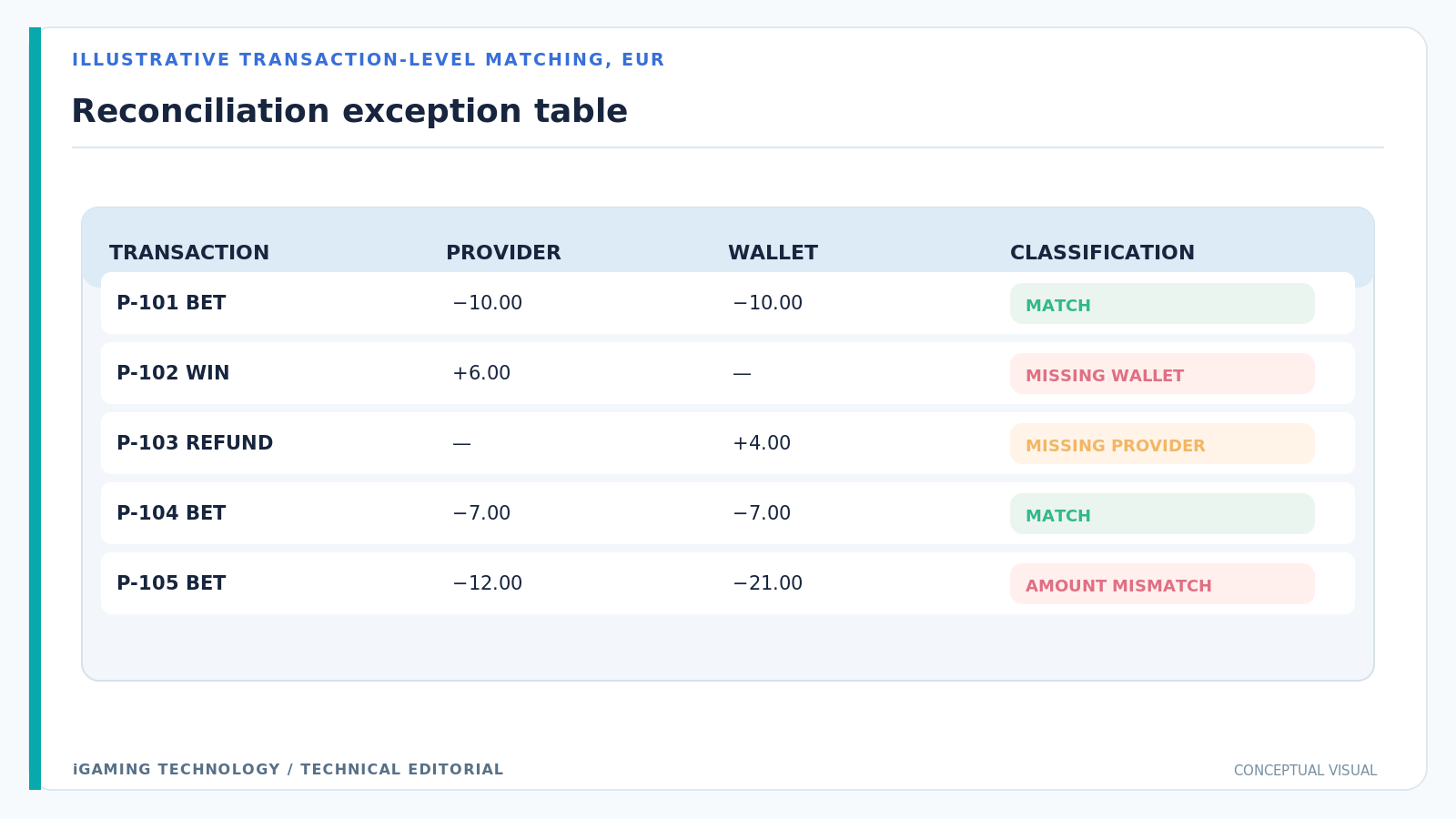
Figure 4. A useful reconciliation view shows the exact comparison keys, amounts, state, and why a row needs investigation.
Consider five illustrative transactions, all in EUR for one provider and business date. P-101 is a 10.00 bet present on both sides: match. P-102 is a 6.00 win in the provider export but has no wallet journal: missing wallet entry, but first confirm the provider-side status is final. P-103 is a 4.00 refund in the wallet, with no current provider export line: unmatched local entry, potentially a late adjustment. P-104 appears twice in provider transport logs yet once in both authoritative financial ledgers: a duplicate delivery, not a duplicate bet. P-105 is 12.00 in the provider export but 21.00 in the wallet: amount mismatch requiring evidence and likely higher-severity review.
| Transaction | Provider view | Wallet view | Initial classification | Next check |
|---|---|---|---|---|
| P-101, BET | 10.00 debit | 10.00 debit | Matched | None beyond routine sample |
| P-102, WIN | 6.00 credit | Absent | Missing wallet | Finality, callback and provider inquiry |
| P-103, REFUND | Absent | 4.00 credit | Missing provider | Reversal link and export cutoff |
| P-104, BET | 7.00 debit | 7.00 debit | Matched | Confirm duplicate attempts not duplicate posting |
| P-105, BET | 12.00 debit | 21.00 debit | Amount mismatch | Compare immutable payload and journal history |
An exception should not automatically create a new credit or debit. First examine idempotency records, source export completeness, delivery attempts, original instruction payload, journal posting group, and any later reversal. Missing data in one report may be an ingestion problem or a day-boundary issue. Premature correction can make an initially harmless timing difference become a genuine double booking.
Introduce aging buckets for unresolved items: same-cycle, one business day, several days, and beyond contractual dispute windows. The actual thresholds depend on provider contracts and internal controls. A gap detector should identify whether an entire file is absent, one provider is delayed, or isolated transactions are missing. Whole-file incompleteness is usually a collection failure, not thousands of independent financial exceptions.
When reporting an exception, distinguish its gross impact from a speculative net difference. A missing 100.00 bet and a missing 100.00 win can cancel out in a high-level total while representing two incorrect player-level postings. Likewise, a duplicate debit and duplicate refund may net to zero while still violating ledger integrity and confusing disputes. Reconciliation should surface item counts, signed amounts by operation type, and gross absolute discrepancy as separate measures. If a provider revises an export after your daily close, treat the new version as a new immutable evidence input and document whether the prior signed-off result is restated or accompanied by a subsequent-period adjustment. This makes historical comparisons explainable.
Dispute workflows and correction safeguards
Investigation needs clear separation between detection and monetary correction. A reconciliation analyst can classify an exception and collect evidence; only an authorized workflow should post an accounting adjustment. Store the proposed action, reviewer identity, reason code, provider case reference, linked original transaction, amount and currency, and an immutable audit trail. For material or unusual exceptions, a four-eyes approval policy helps prevent mistaken or fraudulent adjustments.
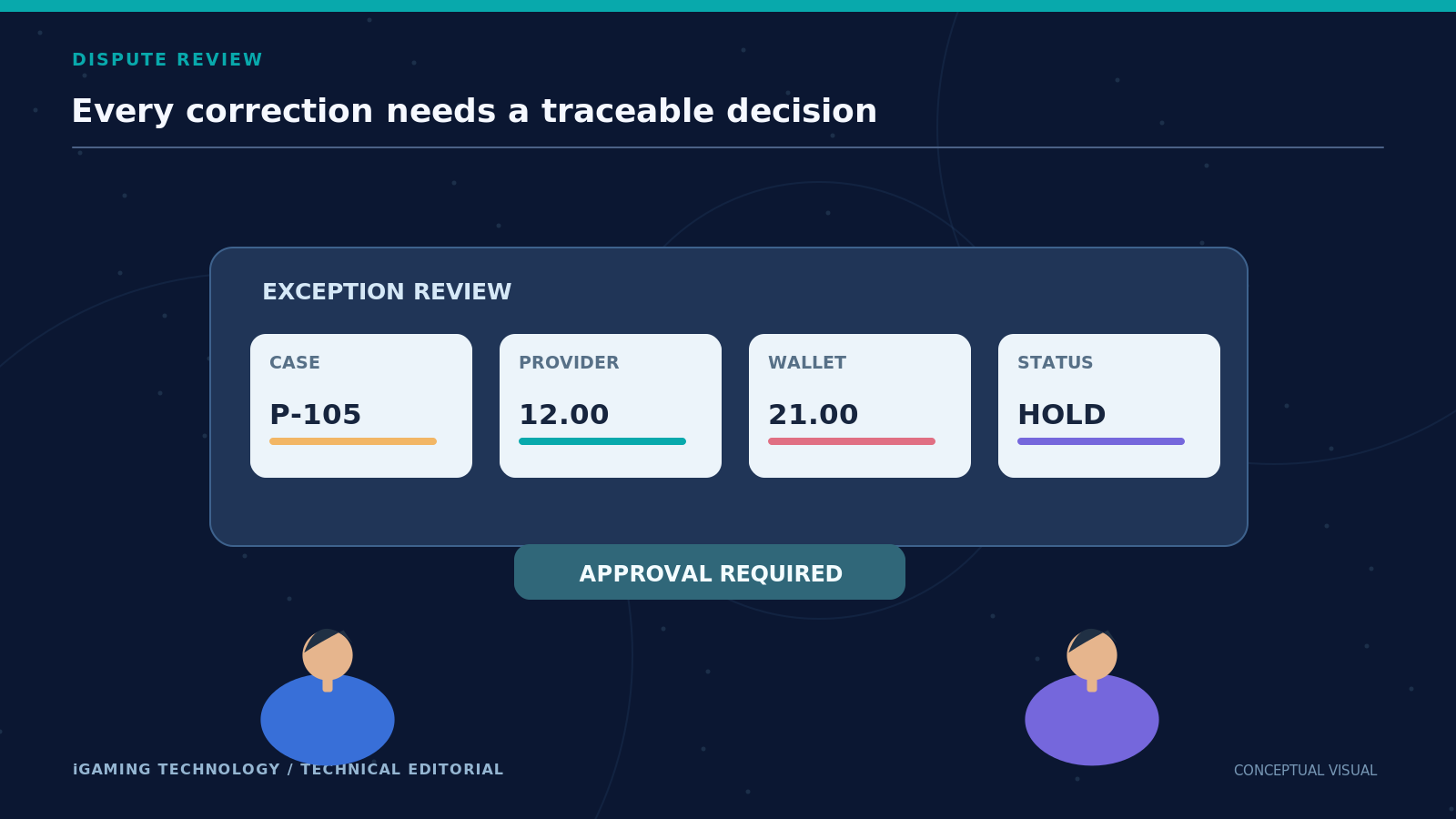
Figure 5. The human decision point is part of the control system: corrections need evidence, review, and traceability.
Correct with explicit compensating journal entries; do not overwrite or delete prior ledger rows. The original disputed debit, new correction, and outcome of provider correspondence should remain connected. If a provider sends a later official refund that duplicates a manual correction, the system must recognize the relationship and prevent an unintended second credit. Define ownership for disputed items before a production incident, including who communicates with providers and who authorizes customer-facing action.
Use a state machine such as OPEN → INVESTIGATING → AWAITING_PROVIDER → APPROVED_FOR_CORRECTION → CORRECTED → VERIFIED → CLOSED, allowing a separate path for false positives or timing differences. The names are illustrative; the important safeguards are controlled transitions, recorded evidence, and re-verification after correction. “Closed” should not mean somebody marked a ticket green; it should mean the records or documented approved exception now reconcile under the agreed rule.
Audit evidence and operational cadence
A reproducible reconciliation run needs a unique run ID, precise data interval, input source hashes, import timestamps, transformation version, matching-rule version, counts by status, sums by currency and operation type, exception output, and sign-off record. Snapshots should be immutable or versioned so a later provider export revision does not erase the original evidence. Store retention requirements according to applicable contracts and regulatory obligations; this guide does not assert one universal retention period for every jurisdiction.
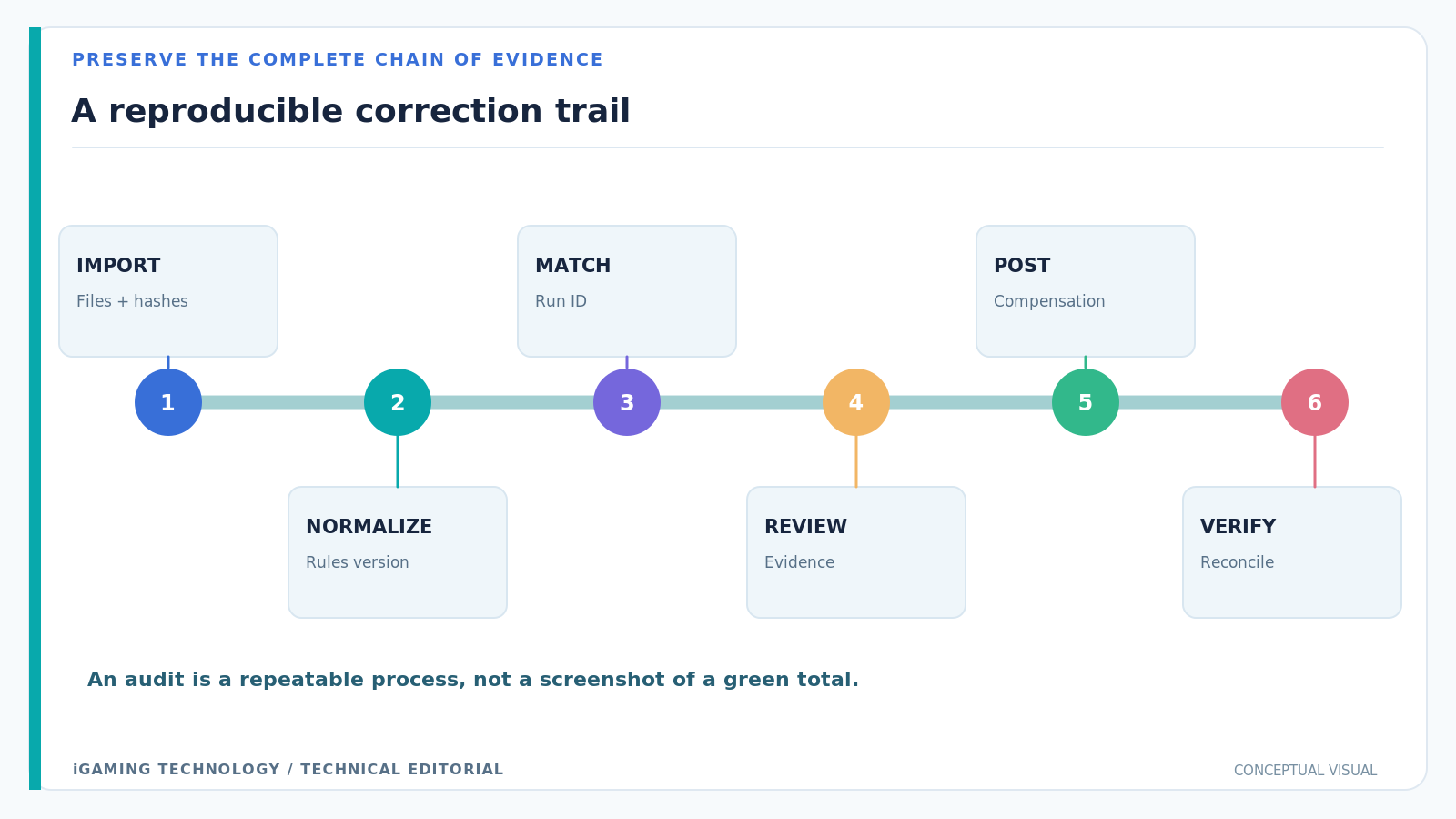
Figure 6. A defensible audit trail can reproduce which inputs and rules produced a result at a particular time.
Operational frequency should follow settlement cycles and risk, not convenience alone. A near-real-time control can flag high-risk gaps quickly, while a daily financial close can reconcile authoritative end-of-cycle exports. A weekly aged-exception review can escalate recurring integration defects. Each cadence has a different objective; a real-time dashboard with incomplete data should not be presented as a certified financial close.
Measure matched transaction ratio, total unmatched value by currency, exception count by category, aged unresolved value, provider export lateness, correction rate, and time from detection to authoritative closure. Do not report a single “99.9% reconciled” figure without saying whether the denominator is transactions, value, or all ingested events. A single large missing win can matter more than thousands of tiny matched bets.
Worked reconciliation examples
Example A: lost win callback. The provider export shows W-201 as a final 15.00 win. The operator inbox has no accepted delivery and the wallet ledger has no credit. The team checks whether the provider can replay the original instruction and whether the wallet’s business key is known. The preferred recovery is a provider-supported idempotent redelivery or approved compensating process tied to W-201, not a new arbitrary “bonus” deposit. Evidence links the provider record, incoming attempt, booking, and final verified match.
Example B: day-boundary mismatch. A 3.00 bet occurred at 23:59:58 in the provider’s reporting zone and was booked at 00:00:02 the next day in the wallet zone. Matching by transaction ID and normalized event time shows the underlying financial entry exists. The daily close records a cutoff adjustment rather than another debit. The exception is explained by policy, not silently suppressed.
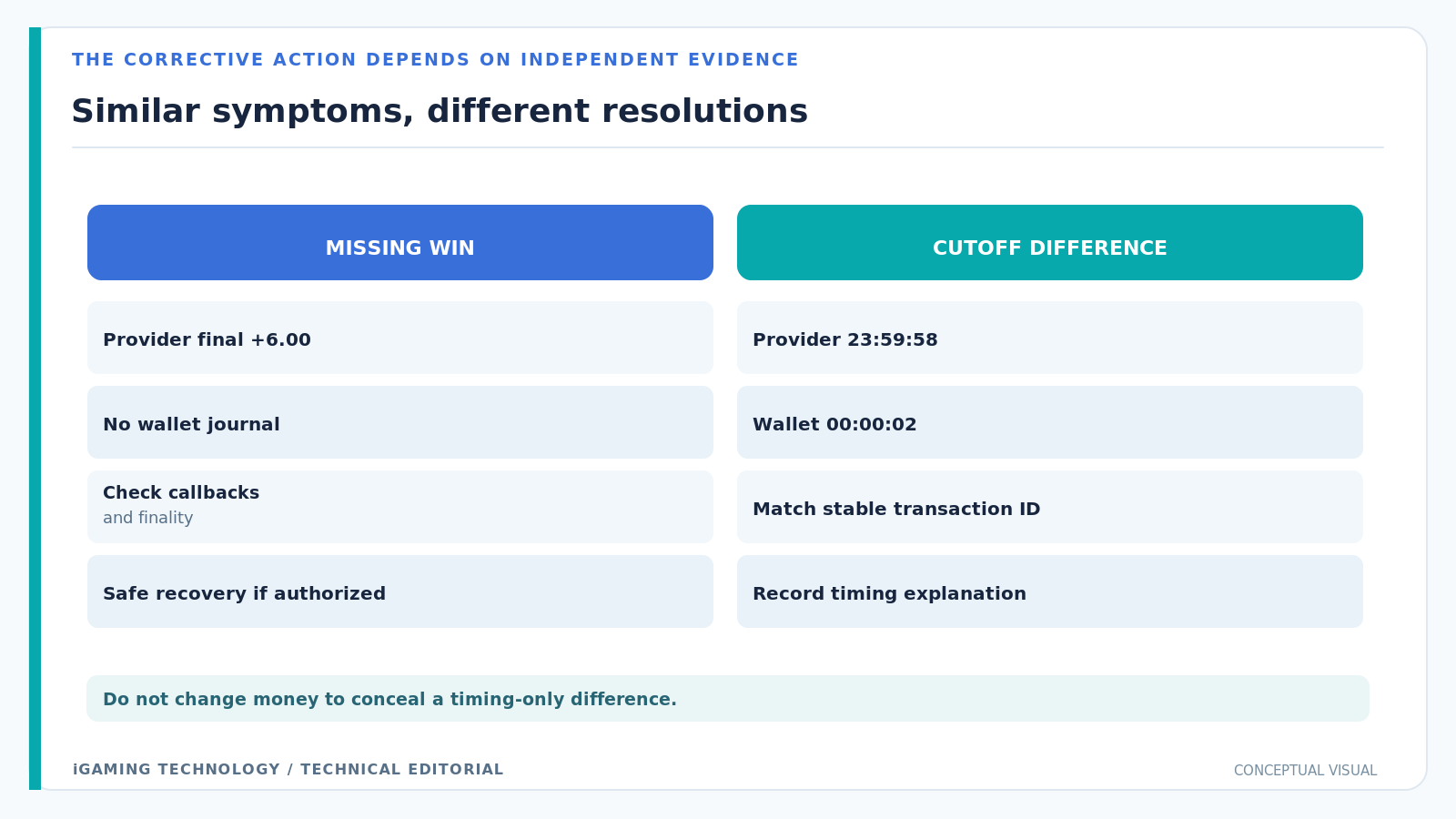
Figure 7. Two rows with similar unmatched symptoms require different actions: one recovery, one timing explanation.
Example C: duplicate export line. A provider data job accidentally includes the same finalized bet twice. The reconciliation importer has immutable source line IDs and financial transaction IDs. It records the source duplication and matches one logical bet to the single wallet booking. An automated adjustment based on total differences would have been wrong. Duplicate detection belongs on both sides of the comparison, and report defects must be escalated to the provider rather than fixed by changing player balances.
Key takeaway: Reconciliation is a chain of evidence from two accounting perspectives to an explained result. Matching the right business IDs, respecting cutoffs and status models, and controlling corrections matter more than making totals look equal at any cost.
Technical references
- Apache Kafka Design — delivery and processing semantics relevant to imported event streams.
- AWS Builders’ Library: Timeouts and Retries — why a lost acknowledgment leaves an uncertain caller outcome.
- Related internal guides: Casino Wallet Architecture and Idempotency in Bet and Win APIs.
Editorial note: The provider/export entries, status names, amounts and workflows are conceptual examples. Actual settlement definitions, currencies and correction controls must be checked against provider contracts and local compliance policies.