An operator learns that a provider has changed a game’s availability, a session has expired, or a settlement export is ready. The integration now has to get that information from the system that knows it to the system that needs it. A webhook lets the source push a notification to a consumer endpoint; polling lets the consumer periodically ask for a current state or a list of changes. Neither transport choice guarantees that the consumer’s local records are correct.
In casino architecture, this distinction matters because a catalog update is not a wallet debit. Game availability notices, configuration changes, report-ready events, provider health updates, and asynchronous workflow statuses can be excellent webhook or polling candidates. A bet or win callback may also arrive over HTTP, but it carries a financial instruction with a separate atomicity and idempotency contract. Do not infer ledger correctness from a notification transport pattern. For money movement, see Idempotency in Bet and Win APIs and Wallet Architecture.

Figure 1. Conceptual editorial illustration: event-driven push and scheduled polling are different delivery strategies. The interface is fictional, not a screenshot of a provider product.
Push notifications versus scheduled reads
A webhook publisher stores or observes an event and sends an outbound HTTPS request to a registered subscriber. The subscriber authenticates the delivery, captures the event identity, acknowledges according to the agreed contract, and handles it. The apparent immediacy is attractive: a provider can announce a game outage without waiting for an operator’s next catalog scan. But the publisher now depends on subscriber connectivity, endpoint authentication, delivery queues, retry handling, and operational visibility across two organizations.
Polling reverses initiation. The operator’s service calls a provider endpoint such as GET /catalog/changes?cursor=..., retrieves a page of changes, persists the next checkpoint, and repeats on a schedule. This gives the consumer explicit rate control, a naturally inspectable cursor, and less dependence on the provider successfully reaching an inbound endpoint. The trade-off is detection lag and potentially wasteful calls when nothing changes. Polling can be economical if changes are rare and a moderate freshness delay is acceptable; it can be expensive if thousands of games and tenants are checked every few seconds.
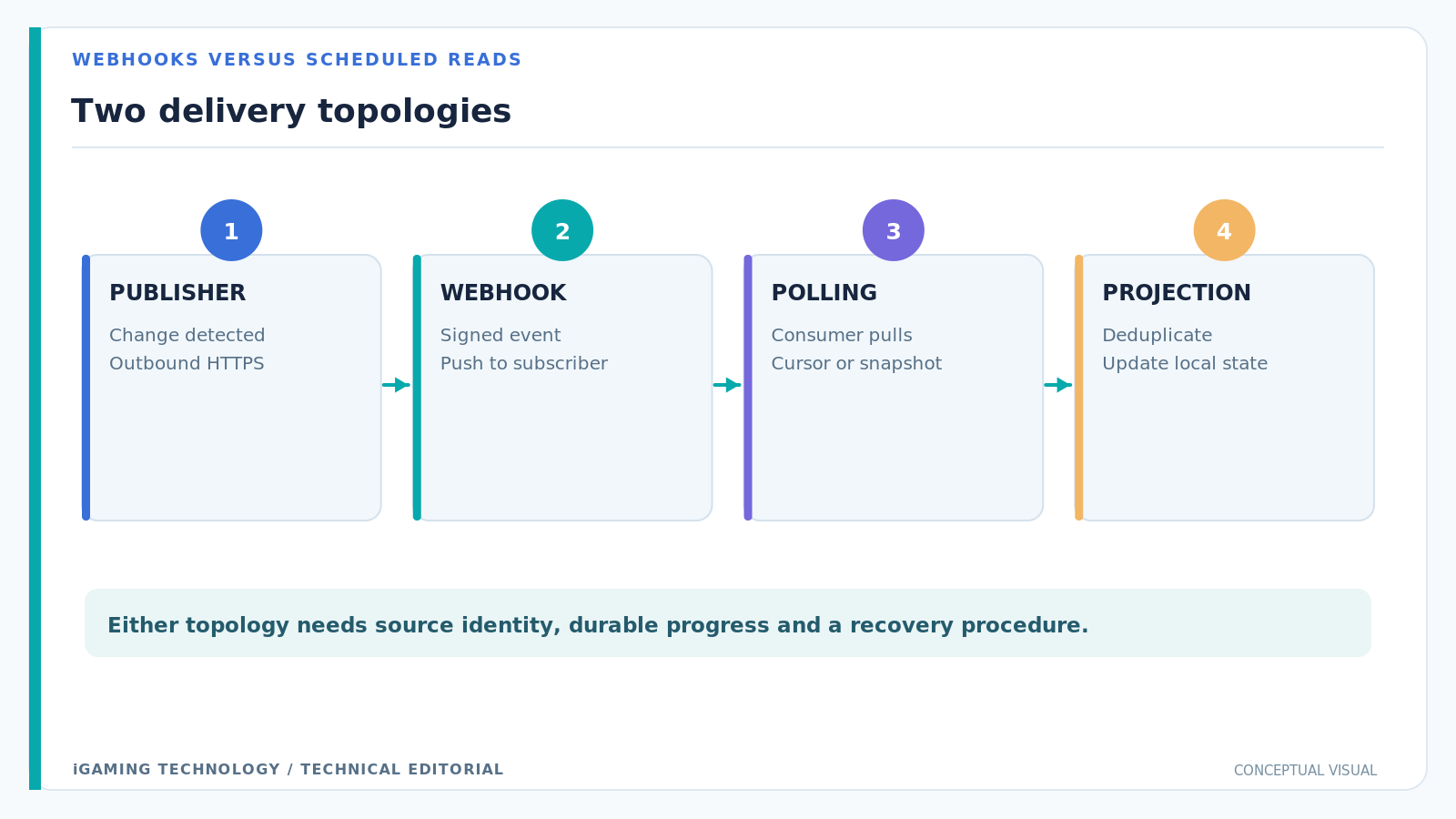
Figure 2. In push, the publisher initiates delivery; in polling, the consumer initiates reads. Both need durable checkpoints and validation.
Choose the transport by the freshness requirement and recovery contract, not by a blanket rule that webhooks are modern and polling is outdated. An outage feed might require quick detection but can still include a periodic reconciliation poll. A daily report status may need neither second-level delivery nor persistent subscriptions. For a rapidly changing live display, the provider might offer an event stream or WebSocket instead; that is a separate delivery contract with its own reconnection semantics.
Define the event boundary before selecting the transport. “Game disabled” can mean unpublished from the catalog, temporarily hidden by an operator, blocked by a jurisdiction rule, or unavailable at the provider edge. Each state has different authority and cache invalidation behavior. A notification must reference a stable game identifier, operator scope, source version, and effective time where supported. If the producer only supplies a vague text description, switching from polling to webhooks will not repair the information model.
| Question | Webhook | Polling |
|---|---|---|
| Who initiates communication? | Publisher | Consumer |
| Typical detection latency | Delivery queue and network delay | Interval plus fetch time |
| Backpressure owner | Publisher and subscriber jointly | Consumer can adjust interval |
| Consumer outage recovery | Redelivery, replay API, or reconciliation scan | Resume cursor or rescan |
| Inbound surface | Public or privately connected callback endpoint | Usually outbound client access |
| Best fit | Changes that need rapid notification | Queryable state, explicit checkpoints, slow-changing data |
Ordering, duplicates and delivery guarantees
Treat an inbound event as a claim about a source state, not proof that this is the first or newest observation. Most practical webhook systems are designed for at-least-once delivery: a provider may retry after a timeout, and a network proxy may duplicate an attempt. Separately queued messages can arrive out of order. The subscriber should expect duplicate event IDs, older source versions arriving after newer ones, and events that arrive after the object has already changed again.
Consider a title configured as AVAILABLE at version 18, then DISABLED at version 19. A delayed version-18 webhook could arrive last. If the consumer naively overwrites its projection in delivery order, the title becomes incorrectly available again. With a source version, the consumer can apply new_version > stored_version and ignore stale events. Without a version or ordered stream, it may be safer to treat the webhook as a hint and fetch current authoritative state.
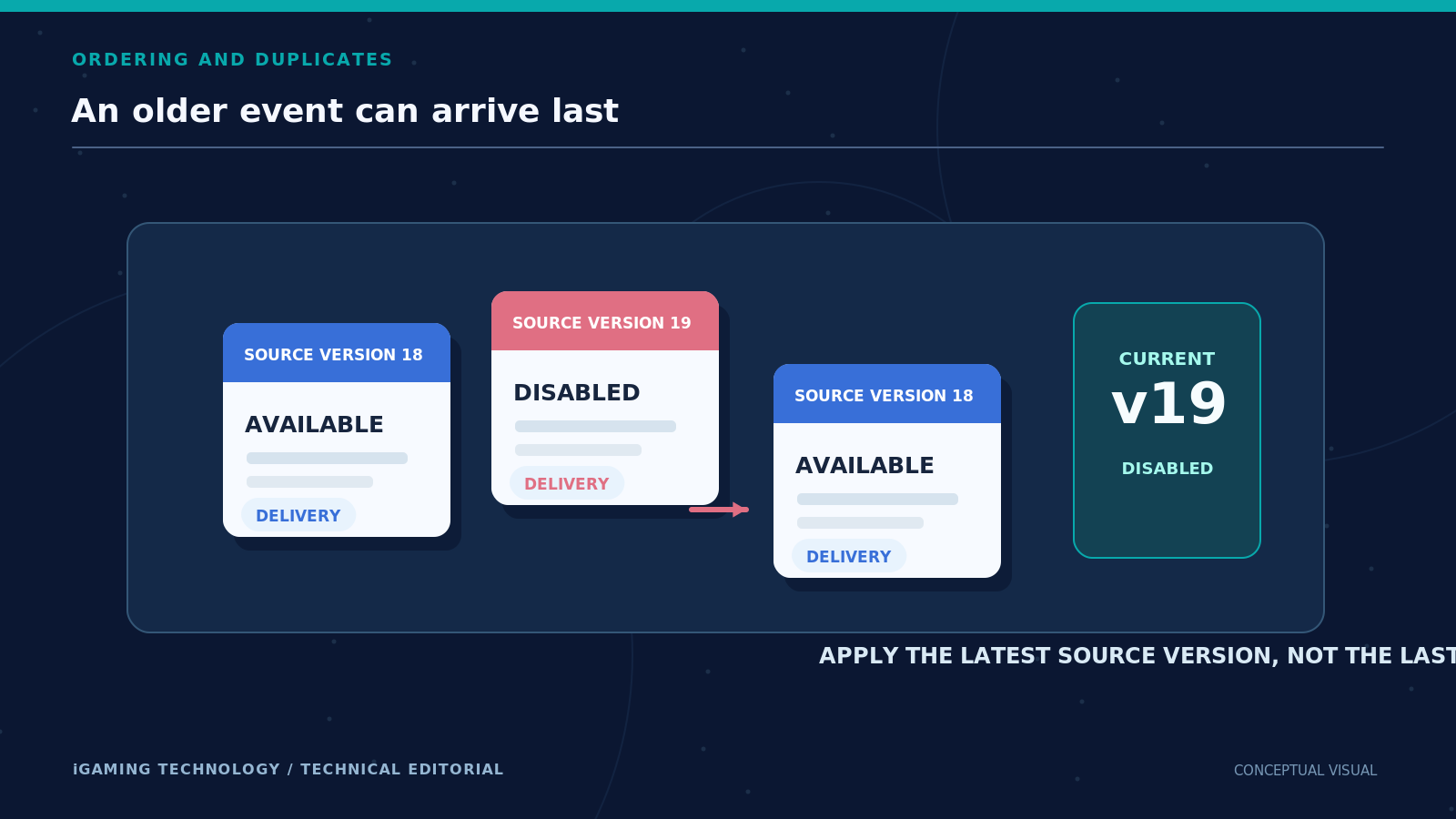
Figure 3. Delivery order can differ from the order of source changes; the dashboard must not rewind to stale state.
“Exactly once” needs a carefully scoped definition. A broker might atomically commit message offsets with output to its own transaction system, but it cannot silently guarantee a single write to an unrelated provider or wallet database. A consumer should combine durable event ID deduplication, source-version checks, and application-level idempotency. These mechanisms address different questions: have we seen this notification, is it current, and is the requested effect safe to repeat?
A practical inbox record can include publisher_id, event_id, resource_id, source_version, received_at, delivery_attempt, and processing status. Unique constraints defend the event-ID boundary; version or object-state comparisons defend against stale changes. Persist the inbox and relevant state transition together where the datastore allows it. Avoid a design that acknowledges a webhook before the event has been durably captured, then loses it in process memory.
Consumer state and cursor management
A polling API is only as reliable as its checkpoint semantics. A simple updated_since=timestamp parameter can miss records when timestamps share the same precision or when a record is written concurrently with a page fetch. Prefer a documented opaque cursor or (updated_at, stable_id) ordering with an inclusive overlap and deduplication. Persist the checkpoint only after the corresponding page has been durably processed. If a page fails halfway through, reprocess it safely rather than advancing past unhandled changes.
For high-volume catalogs, partition work by provider and operator scope. Track cursor age and oldest unprocessed update, not just whether the last API request returned 200. A healthy HTTP request that repeatedly returns the same page because the checkpoint is stuck is not a healthy integration. Similarly, a cursor that advances while all events are sent to a dead-letter queue conceals a loss of business state.
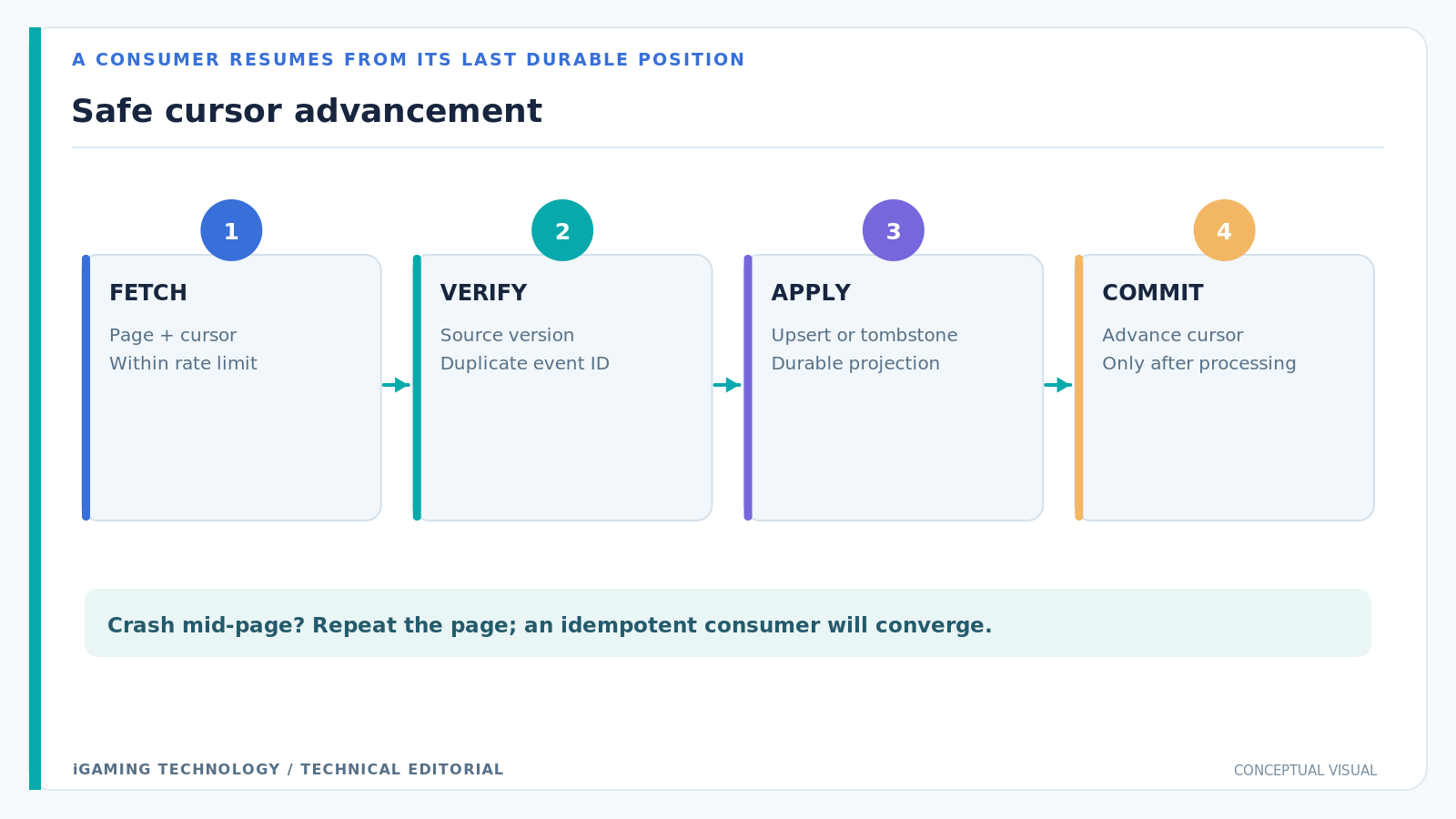
Figure 4. Fetch, validate, apply, and checkpoint form a recovery unit. A cursor is advanced after durable processing, not before.
Webhook consumers need state too: an inbox, a last-source-version projection per resource, a retryable processing queue, and a replay horizon. An acknowledgment can mean “safely accepted for processing” rather than “business projection already updated,” but the provider and consumer must agree on this meaning. If a provider expects the application effect before acknowledgment, an early 2xx hides failures. Operational documentation should distinguish delivery acknowledgment, processing completion, and downstream state convergence.
When events are compact, include the stable identifier and source version; do not necessarily copy entire sensitive player or wallet objects into every notification. Consumers can fetch a current, authorized representation. That fetch can race with subsequent changes, so the consumer must know whether it wants the event snapshot or the latest state. These are different business semantics even when they use the same API.
Timeouts, replay and outage scenarios
Imagine the operator’s webhook endpoint is unavailable for 40 minutes while a provider publishes 120 catalog updates. The publisher retries deliveries and then stops at its retention limit. Recovery requires a durable delivery backlog, a replay endpoint, or an authoritative snapshot comparison. If none is available, the operator cannot prove completeness by observing that new webhooks now arrive. A gap detector might monitor per-source sequence numbers and trigger a catch-up poll. The combined pattern is common: webhooks reduce time to notice; polling repairs omissions.
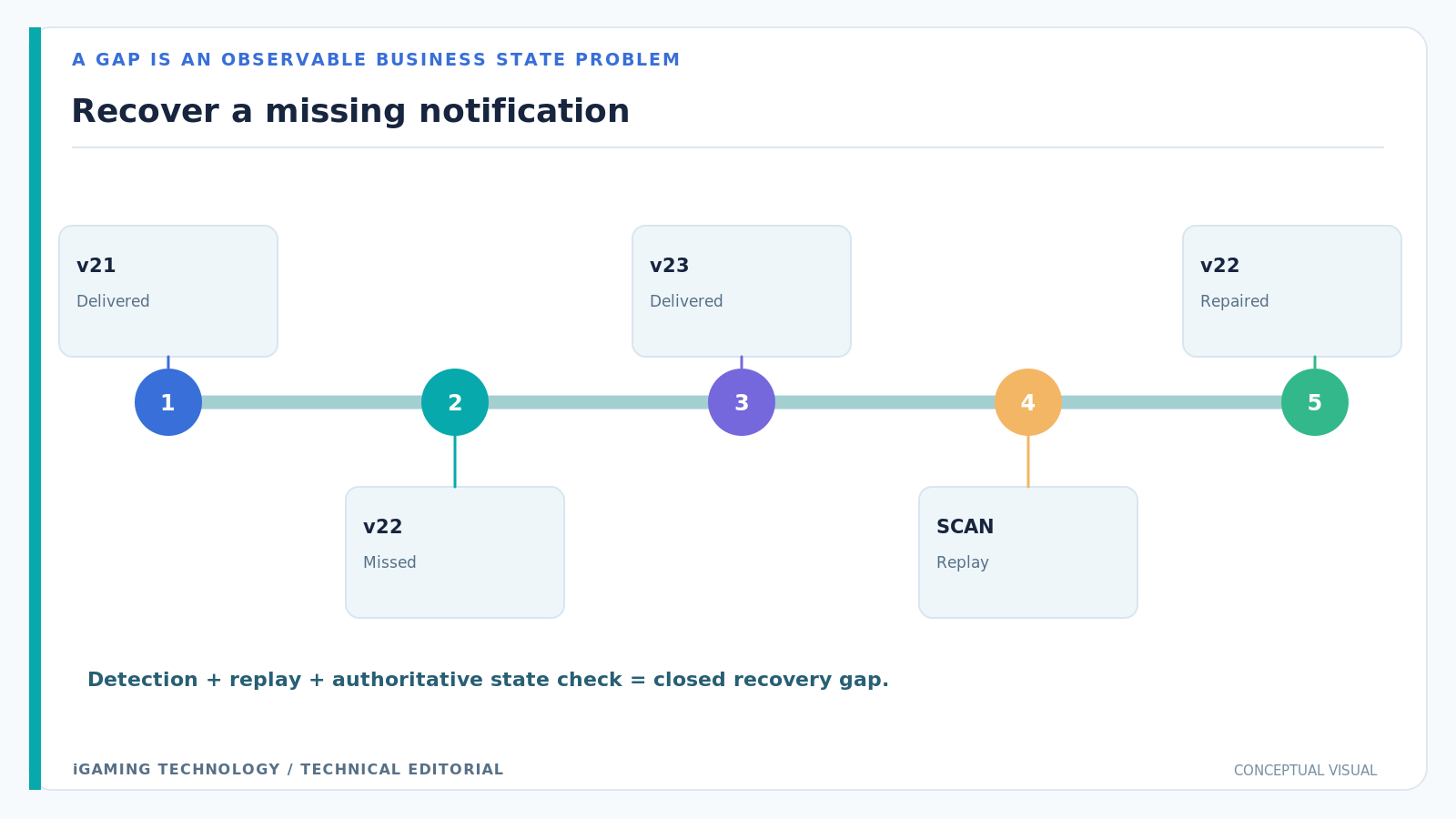
Figure 5. Replaying from a durable source or comparing a snapshot closes a missed-delivery gap.
If a consumer receives the same signed delivery five times, avoid treating repeated valid signatures as five separate business events. Authentication proves who signed the message and whether protected bytes were changed; it does not prove novelty. Dedupe by a publisher-documented event identifier and handle a valid replay according to the business versioning rules. For the security layer, see Casino API Authentication.
For polling, outage recovery is different: after restart, resume the persisted cursor, fetch bounded batches, and pace requests to avoid overwhelming the provider. Long outages may invalidate cursors or exceed historical retention. Document fallback to a full snapshot, including whether removed games appear as tombstones. A snapshot comparison that only inserts and updates but never deletes leaves stale availability forever.
A complete incident drill should include a publisher returning 503, a subscriber returning 503, an event arriving after its replacement, an expired cursor, a duplicated page, and a change whose API details differ from the notification snapshot. Measure recovery time to correct local state, not just the time until HTTP traffic resumes.
A useful recovery playbook also names the source of truth for every field. Imagine that a provider pushes game_enabled=false, while an operator has manually disabled the same title for a separate compliance reason. A later provider game_enabled=true event must not override the operator’s independent policy. Store distinct layers—provider availability, operator publication, jurisdiction eligibility, and resulting effective availability—and recompute the displayed state. This avoids treating a delivery timestamp as authority over an unrelated decision. Record which layer and source version changed each computed value. At the end of a replay, compare the number of active source records and source-version watermarks with the provider’s authoritative query, not just the size of the event inbox. These controls make recovery testable rather than intuitive.
Scalability and security implications
At scale, webhook publishers need rate limits by subscriber, bounded retries, queue visibility, protection against one slow tenant occupying every worker, and an explicit replay mechanism. Consumers need to validate inbound signatures or mTLS identities, cap request sizes, reject unknown event types, and decouple network acknowledgment from slow analytics and catalog rebuilding. Allowlisting outbound destination URLs at a publisher matters too: arbitrary subscriber URLs can become an SSRF path unless the platform validates DNS resolution and network destinations.
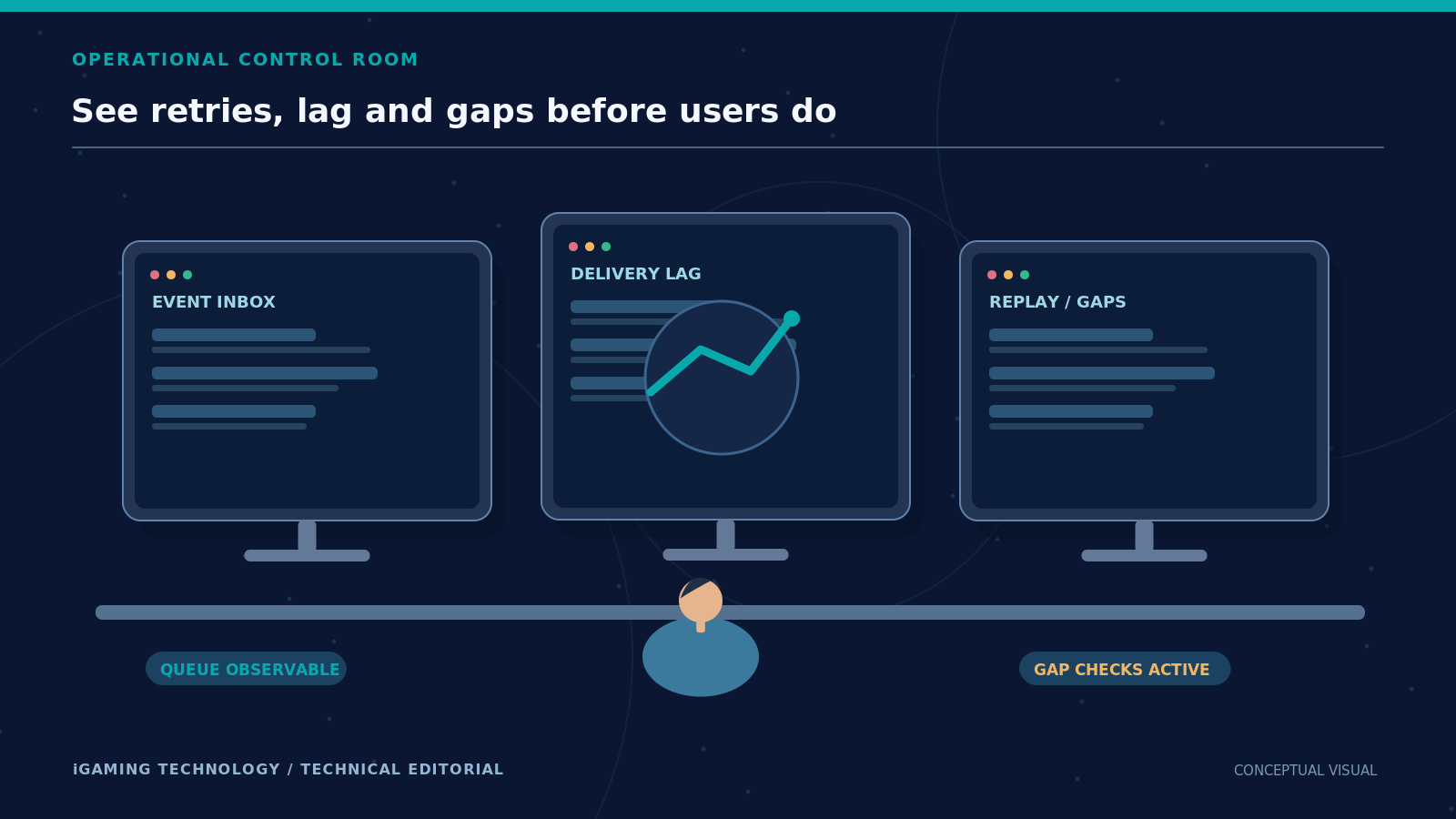
Figure 6. Reliability and security meet at the integration boundary, where people need visibility into delivery backlogs and failures.
Pollers need credential rotation, request budgets, adaptive intervals, and clear provider throttling behavior. Aggressive synchronized polling after the top of each minute can create traffic spikes. Add bounded jitter, cache unchanged resources, and respect documented rate limits and Retry-After instructions. Scraping an undocumented internal endpoint can break on a routine provider deployment; use versioned contracts and agreed pagination.
Do not log raw player identifiers, auth tokens, signed payload secrets, or full PII unnecessarily. Preserve correlation IDs and source references for incident reconstruction, but route sensitive fields through access controls and retention policies. Delivery-event observability should track source_version, inbox age, backlog size, retry count, source gap count, and consumer projection lag. Application-level state checks are a stronger success signal than a green webhook health check.
Decision matrix for integration events
For catalog availability, use a webhook with source versioning and periodic snapshot repair when the provider supports both. For daily settlement files, a report-ready webhook can trigger retrieval, while polling the report status every few minutes may be easier to audit. For configuration rollout status, prefer an immutable rollout ID and queryable status; a notification speeds updates but should not be the only evidence of activation. For health status, combine time-series checks with provider advisories rather than letting a single webhook define operational truth.
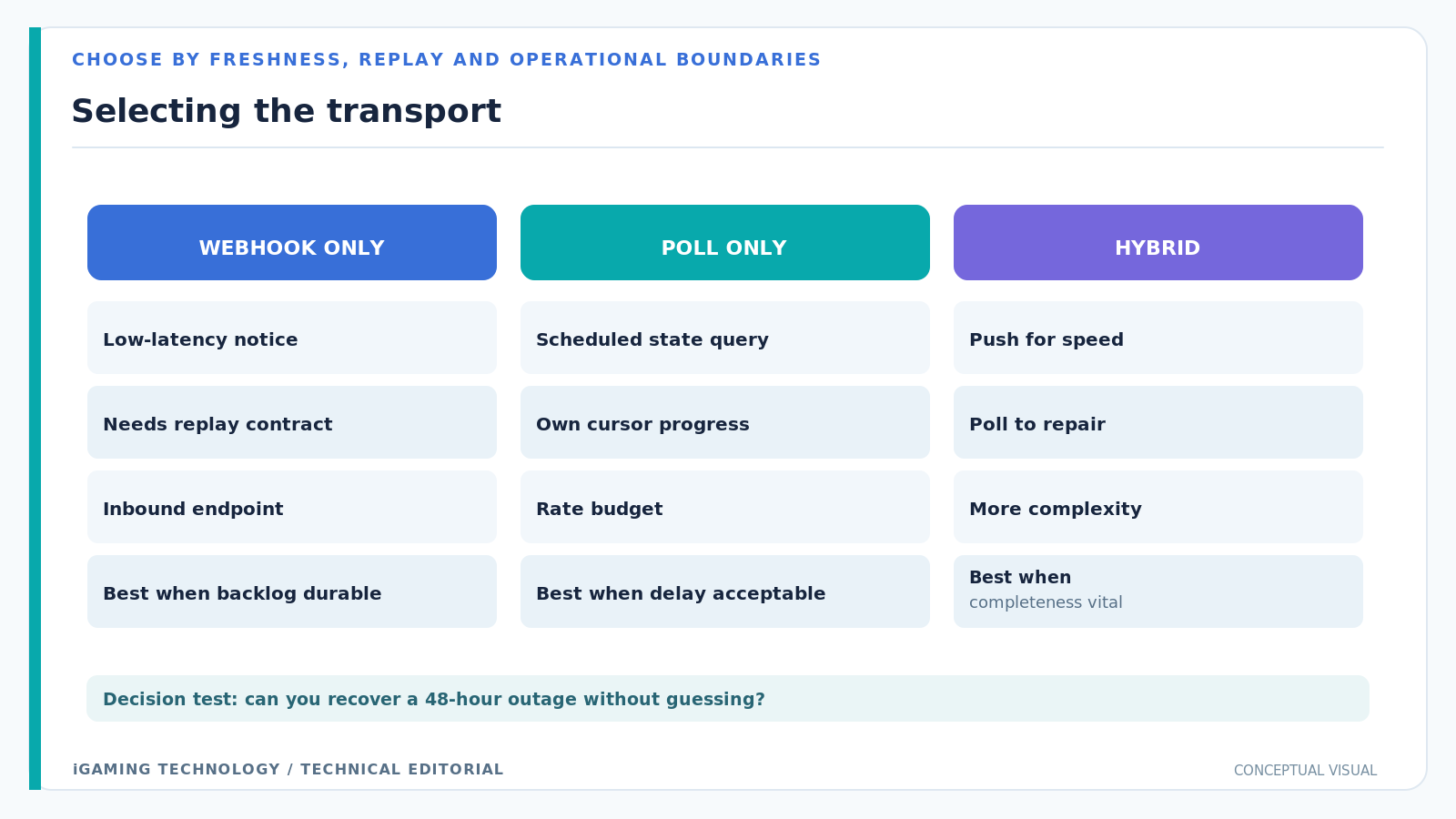
Figure 7. Choose the least complex pattern that meets detection and completeness requirements.
A decision workshop should produce five artifacts: an event glossary; a transport contract with retry and acknowledgment semantics; an authoritative resource/version rule; a replay and snapshot policy; and an operations worksheet with alerts and ownership. Run an outage simulation before go-live. If the design cannot explain how it discovers an event missed for 48 hours, it does not yet have a completeness story.
Key takeaway: Webhooks are a low-latency delivery mechanism; polling is a controlled observation mechanism. Correct integrations require durable processing, version-aware projections, recovery paths, and clear authority regardless of which mechanism sends the first signal.
Technical references
- OWASP Webhook Security Cheat Sheet — authenticity, replay safety, endpoint controls and retries.
- Apache Kafka Design: Delivery Semantics — scope and limits of exactly-once stream processing.
- OpenTelemetry HTTP Semantics — conventions for observing transport behavior.
Editorial note: Event names and sample API shapes are illustrative. Providers differ in retry duration, replay availability, event ordering, and signature schemes; validate their published contracts.