An iGaming platform is a network of systems that jointly deliver a game session and record its consequences. The game client presents an experience, the remote game server (RGS) executes or coordinates game logic, the operator manages player identity and money, and integration services translate messages across organizational boundaries. Observability and analytics receive events that describe what happened, but they should not be mistaken for the authoritative source of financial truth.
This guide maps the system as services, data flows, and responsibility boundaries. It does not prescribe a particular vendor, cloud, database, or API payload. The central questions are who owns each state transition, which messages cross trust boundaries, what must be durable, and how the platform recovers after communication fails.
System actors and service boundaries
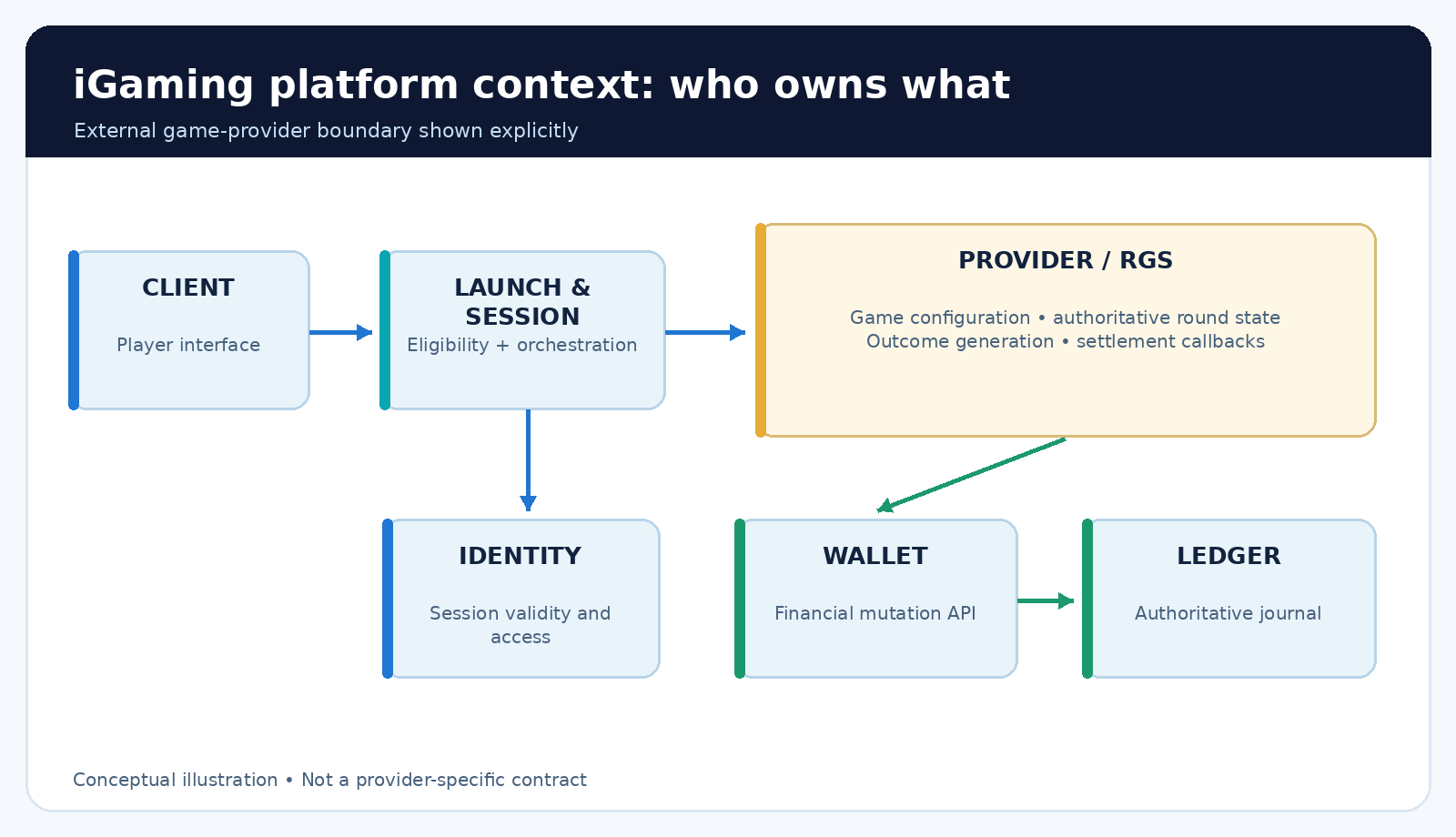
Figure 1. Conceptual service architecture showing operator-controlled services and an external provider boundary.
A useful starting point is to divide the actors into five groups. The player and client initiate sessions and display outcomes. The operator platform controls eligibility, identity, game access, and wallet state. The integration layer adapts provider contracts, authenticates calls, and routes messages. The provider or RGS supplies game logic, round progression, and certified configurations where applicable. Finally, operational and analytical systems observe activity and support audits, reporting, and investigations.
The player-facing channel may be a mobile app, embedded web view, or browser. The game client can be delivered from the provider or through operator-controlled distribution. In either case, the client should not be trusted to authorize a wager, decide the account balance, or assert that a round has settled merely because an animation finished.
Identity services establish who the player is and whether a session is eligible for the requested activity. A session service can issue an opaque handoff token or reference that the provider validates through an agreed integration. The token should be scoped to an intended purpose, have an appropriate lifetime, and avoid exposing unnecessary personal information. Token design depends on the integration contract and threat model.
The RGS is not simply a file host. Depending on the provider architecture, it may own authoritative game state, outcome generation, configuration lookup, and the transition from an open round to a finalized result. An aggregator may add a catalog, provider adapters, game launch routing, and normalization, but it does not necessarily become the system of record for each underlying operation.
The wallet boundary is especially important. The operator’s wallet represents the player’s financial entitlement within the product. Providers may send bet and win requests through a callback API, but a provider’s acceptance of a game event does not automatically imply that the operator ledger has recorded the corresponding financial effect. The integration contract must define which party waits for which acknowledgment.
Boundary checklist: For each service, document its state owner, durable store, external dependencies, authentication mechanism, timeout behavior, unique business identifiers, and recovery procedure. A box with no explicit owner is a warning sign; so is a financial operation that can be invoked by two unrelated services without a shared idempotency rule.
Frontend, orchestration, RGS and backend responsibilities
Frontends are responsible for rendering, input collection, and communicating session progress. They may display a cached balance for usability, but that value is a view of the wallet rather than independent financial authority. After a reconnect, the client should recover round and transaction status from trusted services instead of replaying locally remembered actions as if they were unprocessed.
The orchestration layer coordinates launch. It can validate a game code, permitted configuration, currency, jurisdictional routing, and eligibility before producing a provider-specific launch context. Where an aggregator is present, orchestration may call one canonical launch endpoint that selects a provider adapter. The adapter maps internal terminology to the provider’s contract and returns a launch URL or equivalent artifact.
The RGS may expose session endpoints, maintain round state, apply game mathematics, and emit outcome or transaction events. Its exact responsibilities vary by game type. A slot round, live dealer decision, and networked progressive jackpot have different real-time requirements even when they share account and session infrastructure. Treat RGS as a logical responsibility boundary, not a universal single executable.
Operator backend services typically include wallet and ledger, player account and eligibility, catalog configuration, back-office tools, risk controls, integration routing, and reporting. Several of these may share a deployment unit. Logical separation does not require a microservice per box. It requires clear ownership and interfaces; deployment topology can follow throughput, team boundaries, failure isolation, and compliance needs.
Consider three authority questions. Can the orchestrator decide a wager was settled? Usually it should not; it may report the answer returned from the proper transaction owner. Can the analytics system replay a missing event? It may reprocess a recorded fact, but it should not use replay to initiate a new bet. Can the provider revoke a wallet transaction by deleting its own history? A correction should instead follow the defined refund or rollback contract with durable evidence on both sides.
Bet, result and event flows across services
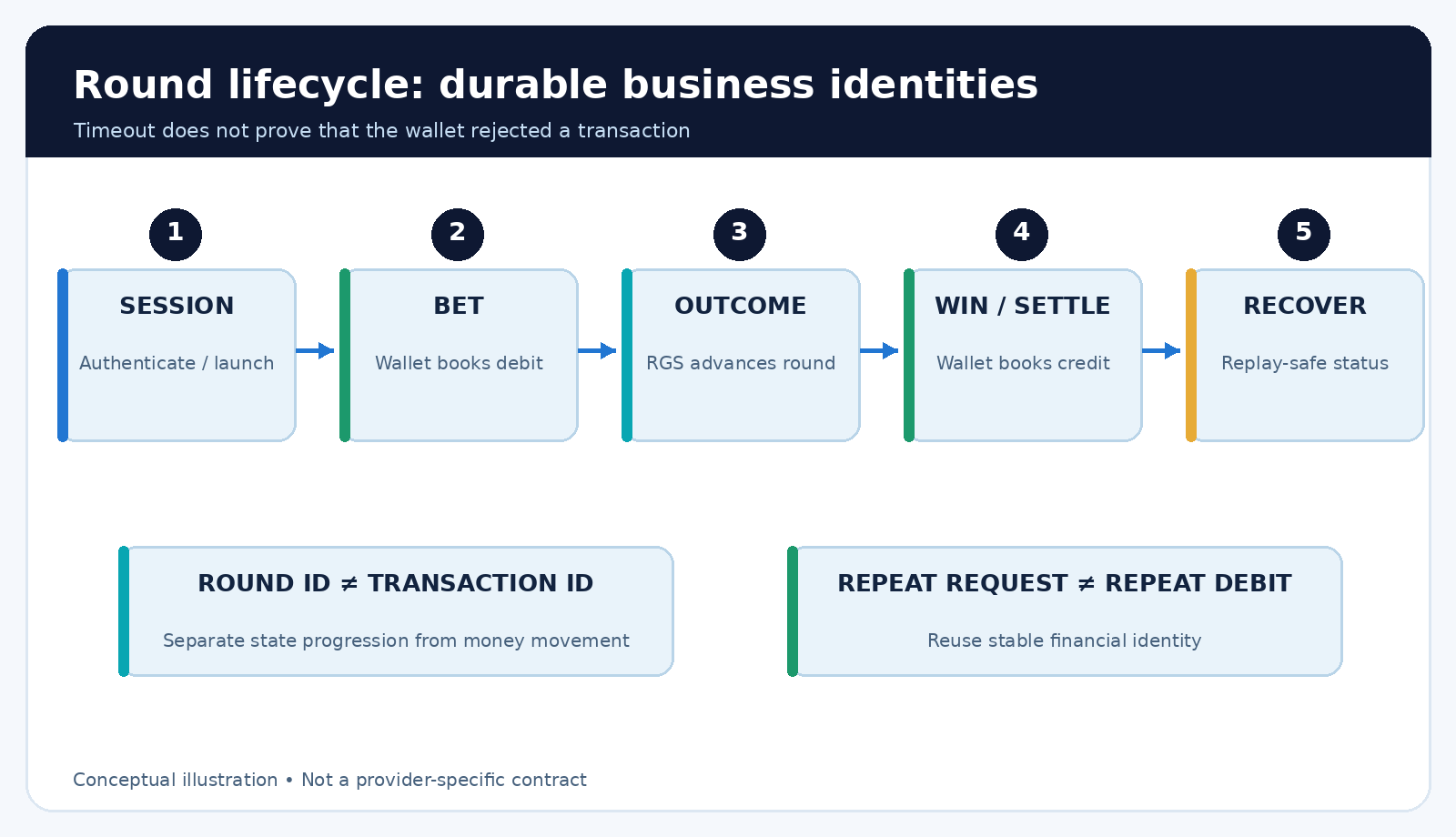
Figure 2. Simplified bet-to-settlement sequence; exact callback order and names are provider-specific.
A representative happy path begins with a valid player session and a game launch that resolves to one approved configuration. When the player requests a wager, the game system associates the request with a round identifier and a provider transaction identifier. It submits an authenticated financial instruction to the operator wallet, either directly or via an adapter. The wallet validates the request, checks applicable limits and available funds, and records the financial operation with idempotency protection.
Once the bet has been accepted under the contract, the game logic determines or advances the outcome. If a win or settlement is due, the provider sends a separate transaction with its own stable business identifier and a reference to the corresponding round or original bet. The wallet books the financial impact and returns a result. The game service can then expose the completed round to the client. The client-facing sequence may differ, but the financial and state histories must remain reconstructible.
Not all systems implement a single bet and a single win. Some have multiple financial movements in a round, a zero-win settlement, a jackpot contribution, a rollback, a canceled round, or a live-event betting window. A robust data model distinguishes round ID, financial transaction ID, idempotency key, session ID, and trace ID. Combining them into one ambiguous id makes both debugging and reconciliation harder.
What happens when the response disappears?
Suppose a wallet commits a €5 bet, but the network drops the response. From the provider’s viewpoint, the result is unknown—not necessarily failed. A provider may retry the same logical transaction using its stable identifier. The wallet needs to return a repeat-safe result without debiting another €5. If the wallet instead treats every HTTP call as a new purchase, a normal timeout becomes a financial defect.
A second failure occurs when a win callback is delayed after the game outcome is recorded. The operator wallet may still show an unsettled round. Monitoring should surface the delay; reconciliation should find the missing counterpart; and operational workflows should resolve the issue under a defined correction policy. The front end should not silently invent a compensating balance update to make the screen appear correct.
Business events versus financial instructions
After a transaction commits, the platform may publish an immutable transaction-created or round-settled event through an outbox or other reliable publication mechanism. Consumer services can update analytics, monitoring, reporting, or player-facing projections. Event delivery is often at least once, so consumers should be prepared to receive duplicates and out-of-order records.
A domain event reports a fact; a financial instruction requests a controlled state change. The distinction matters during replay. Reprocessing an analytics event should regenerate a materialized view, not deduct money again. An outbox record that refers to a ledger transaction should point to the committed business identity, making the relationship auditable after a failure.
Wallet and identity touchpoints (high level)
Identity and wallet services meet the game flow at different moments. Identity and eligibility are prerequisites to starting or continuing a session under the operator’s rules. Wallet authorization determines whether a specific financial action can proceed. Authentication alone does not authorize a debit; a valid signed request may still have insufficient funds, invalid state, or a duplicate transaction identifier.
At launch, a session token may bind the player reference, game reference, currency, and expiration. Avoid placing a full player profile in a browser-accessible token where a more limited reference will do. On each financial callback, verify the provider identity and the binding between the requested wallet, session or player, allowed currency, and game context according to the contract. Error responses should be explicit enough for recovery without exposing secrets.
Wallet balances are projections of financial facts and policy. A displayed figure can include available, reserved, promotional, or pending amounts, each with a different rule. The available amount should not be calculated from asynchronous analytics events. Any promotional balance separation, wagering restriction, or settlement priority belongs in a clearly specified policy layer with traceable decisions.
Treat debit and credit transactions as durable operations. Use a stable business reference scoped to the provider and transaction type, a robust atomic commit, and a clear state model for received, committed, rejected, or in_review where the implementation requires it. The system should never infer a final business result from a network timeout alone.
Persistence, monitoring and failure domains
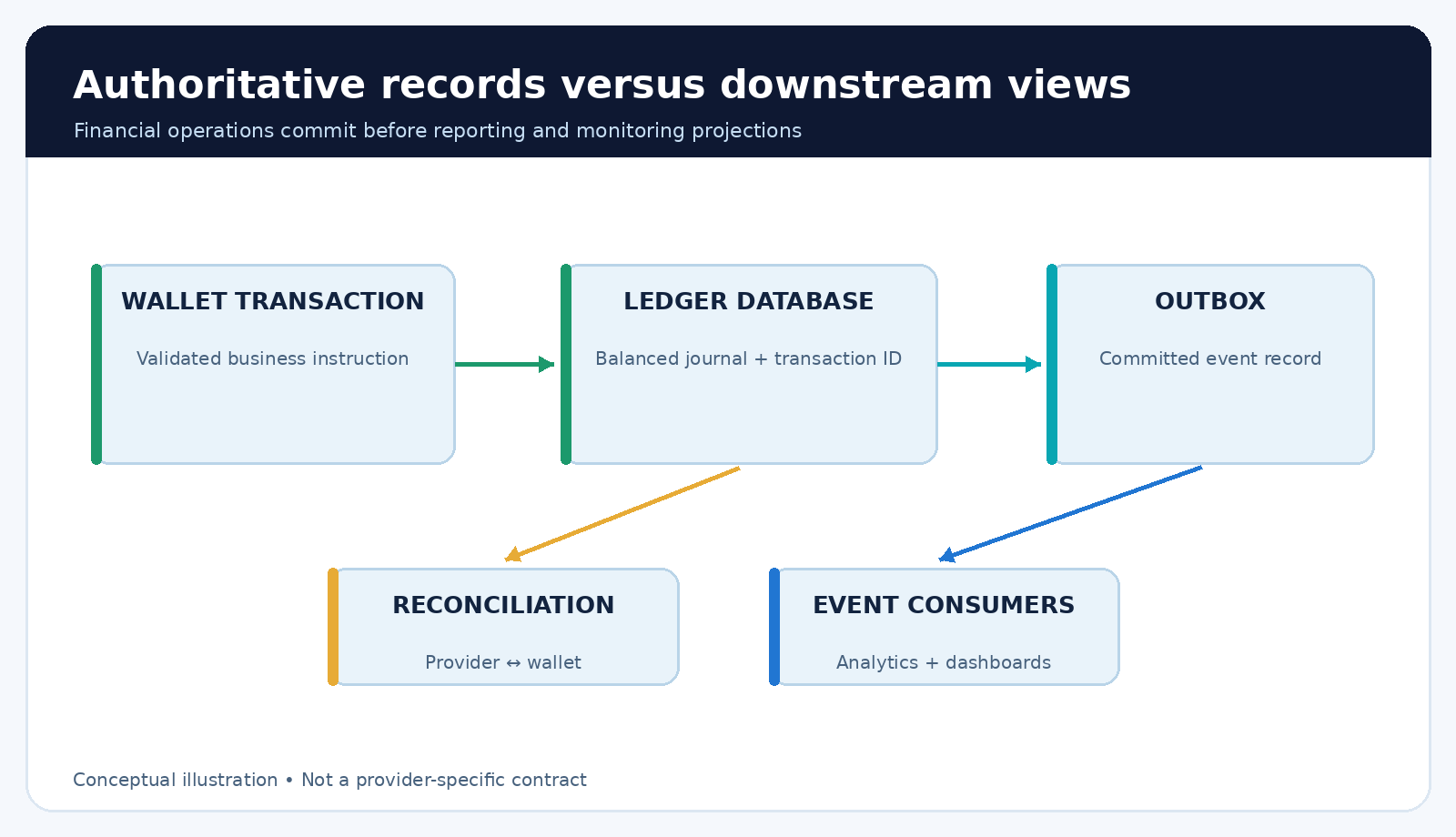
Figure 3. Authoritative transactional storage and downstream event consumers are separated.
Persistence choices follow data ownership. The wallet ledger requires transactional guarantees suited to monetary operations. A session cache may prioritize expiration and rapid lookup. A game round store needs a consistent record of state transitions and compatible configuration versions. An event stream can distribute committed facts to analytical and operational consumers without becoming the only reliable record of financial execution.
The most useful architecture diagram shows not only where data is written, but how a failed write or a partially completed request is detected. For example, a database commit may succeed even when an API response times out. A message producer may fail after the commit but before publication. An outbox or another coordinated publication pattern can bridge that gap, provided it is monitored and its consumers handle duplicate delivery.
Monitoring must be designed around user-critical journeys: launch success rate, wallet bet/settlement completion, age of unsettled rounds, provider callback latency, reconciliation mismatch rate, and the growth of unprocessed events. A service can be technically up while a specific provider or currency is effectively unavailable. Use dimensions that allow meaningful diagnosis, while avoiding high-cardinality labels and personal data exposure.
Distributed tracing helps reconstruct a call across multiple services. OpenTelemetry provides concepts and conventions for propagating trace context across boundaries, although cross-organization systems may require carefully agreed correlation headers. A trace ID supports diagnosis; it is not a replacement for a stable financial transaction ID. See the official OpenTelemetry documentation on context propagation and traces.
Failure domains include a process, host, availability zone, cloud region, third-party provider, database cluster, or external network route. Replicating application instances across zones does not remove a single-writer database bottleneck. Running in two regions does not make dual financial writes safe. Regional recovery designs must define leader election, fencing, replication lag, recovery objectives, and what happens to requests accepted near the moment of failover.
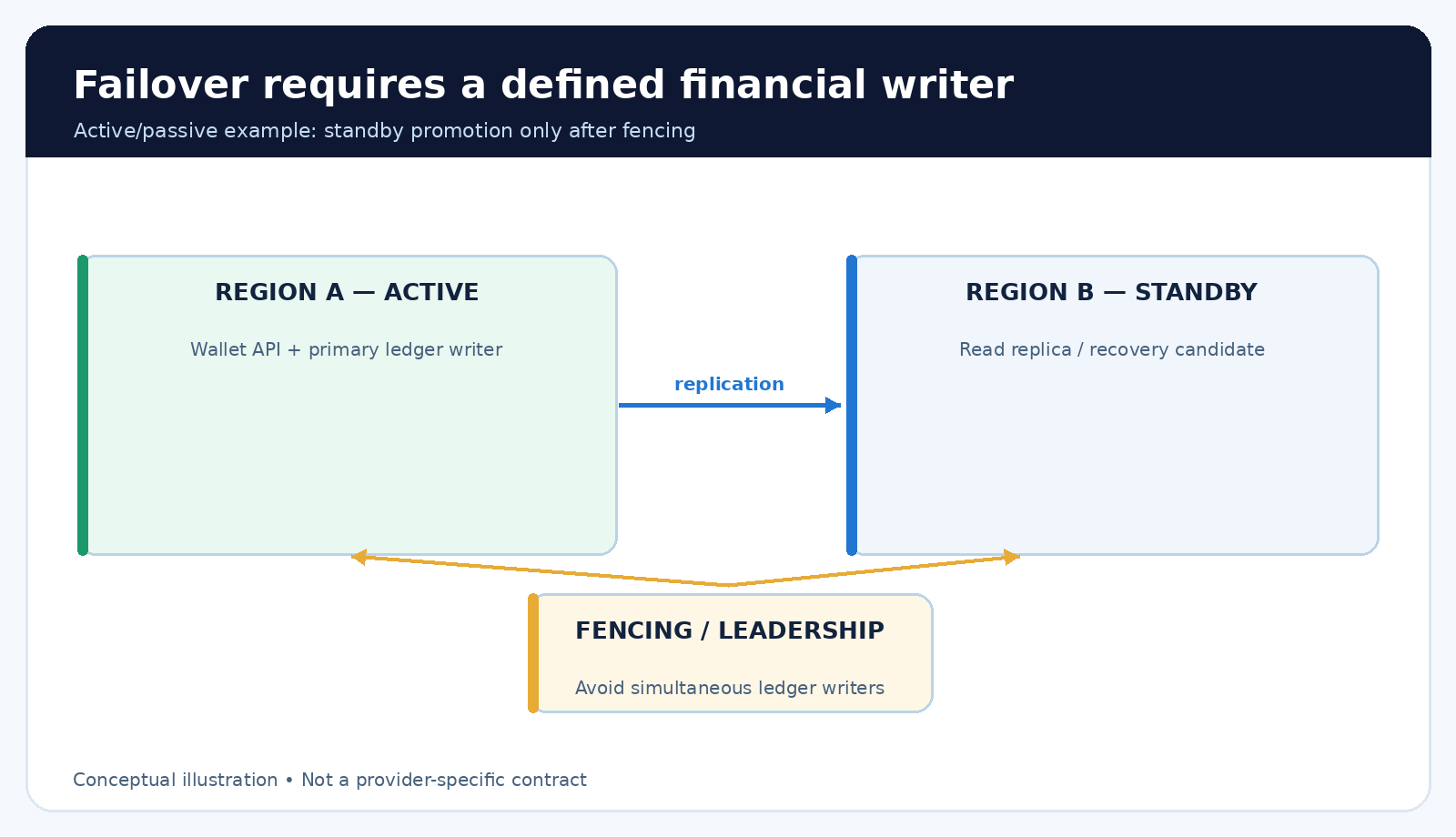
Figure 4. Active/passive example with controlled promotion; not a universal recommendation.
Reference diagram and architecture trade-offs
The reference diagrams in this guide intentionally separate financial mutation, round progression, and observational data. These are three different consistency problems. A wallet mutation requires strong guarantees for the exact business operation. Round progression requires valid state transitions and recoverability. Observability and analytics can often tolerate delays, but should preserve enough identifiers to trace discrepancies to authoritative records.
A modular monolith may simplify transaction ownership and deployment for a smaller team. A distributed service architecture may allow independent scaling and isolation but adds network failure modes, version negotiation, and operational overhead. Direct provider integration gives an operator more control over contract differences; an aggregator reduces repeated onboarding work but introduces another routing and normalization layer. Active/passive deployment can simplify financial write ownership, whereas active/active writes require a stronger coordination design.
Use an architecture decision record for each major choice. Document the requirement, alternatives, expected failure modes, consistency model, cost of operating the chosen approach, and a reversible migration path. Run controlled tests for duplicate callbacks, timeout-after-commit, partial provider outage, stream lag, region loss, and recovery from a stale read replica.
No diagram can certify a platform on its own. The diagram becomes useful when engineers can connect each arrow to a specific interface, each state owner to a durable guarantee, and each failure scenario to an automated test or documented operational response. That is the practical foundation of dependable iGaming platform architecture.
Related technical guides
Continue with Wallet Architecture for accounting invariants, Provider API Integration for launch and callbacks, Idempotency for duplicate financial requests, Reconciliation for independently verified records, and Observability for tracing a round across boundaries. For distributed-systems design patterns outside gaming, the AWS Games Industry Lens supplies additional reference architectures; adapt its concepts to the platform’s actual responsibility and regulatory boundaries.